By Liora Kittredge | Dog Nutrition & Food Guide Writer | Published: March 13, 2026 | 12 min read
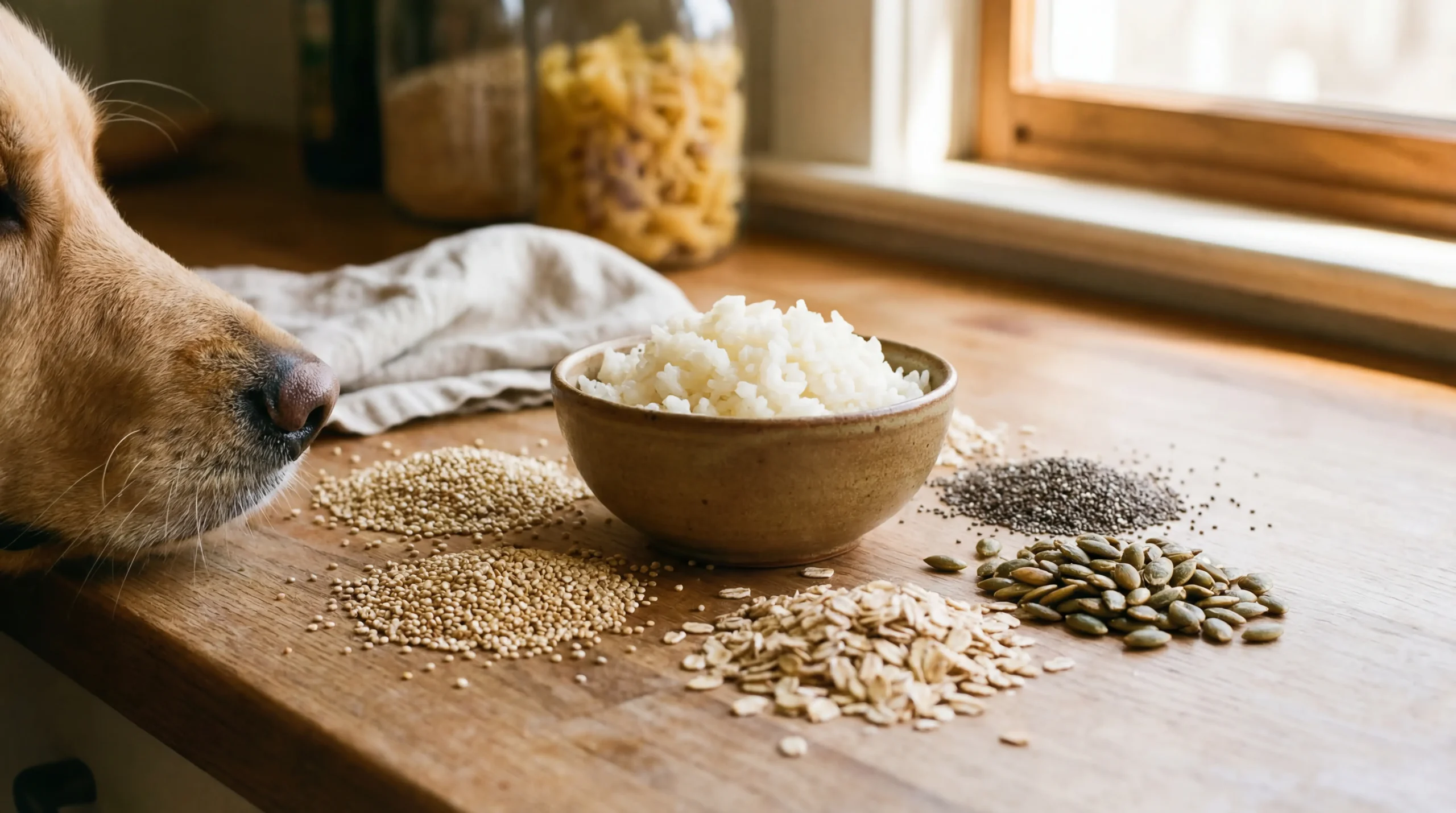
Quick answer: Most dogs can safely eat cooked whole grains like rice, oats, and quinoa; plain legumes like chickpeas (not hummus); and seeds like chia, flax, and pumpkin in moderation. The key is preparation: always cook grains thoroughly, skip seasonings, and introduce new foods gradually. Raw dough, xylitol-containing products, and heavily seasoned preparations are the real dangers.
Important: This article is for informational purposes only and is not veterinary advice. Consult your veterinarian before making dietary changes for your dog, especially if your dog has existing health conditions. The author is not a veterinary nutritionist.
Table of Contents
Introduction
Understanding which grains and seeds dogs can eat safely starts with looking beyond the marketing. The ingredient panel on a bag of dog food tells you more than the front label ever will. I learned this after one of my dogs developed a food allergy and I spent months running an elimination diet under my vet’s guidance, comparing formulations side by side, and tracking how my dogs responded to different ingredients. What surprised me most wasn’t which grains caused problems; it was how often the “grain-free” alternatives created new ones.
This guide covers which grains, legumes, and seeds are genuinely safe for dogs, which ones to approach with caution, and how to prepare them properly. You’ll find specific guidance on rice, oats, quinoa, chickpeas, sesame seeds, and more. I’ve also included the context that most online lists skip: the grain-free debate, the DCM research, and why the replacement ingredient matters as much as what you removed.
Whether you’re cooking homemade meals for your dog, sharing table scraps occasionally, or just trying to understand what’s actually in your dog’s commercial food, this guide gives you the data to make informed decisions. For the detailed breakdown on any specific food, you’ll find links to in-depth guides on rice, bread, and quinoa throughout.
Safe Grains for Dogs
Dogs evolved alongside humans and developed the ability to digest starches that their wolf ancestors couldn’t process efficiently. Research published in Nature (Axelsson et al., 2013) identified differences in key genes that allow domestic dogs to break down and use carbohydrates from grains. That doesn’t mean all grains are equal, though. Some offer genuine nutritional value; others are cheap fillers with minimal benefit.
What is a whole grain? A whole grain retains all three parts of the grain kernel: the bran (outer layer with fiber), the germ (nutrient-rich core), and the endosperm (starchy middle). Refined grains remove the bran and germ, stripping away most of the fiber and nutrients. When comparing dog food formulations, whole grains generally offer more nutritional value than their refined counterparts.
Grains that are safe for most dogs:
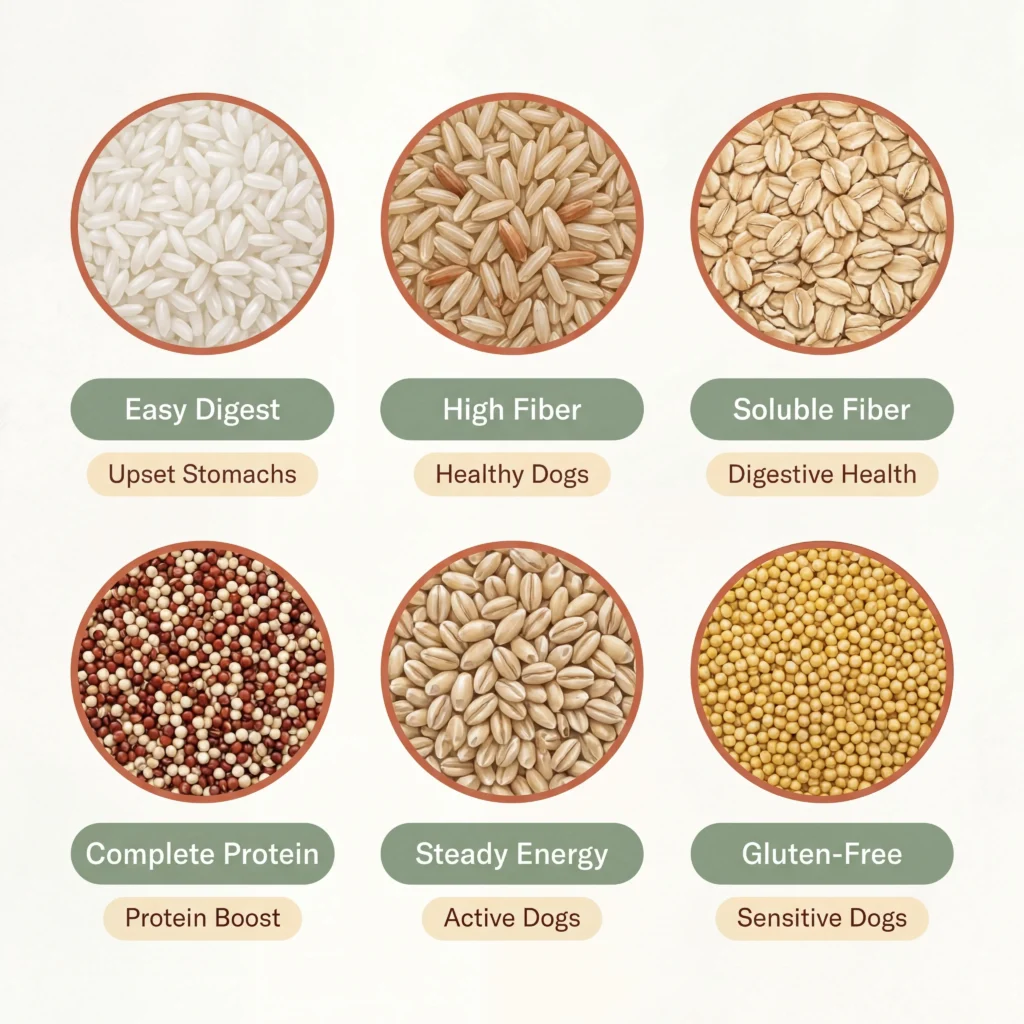
| Grain | Safety | Best For | Notes |
|---|---|---|---|
| White rice | Safe | Upset stomachs, bland diets | Easily digestible, low fiber |
| Brown rice | Safe | Healthy dogs | Higher fiber, harder to digest for sensitive stomachs |
| Oats | Safe | Digestive regularity | High in soluble fiber, cook plain |
| Quinoa | Safe | Protein supplementation | Rinse thoroughly to remove saponins |
| Barley | Safe | Steady energy | Must be cooked thoroughly |
| Millet | Safe | Variety | Gluten-free, easily digestible |
White rice is easily digestible, gentle on upset stomachs, and commonly recommended by vets for bland diets. It’s low in fiber compared to brown rice, which makes it the better choice for dogs recovering from digestive issues.
Brown rice has higher fiber, vitamins, and minerals than white rice, but the bran layer makes it harder to digest. In my experience, dogs with sensitive stomachs do better with white rice during illness, while healthy dogs handle brown rice without issues. For the complete breakdown, see the guide on brown rice for dogs.
Oats (oatmeal) are high in soluble fiber, good for digestive regularity, and a solid source of B vitamins. Cook plain with no sugar, milk, or flavorings. Oats are naturally gluten-free when labeled as such (meaning they weren’t processed in a facility with wheat).
Quinoa is technically a pseudocereal, not a true grain. It contains all nine essential amino acids, making it a complete protein source. The catch is saponins: these natural compounds can cause digestive upset if you don’t rinse quinoa thoroughly before cooking. Most commercial quinoa is pre-rinsed, but check the package. More details in the quinoa guide.
Barley is high in fiber, contains beta-glucans that support heart health, and provides steady energy. Must be cooked thoroughly; raw or undercooked barley is difficult for dogs to digest.
For a deeper breakdown on rice types and when to use each one, see the full guide on whether dogs can eat rice safely.
Grains to approach with caution:
Wheat is not toxic, but it’s one of the more common grain allergens in dogs. According to veterinary dermatology research, the top five food allergens for dogs are beef, dairy, wheat, chicken, and egg (in that order). If your dog scratches frequently, has chronic ear infections, or shows digestive symptoms, wheat sensitivity is worth investigating through an elimination diet with your vet’s guidance.
Corn is safe when cooked and served off the cob (the cob itself is a choking and obstruction hazard). Corn gets a bad reputation as a “filler,” but when properly processed, it provides digestible carbohydrates and essential fatty acids. The label claim matters here: whole corn versus corn gluten meal are different nutritional profiles.
Legumes and Beans for Dogs
Legumes occupy a complicated space in dog nutrition discussions right now. They’re a good source of plant-based protein and fiber, but they’ve also been linked to ongoing FDA research into diet-associated heart disease in dogs. The data isn’t conclusive, but it’s worth understanding before you add chickpeas or lentils to your dog’s regular diet.
What is DCM? Dilated cardiomyopathy (DCM) is a serious heart condition where the heart muscle weakens and can’t pump blood efficiently. Historically, DCM appeared mainly in breeds with genetic predispositions (Dobermans, Great Danes, Boxers). The FDA began investigating in 2018 after DCM appeared in breeds not typically affected.
Legumes that are safe in moderation:
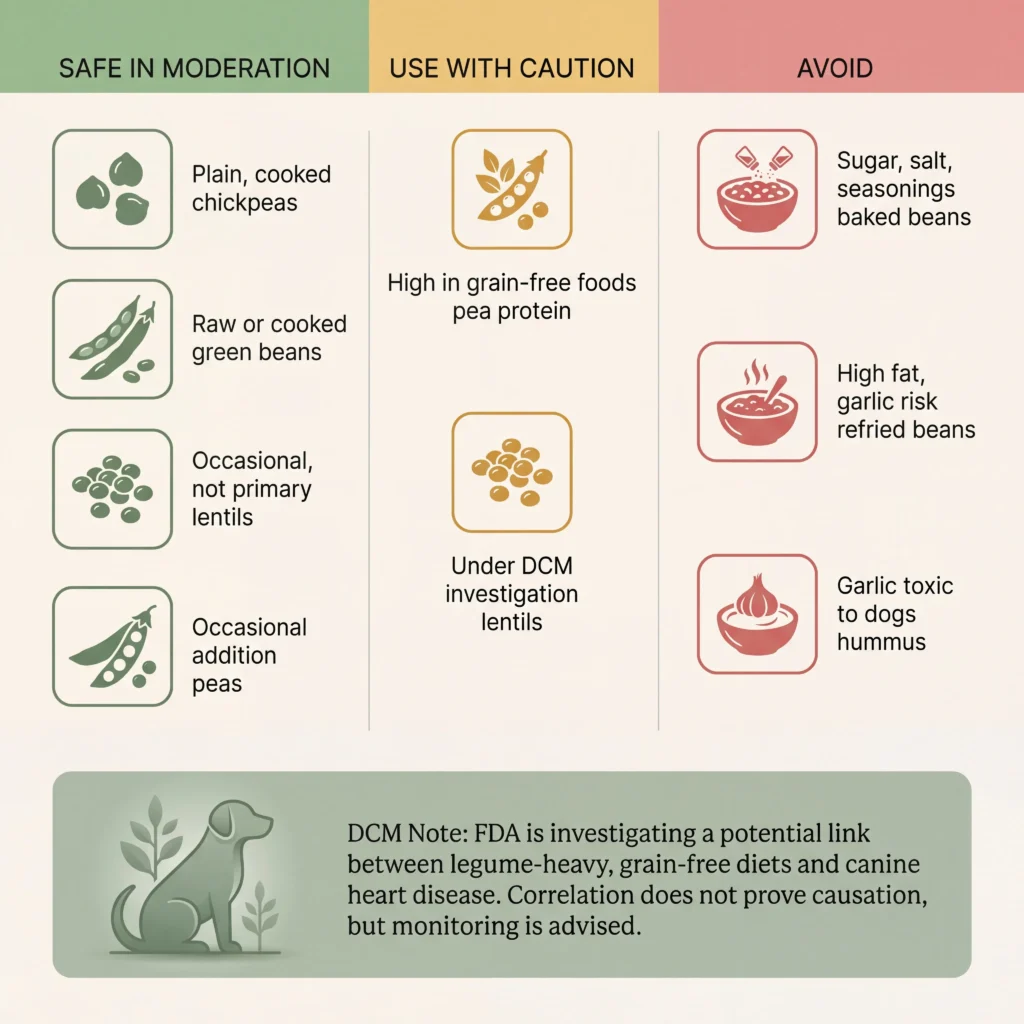
Chickpeas (garbanzo beans) are safe when plain and cooked. They’re a good source of protein, fiber, and several vitamins. The critical distinction: plain chickpeas are fine; hummus is not. Hummus contains garlic (toxic to dogs), lemon juice (can cause stomach upset), tahini (high fat), and often salt. Canned chickpeas are acceptable if you rinse them to remove excess sodium; dried chickpeas require thorough cooking.
If your dog grabbed a chickpea off your plate, don’t panic. If they got into the hummus container, that’s a different conversation. See the full breakdown at can dogs have chickpeas.
Green beans are technically a legume, though most people think of them as vegetables. They’re low calorie, high fiber, and safe raw or cooked. Often recommended as a treat for dogs on a weight management plan. For more on vegetables, see the guide on vegetables safe for dogs.
Lentils are high in protein and fiber, but they’re also high in the compounds being studied in the DCM research. If lentils are a primary ingredient in your dog’s commercial food (check the first five ingredients), it may be worth discussing alternatives with your vet.
Peas have a similar profile to lentils. They’re safe as an occasional addition to meals, but the FDA has noted that peas appear frequently in diets associated with reported DCM cases. This doesn’t mean peas cause heart disease; it means the relationship is being investigated.
Legumes to avoid:
- Baked beans: Loaded with sugar, salt, and often onion or garlic seasonings
- Refried beans: High in fat and frequently contain garlic
- Any canned beans with added seasonings or sauces
Seeds Dogs Can and Cannot Eat
Seeds can be a nutritional bonus for dogs when used correctly: they provide omega fatty acids, fiber, and various minerals. The key word is “bonus.” Seeds are calorie-dense and should be additions to a balanced diet, not a significant portion of it.
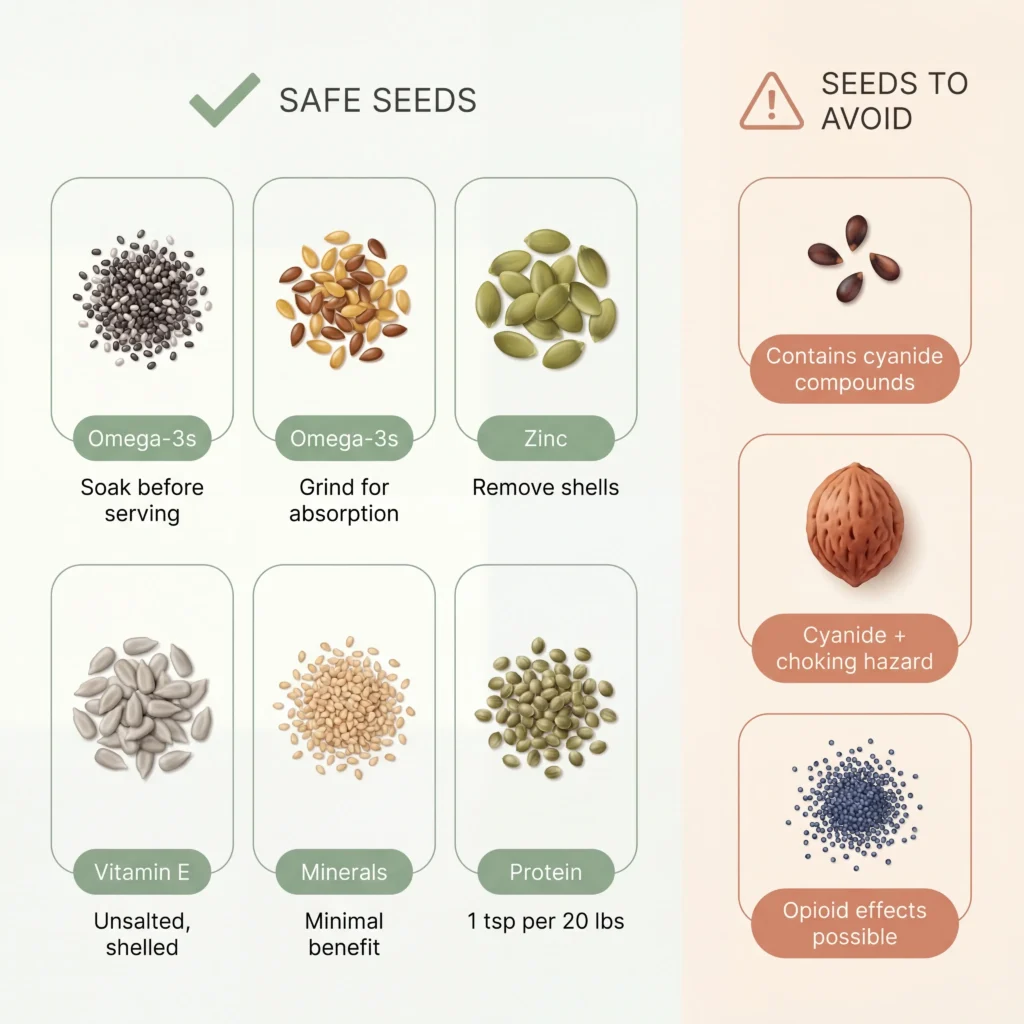
Seeds that are safe for dogs:
Chia seeds are high in omega-3 fatty acids, fiber, and protein. Soak them in water before adding to food; dry chia seeds can expand in the digestive tract and cause discomfort. A quarter teaspoon per 10 pounds of body weight daily is a reasonable starting point.
Flaxseeds are another omega-3 source, best when ground (whole flaxseeds often pass through undigested). Store ground flaxseed in the refrigerator to prevent rancidity. Dogs under 50 pounds can have about a quarter teaspoon daily; larger dogs can have up to a tablespoon.
Pumpkin seeds are a good source of zinc and fatty acids, sometimes used as a natural support for intestinal health. Remove shells when possible and serve raw or roasted without salt.
Sunflower seeds are safe when shelled and unsalted. They’re high in vitamin E and healthy fats, but also high in calories. Use sparingly.
Sesame seeds are not toxic, but they offer minimal nutritional benefit for dogs. If your dog ate a sesame seed bun, the sesame seeds aren’t the concern; it’s the bread quantity and any other ingredients. For the complete breakdown, see can dogs eat sesame seeds.
Hemp seeds are high in protein and balanced omega fatty acids. They’re generally well-tolerated and can be added at about 1 teaspoon per 20 pounds of body weight.
Seeds to avoid:
- Apple seeds: Contain amygdalin, which releases cyanide when digested. A few seeds from one apple core are unlikely to cause harm in a large dog, but repeated exposure or large quantities pose real risk.
- Cherry, peach, and apricot pits: Same cyanide concern, plus choking and obstruction hazards due to size.
- Poppy seeds: Can cause opioid-like effects in dogs. Keep baked goods with poppy seeds away from your dog.
The Grain-Free Dog Food Debate
The grain-free trend in pet food started with good intentions but ran ahead of the science. The idea was simple: dogs descended from wolves, wolves don’t eat grains, therefore dogs shouldn’t eat grains either. The label says one thing; the data says another.
Domestic dogs have evolved to digest starches effectively. Studies have identified specific genetic differences between dogs and wolves that allow dogs to break down carbohydrates from grains. Removing grains from a dog’s diet isn’t inherently harmful, but the replacement ingredients matter.
The DCM Investigation
Starting in July 2018, the FDA began investigating reports of dilated cardiomyopathy (DCM) in dogs eating certain grain-free diets. By November 2022, the FDA had received 1,382 reports of DCM in dogs. More than 90% of the reported diets were grain-free, and 93% contained peas or lentils as primary ingredients.
This correlation doesn’t prove causation. The FDA investigation was still active as of the publication date of this article, and researchers haven’t identified a definitive mechanism. For the most current information, check the FDA’s DCM investigation page.
The current thinking focuses on taurine, an amino acid essential for heart function. Some hypotheses suggest that legume-heavy diets might interfere with taurine metabolism or that certain ingredient combinations reduce taurine bioavailability. Taurine supplementation has shown mixed results in affected dogs, but the research is ongoing.
My take: Grain-free isn’t a quality indicator. After I switched my dogs to a grain-free formula based on marketing claims, one of them developed digestive issues within a few weeks. My vet pointed out that the grain-free food had peas and lentils in the first five ingredients; the formula I’d switched from had brown rice. The replacement ingredient matters as much as what was removed.
If your dog is doing well on a grain-inclusive diet, there’s no evidence-based reason to switch to grain-free. If your dog is on a grain-free diet and thriving with no health concerns, discuss monitoring options with your vet rather than making reactive changes.
For guidance on evaluating commercial dog food options, the dog food selection guide covers what the guaranteed analysis actually tells you. Oren’s guides on ingredient safety provide additional depth on how specific compounds affect dogs.
How to Cook Grains for Dogs
The preparation method matters more than most grain safety guides acknowledge. Raw or undercooked grains are difficult for dogs to digest and can cause stomach upset. Proper cooking makes nutrients bioavailable and eliminates potential digestive issues.
Basic Grain Cooking for Dogs
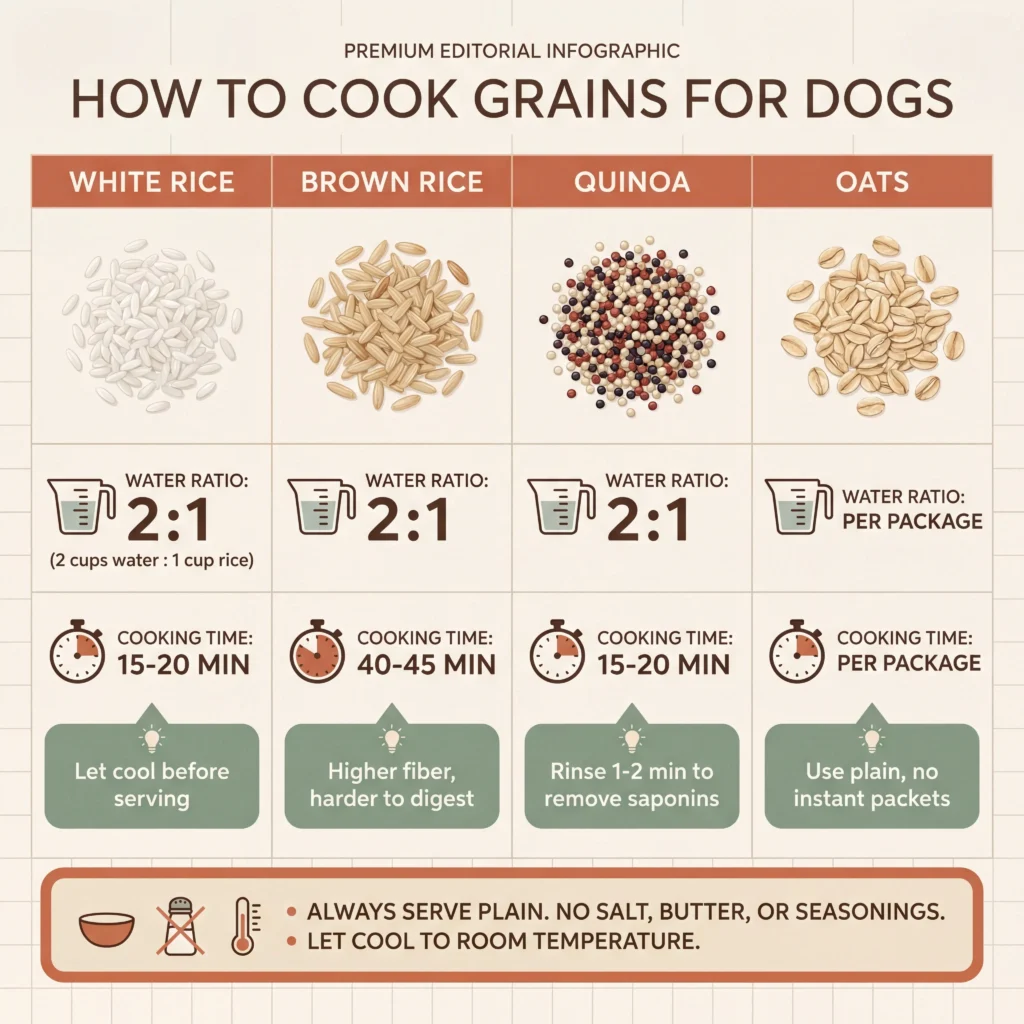
Rice (white or brown):
- Rinse thoroughly to remove excess starch
- Use a 2:1 water-to-rice ratio (2 cups water per 1 cup rice)
- Bring to boil, then reduce heat and simmer covered
- White rice: 15-20 minutes. Brown rice: 40-45 minutes.
- Let rest 5 minutes off heat before serving
- No salt, butter, or seasonings
- Let cool to room temperature before serving to your dog
For dogs with upset stomachs, white rice cooked slightly softer (add an extra quarter cup of water) is easier to digest. See the full preparation guide in can dogs eat rice.
Quinoa:
- Rinse thoroughly under cold water for 1-2 minutes (removes saponins)
- Use a 2:1 water-to-quinoa ratio
- Bring to boil, reduce heat, simmer covered 15-20 minutes
- Fluff with fork, let cool before serving
Oats:
- Use old-fashioned or steel-cut oats (not instant packets with added sugar)
- Cook with water only, following package directions
- Serve plain and cooled
Portion Guidelines
The 90/10 rule applies here: treats and additions (including grains you’re adding to meals) should make up no more than 10% of your dog’s daily caloric intake. The other 90% should come from nutritionally complete dog food.
General portions by dog size (these are starting points — adjust based on your dog’s response):
| Dog Size | Example Breeds | Grain Addition (cooked) |
|---|---|---|
| Small (under 20 lbs) | Chihuahua, Yorkshire Terrier, Pomeranian | 1-2 tablespoons |
| Medium (20-50 lbs) | Beagle, Cocker Spaniel, Border Collie | 2-4 tablespoons |
| Large (50-90 lbs) | Labrador, Golden Retriever, German Shepherd | 1/4 to 1/2 cup |
| Giant (90+ lbs) | Great Dane, Mastiff, Saint Bernard | 1/2 to 3/4 cup |
Monitor your dog’s weight and stool quality, and adjust accordingly. I track what I feed and how my dogs respond; when I added rice to every meal without reducing kibble portions, one of my dogs started gaining weight before I noticed the pattern.
What NOT to do:
- Never feed raw bread dough (the yeast continues fermenting in the stomach, producing alcohol and dangerous bloating)
- Skip instant oatmeal packets (contain sugar and artificial flavors)
- Avoid any grain preparation with onion, garlic, nutmeg, excessive paprika, or anything containing xylitol
For specific guidance on bread and the raw dough danger, see can dogs eat bread. For pasta-specific questions, including the sauce ingredient breakdown, can dogs eat spaghetti covers what to know.
Explore Grains and Seeds Topics In-Depth
I’ve written detailed guides on each of the major grains, legumes, and seeds dogs encounter. Each one covers the specific safety considerations, preparation methods, and portion guidance that a general overview can’t fit.
Grains and Starches
Can Dogs Eat Rice — The bland diet mistake most owners make, plus white versus brown rice and when each one actually helps
Can Dogs Have Brown Rice — Why the “healthier” option isn’t always better for your specific dog
Can Dogs Eat Quinoa — The saponin problem and why a 60-second rinse changes everything
Bread and Pasta
Can Dogs Eat Bread — Baked bread versus raw dough: one is usually fine, the other is an emergency
Can Dogs Have Sourdough Bread — That jar of starter on your counter is more dangerous than the loaf in your bread box
Can Dogs Eat Spaghetti — The noodles aren’t the problem. Here’s why I check every sauce ingredient now.
Legumes and Seeds
Can Dogs Have Chickpeas — Plain chickpeas, hummus, and where the DCM research actually stands
Can Dogs Eat Sesame Seeds — Sesame buns, tahini, and why most of the worry is misplaced
What I’ve Learned
Liora Kittredge’s Take:
The biggest lesson from my elimination diet months wasn’t about any specific grain being good or bad. It was that marketing claims and ingredient reality rarely match.
A bag advertising “wholesome grains” might list corn gluten meal as the second ingredient. A “premium” formula might have less actual protein than a store brand. One of my dogs had an allergy triggered by a specific grain filler that appeared in three different “limited ingredient” foods I tried before we identified it through a proper elimination protocol.
I keep a spreadsheet now. It sounds excessive until you’re comparing six different formulations and trying to remember which one had the pea protein that caused a reaction. The guaranteed analysis is your starting point, not your answer.
Ingredient order, the specific forms of ingredients (chicken versus chicken meal versus chicken by-product), and how your individual dog responds matter more than any general “safe” or “unsafe” list. Trust your observations over marketing. And if something isn’t working, the formula can change.
— Liora Kittredge, Dog Nutrition & Food Guide Writer
Common Grain-Feeding Mistakes (And How to Avoid Them)
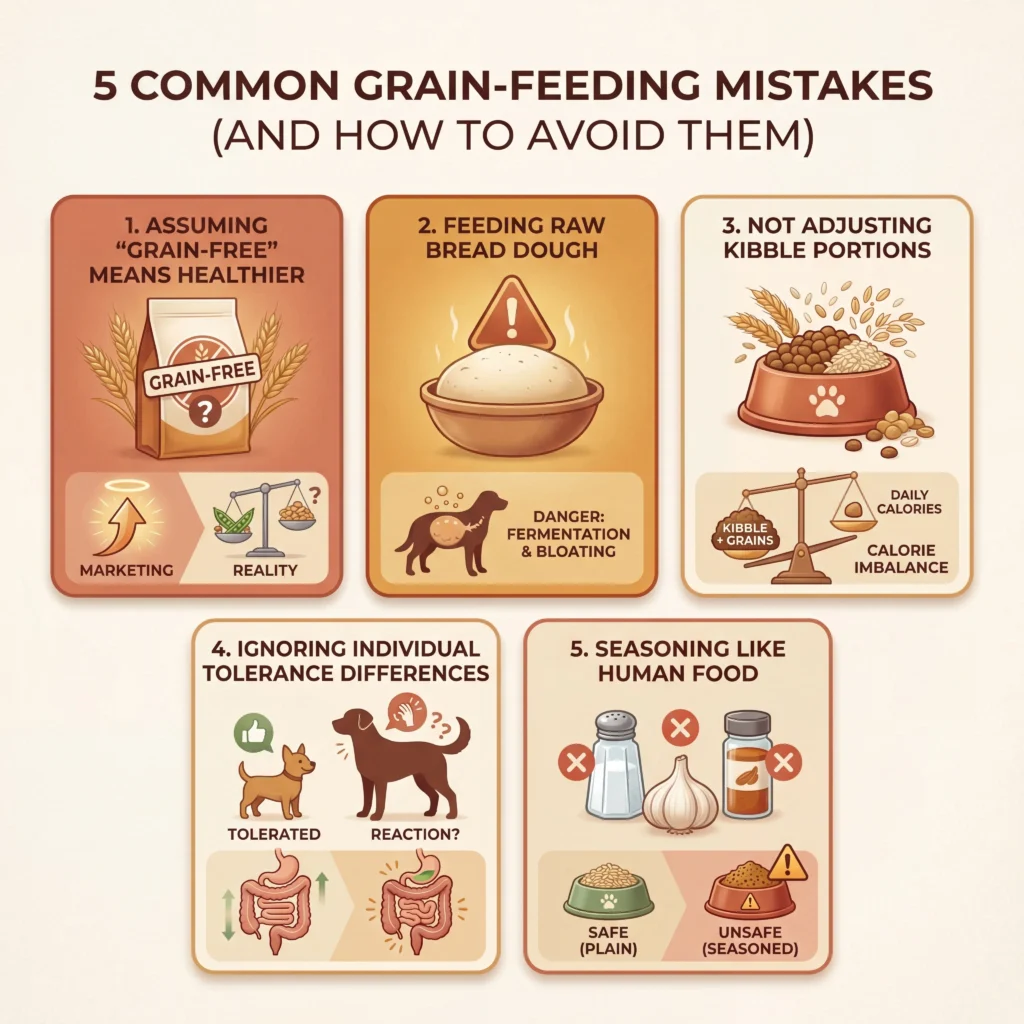
Mistake #1: Assuming “grain-free” means healthier
Why it happens: Marketing has spent years positioning grains as problematic, and grain-free products often cost more (which consumers associate with higher quality). The label claim sounds like an upgrade.
The fix: Evaluate the entire ingredient panel, not just what’s absent. Check what replaced the grains. If peas, lentils, or potatoes dominate the first five ingredients, you’ve traded one carbohydrate source for another, not necessarily improved the nutritional profile.
I made this assumption myself when I switched my dogs to grain-free without checking what they’d actually be eating instead.
Mistake #2: Feeding raw bread dough
Why it happens: The dough looks harmless, and some people don’t realize it’s different from baked bread. Dogs can grab dough rising on the counter before you catch them.
The fix: The warm, moist environment of a dog’s stomach is ideal for yeast fermentation. This produces ethanol (alcohol poisoning risk) and carbon dioxide (dangerous stomach bloating). Baked bread is generally fine in small amounts; raw dough is an emergency. Keep rising dough out of reach, period.
Mistake #3: Adding grains without adjusting kibble portions
Why it happens: A “little” rice or oatmeal feels insignificant compared to a full meal. But calories add up, especially in smaller dogs.
The fix: Apply the 90/10 rule consistently. If you’re adding grains to meals regularly, reduce the kibble amount proportionally. A quarter cup of cooked rice adds roughly 50 calories. For a 20-pound dog eating 400 calories a day, that “small” addition is 12% of their daily intake.
The fix was simple once I tracked the numbers in my spreadsheet.
Mistake #4: Ignoring individual tolerance differences
Why it happens: Lists of “safe” foods create the impression that if a food is generally safe, it’s safe for your specific dog. Individual tolerance varies significantly.
The fix: Introduce new grains one at a time, in small amounts, and watch for reactions over 48-72 hours. Digestive upset, itching, ear inflammation, or changes in stool quality all signal potential intolerance. What works for one dog may not work for another, even in the same household.
Mistake #5: Seasoning grains the same way you’d season your own food
Why it happens: It’s natural to prepare food for your dog the same way you’d prepare it for yourself. Salt, butter, garlic, and onion make grains taste better to humans.
The fix: Dogs don’t need seasoning, and several common seasonings are actively harmful. Garlic and onion are toxic. Butter adds unnecessary fat. Salt in excess causes problems. Nutmeg is dangerous. Anything containing xylitol can be fatal. Plain preparation is the only safe preparation. If plain grains seem boring to you, remember: your dog’s taste preferences aren’t yours.
Frequently Asked Questions
Q: What seeds and grains are good for dogs?
A: The safest grains for most dogs are cooked white rice, brown rice (for dogs without sensitive stomachs), oats, quinoa, and barley. For seeds, chia seeds (soaked), ground flaxseeds, pumpkin seeds (shelled), and sunflower seeds (shelled and unsalted) all offer nutritional benefits in moderation. The key is proper preparation: cook grains thoroughly, grind or soak seeds for better digestibility, and skip all seasonings.
Q: What grains should dogs not eat?
A: No grain is toxic to dogs the way chocolate or grapes are. However, wheat and corn are more likely to trigger allergic reactions than other grains. Raw grains of any type are hard to digest. The bigger concerns are preparation-related: raw bread dough (fermenting yeast creates alcohol and dangerous bloating), seasoned grains (garlic, onion, excessive salt), and processed grain products with artificial sweeteners (xylitol is deadly). If your dog has food sensitivities, work with your vet to identify specific triggers through an elimination diet.
Q: What is the 90/10 rule for dogs?
A: The 90/10 rule means 90% of your dog’s daily calories should come from nutritionally complete dog food, while only 10% should come from treats, table scraps, or additions like grains and seeds. This ensures your dog gets balanced nutrition while allowing some variety. For a 50-pound dog eating about 1,000 calories daily, that 10% is only 100 calories: roughly a quarter cup of cooked rice.
Q: What seeds can dogs eat daily?
A: Ground flaxseed and soaked chia seeds are the safest options for daily addition in small amounts. Dogs under 50 pounds can have about a quarter teaspoon of ground flaxseed daily; larger dogs can have up to a tablespoon. For chia, a quarter teaspoon per 10 pounds of body weight is a reasonable guideline. Pumpkin and sunflower seeds are better as occasional additions due to their higher fat and calorie content.
Q: Can dogs eat bread safely?
A: Plain baked bread in small amounts is generally safe for most dogs. The critical distinction is between baked bread (usually fine in moderation) and raw dough (dangerous because yeast continues fermenting in the stomach, producing alcohol and gas). Also watch for added ingredients: raisins, xylitol, garlic, and excessive salt all make bread unsafe. For the complete breakdown, see the detailed guide on bread safety for dogs.
Q: Is the grain-free dog food controversy still ongoing?
A: As of the publication date of this article (March 2026), the FDA’s investigation into potential links between grain-free diets and dilated cardiomyopathy (DCM) in dogs had not reached a final conclusion. By November 2022, 1,382 DCM cases had been reported, with more than 90% involving grain-free diets. However, the FDA has not established a definitive causal link or recommended that all dogs avoid grain-free food. For the most current status, check the FDA’s official DCM investigation page. The data suggests ongoing monitoring and veterinary consultation rather than panic-driven diet switches.
Your Next Steps
The grains, legumes, and seeds your dog can safely eat depend on preparation, portion control, and your individual dog’s tolerance. Most dogs do fine with properly cooked whole grains like rice and oats, plain legumes in moderation, and small amounts of beneficial seeds like chia and flax.
Three things to do now:
- Check your current dog food’s ingredient panel. Look at the first five ingredients. Are grains present? If grain-free, what replaced them? This baseline helps you make informed decisions about any additions or changes.
- Start simple if you’re adding grains. Plain white rice is the safest starting point for most dogs. Introduce one new food at a time and watch for reactions over 48-72 hours before adding anything else.
- Keep the 90/10 ratio in mind. Whatever you add should fit within the 10% treat allowance, which means adjusting kibble portions accordingly.
For specific questions about any grain or seed your dog encountered, the in-depth guides linked throughout this page cover the details that matter. Read the ingredient panel before you read the reviews. Your dog’s response to the food matters more than the brand’s claims about it.
Remember: When in doubt about your dog’s diet, especially if your dog has existing health conditions, consult your veterinarian. This guide reflects personal research and experience, not professional veterinary advice.
— Liora Kittredge
About the Author
Liora Kittredge — Dog Nutrition & Food Guide Writer
Liora writes about dog food ingredients, grain safety, and food selection for FetchOrSkip. Her interest in canine nutrition started when one of her dogs developed a food allergy and the elimination diet that followed taught her that the ingredient label mattered more than the brand. She spent months comparing commercial dog food formulations, tracking how her dogs responded to different foods, and building a system that compared ingredients, costs per serving, and real-world results. When a grain-free switch she tried backfired, she learned firsthand that trend-based feeding decisions can create new problems.
Liora writes for dog owners who want to understand what’s in their dog’s food before they buy it. Her guides compare formulas by the data that matters and cut through the marketing language that makes ingredient panels hard to read. She has a background in nutrition sciences and is based in the Pacific Northwest.