
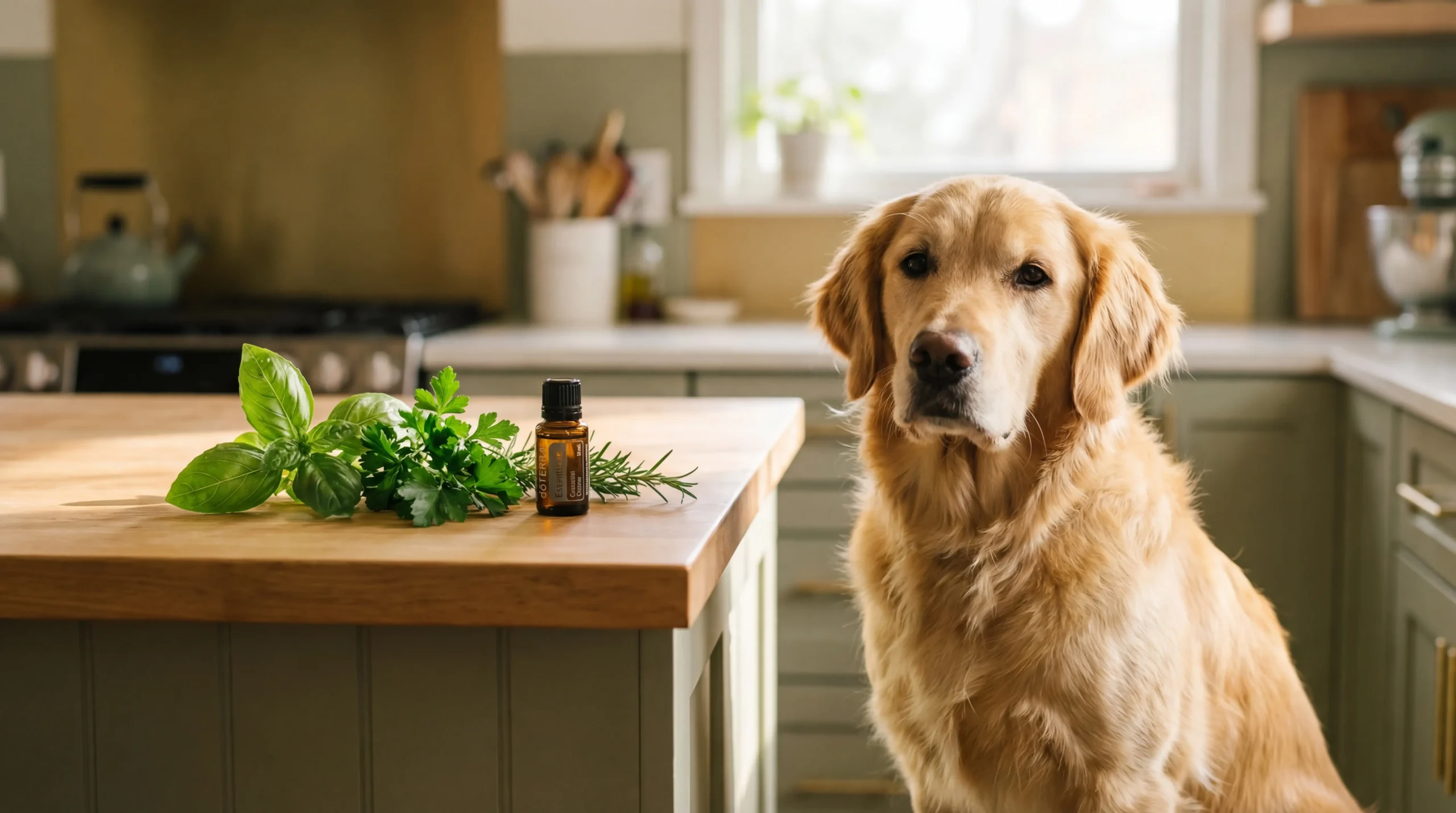
By Oren Basurto | Dog Health & Safety Writer | Published: March 13, 2026 | 14 min read
Quick Answer: Herbs, oils and medication safe for dogs depend on the specific substance and dose. Safe herbs include basil (1-2 fresh leaves for small dogs, 3-4 for large), parsley, cilantro, thyme, and rosemary in small amounts. Safe essential oils are limited: lavender and chamomile heavily diluted (less than 0.5% in carrier oil) may work for some dogs, but tea tree, peppermint, eucalyptus, and wintergreen are toxic at any concentration. For over-the-counter medications, diphenhydramine (Benadryl tablets, 1 mg per pound), cetirizine (Zyrtec, plain formula only), and famotidine (Pepcid) may be appropriate with veterinary guidance. Acetaminophen (Tylenol) and ibuprofen are never safe for dogs.
Why This Guide Is Different
Most herb and medication guides cover one topic. This is the only comprehensive resource covering all three categories together: herbs, essential oils, and OTC medications. Every section includes the specific compounds involved, dose-dependent thresholds where they exist, and clear guidance on when to skip home treatment entirely. I wrote this for the dog owner standing in their kitchen wondering if they need to call the vet or poison control right now.
Most of what you’ll find online about herbs, oils, and medications for dogs is incomplete. One site tells you peppermint oil calms anxious dogs. Another warns it can cause liver damage. A forum recommends Benadryl for allergies, but nobody mentions that the liquid version often contains xylitol, which is toxic to dogs at any dose.
I learned this the hard way. My large-breed dog developed digestive problems after I followed a raw diet recommended by an online community. The recipe had no nutritional balancing. When his liver enzymes came back elevated, my vet pointed out what the forum never mentioned: species-specific metabolism matters. Dogs process compounds differently than humans do. That realization changed how I approach every food safety question.
This guide covers all three categories in one place. You’ll find which herbs you can safely share with your dog and in what amounts, which essential oils pose real risks and which don’t, and the OTC medications that might help versus those that can cause serious harm. Every section includes specific compounds, dose-dependent thresholds, and clear guidance on when to skip the home remedy and call your vet instead.
Table of Contents
Safe Herbs and Spices for Dogs
The question isn’t whether dogs can eat herbs. It’s which ones, in what form, and how much. Most culinary herbs are safe in small quantities. The problems start when owners treat “safe” as a green light for unlimited use.
What is an herb toxicity threshold? The amount of a substance required to cause adverse effects in a specific species. For dogs, these thresholds are often lower than for humans due to differences in liver enzyme activity and body weight ratios.
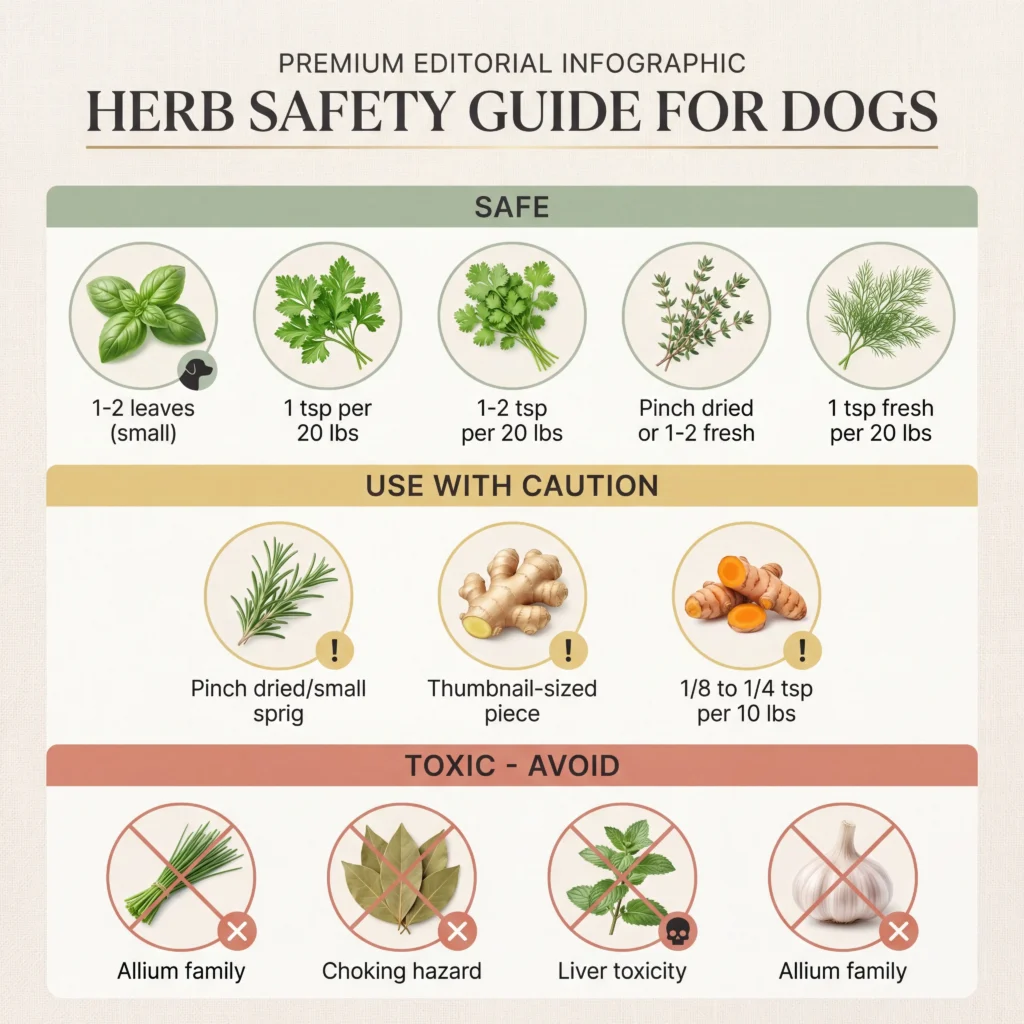
Here’s what the data actually shows for common herbs:
Herb Safety Quick Reference
| Herb | Status | Serving Size | Notes |
|---|---|---|---|
| Basil | Safe | 1-2 leaves (small dog), 3-4 leaves (large dog) | Antioxidant properties; too much may cause digestive upset |
| Parsley (curly) | Safe | 1 teaspoon chopped per 20 lbs body weight | Freshens breath; avoid for dogs with kidney issues due to oxalates |
| Cilantro | Safe | 1-2 teaspoons chopped per 20 lbs | Vitamins A, C, K; some dogs dislike the taste |
| Thyme | Safe | Pinch of dried or 1-2 fresh leaves | Antimicrobial; may irritate stomach if overused |
| Rosemary | Safe with caution | Pinch of dried or small sprig | See seizure note below; avoid rosemary essential oil |
| Dill | Safe | 1 teaspoon fresh per 20 lbs | Helps with gas and mild nausea |
| Ginger | Safe | Thumbnail-sized piece for medium dog | Settles upset stomach; fresh is potent |
| Turmeric | Safe | 1/8 to 1/4 teaspoon per 10 lbs | Anti-inflammatory; needs fat for absorption |
| Spanish thyme | Toxic | None | Causes vomiting, diarrhea, tremors |
| Chives | Toxic | None | Allium family; causes hemolytic anemia |
| Bay leaves | Toxic | None | Choking hazard plus digestive irritation |
| Pennyroyal mint | Toxic | None | Liver toxicity |
Safe Herbs in Detail:
Basil contains antioxidants and offers mild anti-inflammatory properties. One to two fresh leaves mixed into food won’t cause issues for most small dogs; larger dogs can handle three to four leaves. Cilantro provides vitamins A, C, and K; some dogs dislike the taste, which solves the portion control problem naturally. Parsley (curly variety) freshens breath and adds vitamins. Stick to about one teaspoon of chopped parsley per 20 pounds of body weight.
Dogs with kidney issues should avoid it due to oxalate content. Thyme has antimicrobial properties but can irritate the stomach if overused; a pinch of dried thyme or one to two fresh leaves is plenty. Rosemary is safe in moderation, though the seizure question deserves its own discussion. Dill helps with gas and mild nausea; one teaspoon of fresh dill per 20 pounds works well.
Ginger and Turmeric:
Ginger settles upset stomachs and may help with motion sickness. Fresh ginger is potent; a thumbnail-sized piece is plenty for a medium dog. Turmeric offers anti-inflammatory benefits, but absorption requires fat and black pepper to enhance bioavailability. Start with 1/8 to 1/4 teaspoon per 10 pounds of body weight, mixed with a small amount of coconut oil. Most dogs tolerate it well; some develop loose stools.
Sable covers the fruit and vegetable questions in her guides. For herbs and spices, different rules apply: small amounts, introduced gradually, with attention to your individual dog’s response.
Toxic Herbs to Avoid Completely:
Spanish thyme causes vomiting, diarrhea, and tremors. Chives belong to the allium family and can trigger hemolytic anemia. Bay leaves are a choking hazard and contain compounds that irritate the digestive tract. Pennyroyal mint is toxic to the liver.
The compound responsible in most toxic herbs is either a volatile oil concentrated enough to damage tissue or a specific chemical that interferes with red blood cell function. The ASPCA maintains a searchable database of toxic and non-toxic plants if you encounter an herb not listed here.
Essential Oils and Dogs: What Is Actually Safe
This is where most online lists fall apart. Essential oils aren’t herbs. They’re highly concentrated plant extracts, and the concentration changes everything.
Why People Use Essential Oils Around Dogs
Before explaining the risks, it’s worth understanding why this question comes up. Dog owners reach for essential oils hoping to calm anxiety during thunderstorms, repel fleas naturally, soothe skin irritations, or freshen up a smelly coat. Some of these uses have limited merit under very specific conditions. Most don’t.
A fresh rosemary sprig on your counter poses minimal risk. Rosemary essential oil applied undiluted to your dog’s skin can cause chemical burns. Diffused at low concentration in a well-ventilated room with an exit route for your dog? Probably fine. The form matters as much as the substance.
Oils That May Be Safe (With Strict Conditions)
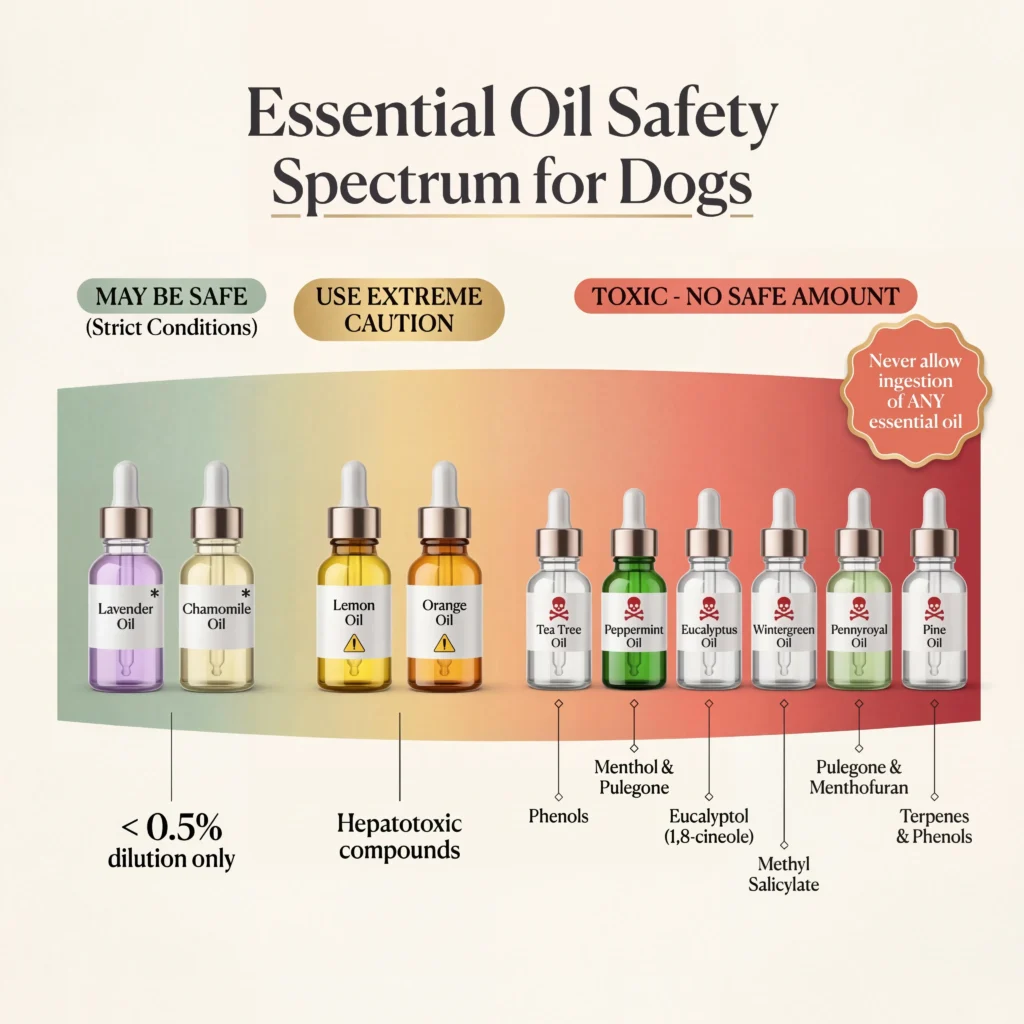
Lavender and chamomile are the two most commonly recommended, and they’re the only ones I’d consider using around my own dog. Even then, the conditions matter:
For diffusing: Use a passive reed diffuser rather than an ultrasonic nebulizer. Reed diffusers release lower concentrations into the air. Keep the diffuser in a room your dog can leave freely. Never use in small, enclosed spaces. If your dog coughs, sneezes, or tries to leave the area, stop immediately.
For topical use (rare circumstances only): Dilute to less than 0.5% concentration. That’s approximately one drop of essential oil per tablespoon of carrier oil (coconut, olive, or jojoba). Never apply to broken skin. Never apply near the face, ears, or genitals. Test on a small area first and monitor for 24 hours. Most veterinary dermatologists recommend against topical essential oil use entirely.
Never: Allow ingestion of any essential oil. Dogs lack the liver enzymes to process these concentrated compounds safely.
Oils That Are Toxic (No Safe Amount)
Peppermint oil contains menthol and pulegone, both of which can cause gastrointestinal upset, liver damage, and central nervous system depression. Eucalyptus contains eucalyptol (1,8-cineole), which causes drooling, vomiting, and in severe cases, seizures. Tea tree oil is particularly dangerous; even small topical exposures have caused tremors and lethargy. Wintergreen contains methyl salicylate, essentially concentrated aspirin, which dogs metabolize poorly.
Citrus oils (lemon, orange, lime) contain limonene and linalool. Both compounds are hepatotoxic in dogs. Pine oil irritates mucous membranes and can cause kidney damage with repeated exposure.
Diffuser Safety
Dogs should always have an exit route from rooms with active essential oil diffusers. Passive reed diffusers release lower concentrations than ultrasonic or nebulizing diffusers and pose less risk. If your dog shows any respiratory symptoms, drooling, or behavioral changes, stop using the diffuser entirely.
Don’t rely on your dog’s willingness to stay in the room as a safety signal. Dogs don’t always leave harmful environments until symptoms are already developing.
Over-the-Counter Medications You Might Consider
If your dog ate this, the first question is how much. That question applies to OTC medications more than almost anything else. The dose makes the poison, and with pharmaceuticals, the margin between therapeutic and toxic can be narrow.
What is species-specific metabolism? Dogs lack certain liver enzymes that humans use to break down common drugs. Acetaminophen, for example, requires glucuronidation for safe processing. Dogs have limited capacity for this pathway, which is why Tylenol causes liver failure in dogs at doses humans would tolerate.
Antihistamines (May Be Appropriate With Vet Guidance)
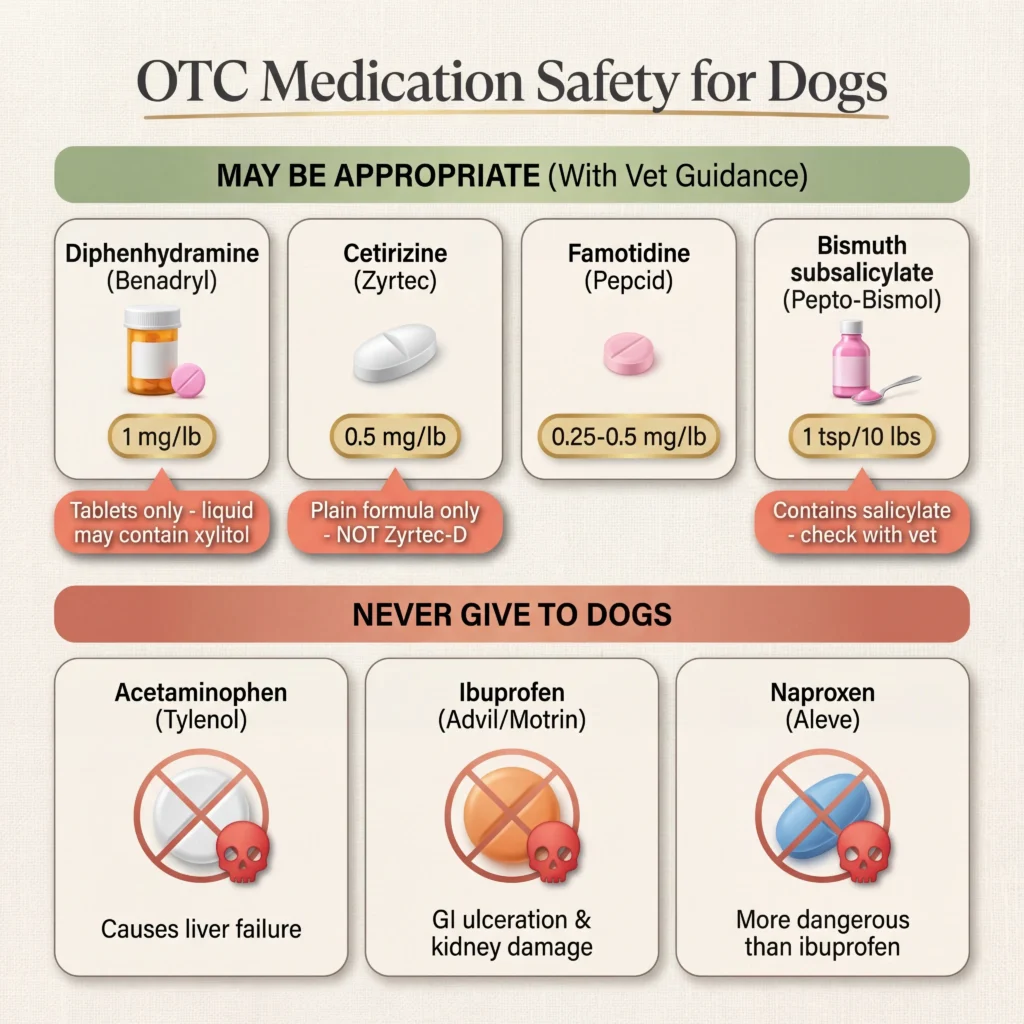
Diphenhydramine (Benadryl) is commonly used for allergic reactions, itching, and mild sedation. The typical dosing range is 1 mg per pound of body weight, two to three times daily. A 50-pound dog would receive 50 mg (two standard 25 mg tablets).
Critical warning: Liquid Benadryl formulations often contain xylitol. I almost made this mistake myself before reading the inactive ingredients on a children’s formula I had at home. Tablet form only. Always confirm the product contains diphenhydramine as the ONLY active ingredient.
Cetirizine (Zyrtec) works for seasonal allergies with less sedation than Benadryl. Typical dosing is 0.5 mg per pound once daily. Plain cetirizine only. Zyrtec-D contains pseudoephedrine, which causes rapid heart rate, seizures, and can be fatal in dogs. Check the box carefully.
Loratadine (Claritin) is another option, though response varies more than with diphenhydramine.
GI Medications (Situational Use)
Bismuth subsalicylate (Pepto-Bismol) can help with mild diarrhea, but here’s the part most safe/toxic lists leave out: it contains salicylate, which is related to aspirin. Dogs on NSAIDs, dogs with bleeding disorders, and pregnant dogs should never receive Pepto-Bismol. The salicylate load can cause problems your vet needs to know about. Typical dosing is 1 teaspoon per 10 pounds, but confirm with your vet first.
Famotidine (Pepcid) reduces stomach acid and may help dogs with acid reflux or minor GI upset. Typical dose is 0.25 to 0.5 mg per pound once or twice daily. Loperamide (Imodium) sometimes helps with diarrhea, but certain breeds (Collies and related breeds with MDR1 gene mutations) can have severe reactions.
Topical OTC Treatments
Neosporin (triple antibiotic ointment) can be applied to minor cuts and scrapes. Use the plain formula without pain relievers (no Neosporin + Pain). Apply a thin layer and cover the area or use an e-collar to prevent licking.
Hydrocortisone cream (0.5% or 1%) may help with localized itching from insect bites or minor skin irritation. Use sparingly and prevent licking. Not for long-term use.
Saline eye drops (artificial tears) can flush debris from eyes. Use only plain saline with no medications added.
Never Give These OTC Medications
Acetaminophen (Tylenol) causes methemoglobinemia and liver necrosis in dogs. There is no safe dose. Ibuprofen (Advil, Motrin) causes GI ulceration and kidney damage. Naproxen (Aleve) is even more dangerous than ibuprofen for dogs. Aspirin is occasionally used under veterinary supervision, but over-the-counter use without guidance risks GI bleeding.
Your vet will want to know this: the time since ingestion, the exact product name (active and inactive ingredients), your dog’s weight, and any symptoms already present. This information determines whether to induce vomiting, administer activated charcoal, or proceed to emergency care.
Home Remedies for Common Dog Issues
Home remedies work best for mild, self-limiting problems. Severe symptoms, blood in stool, difficulty breathing, or any neurological signs skip the home remedy phase entirely.
For Upset Stomach
The bland diet protocol remains the gold standard. Most veterinarians recommend a 12 to 24-hour fast (water always available), followed by small meals of boiled chicken and white rice. The ratio should favor rice (about 2:1 rice to chicken). Introduce regular food gradually over several days.
Pumpkin puree (plain, not pie filling) adds fiber that can help with both diarrhea and constipation. Start with one tablespoon for small dogs, two for medium, three for large.
Chicken broth encourages hydration in dogs who won’t drink water after illness. Use low-sodium, onion-free broth or make your own.
Probiotics for GI Recovery:
Probiotic supplements formulated for dogs can help restore gut flora during and after digestive upset. Look for products containing Lactobacillus acidophilus, Bifidobacterium animalis, or Enterococcus faecium. Dosing varies by product; follow package instructions or ask your vet. Some veterinarians recommend continuing probiotics for several days after symptoms resolve.
For Itchy Skin
Oatmeal baths soothe irritated skin. Grind plain oatmeal into powder, mix with lukewarm water, and let your dog soak for ten minutes. Rinse thoroughly. Coconut oil applied topically can help dry, flaky skin, though some dogs react to it. Test on a small area first.
For Minor Wounds
Clean with saline solution (not hydrogen peroxide, which damages healing tissue). Apply a thin layer of plain Neosporin and cover to prevent licking. For anything deeper than a superficial scrape, or any wound that’s still bleeding after 10 minutes of pressure, see your vet.
Two different risks, same food: what works as a remedy in one situation can cause harm in another. Coconut oil soothes dry skin but causes pancreatitis in dogs who ingest large amounts. Context matters.
Dangerous Substances to Keep Away From Dogs
Some substances are dose-dependent toxins. Others are dangerous at any amount. This section consolidates the worst offenders across herbs, oils, and medications.
Toxic Herbs and Plants
Garlic and onions (all allium family members) cause oxidative damage to red blood cells. Small amounts over time are as dangerous as one large dose. The toxic threshold is approximately 0.5% of body weight, but some dogs react to less.
Sago palm causes liver failure; even a few seeds can be fatal. Foxglove contains cardiac glycosides that affect heart rhythm. Oleander is toxic in every part of the plant. Lily of the valley causes severe cardiac arrhythmias.
Toxic Essential Oils
Tea tree, peppermint, eucalyptus, wintergreen, pennyroyal, pine, and citrus oils are all dangerous. The toxic compound varies: phenols in tea tree, methyl salicylate in wintergreen, terpenes in citrus. All cause some combination of GI distress, neurological symptoms, and organ damage.
Dangerous Medications
Acetaminophen, ibuprofen, and naproxen top the list. Also dangerous: human antidepressants (especially SSRIs like fluoxetine and sertraline), ADHD medications (amphetamines are highly toxic to dogs), sleep aids containing diphenhydramine plus other active ingredients, and any medication containing xylitol as a sweetener.
Household Products Often Overlooked
Xylitol appears in sugar-free gum, some peanut butters, certain medications, toothpaste, and baked goods. Even small amounts trigger rapid insulin release, causing dangerous hypoglycemia within 10 to 60 minutes. Larger amounts cause liver failure within 24 to 72 hours. Check ingredient labels for xylitol, birch sugar, or wood sugar.
Antifreeze (ethylene glycol) tastes sweet to dogs, which makes accidental ingestion common. Initial symptoms appear within 30 minutes to 12 hours: vomiting, excessive thirst, excessive urination, and uncoordinated movement (appearing “drunk”). The dog may seem to improve temporarily, but kidney failure follows within 24 to 72 hours without treatment. Antifreeze poisoning requires immediate veterinary intervention; the antidote (fomepizole or ethanol) works best when given within the first few hours. Propylene glycol antifreeze is less toxic but still not safe.
Rat poison comes in many formulations, each with different mechanisms and antidotes. Anticoagulant rodenticides (most common) cause internal bleeding; symptoms may not appear for 3 to 5 days. Bromethalin causes brain swelling. Cholecalciferol causes kidney failure. If your dog ate rat poison, bring the packaging to the vet; the specific product determines treatment.
Chocolate toxicity depends on type and amount. Baking chocolate and dark chocolate contain the highest concentrations of theobromine (the toxic compound). Milk chocolate is less concentrated but still dangerous in quantity. White chocolate contains almost no theobromine.
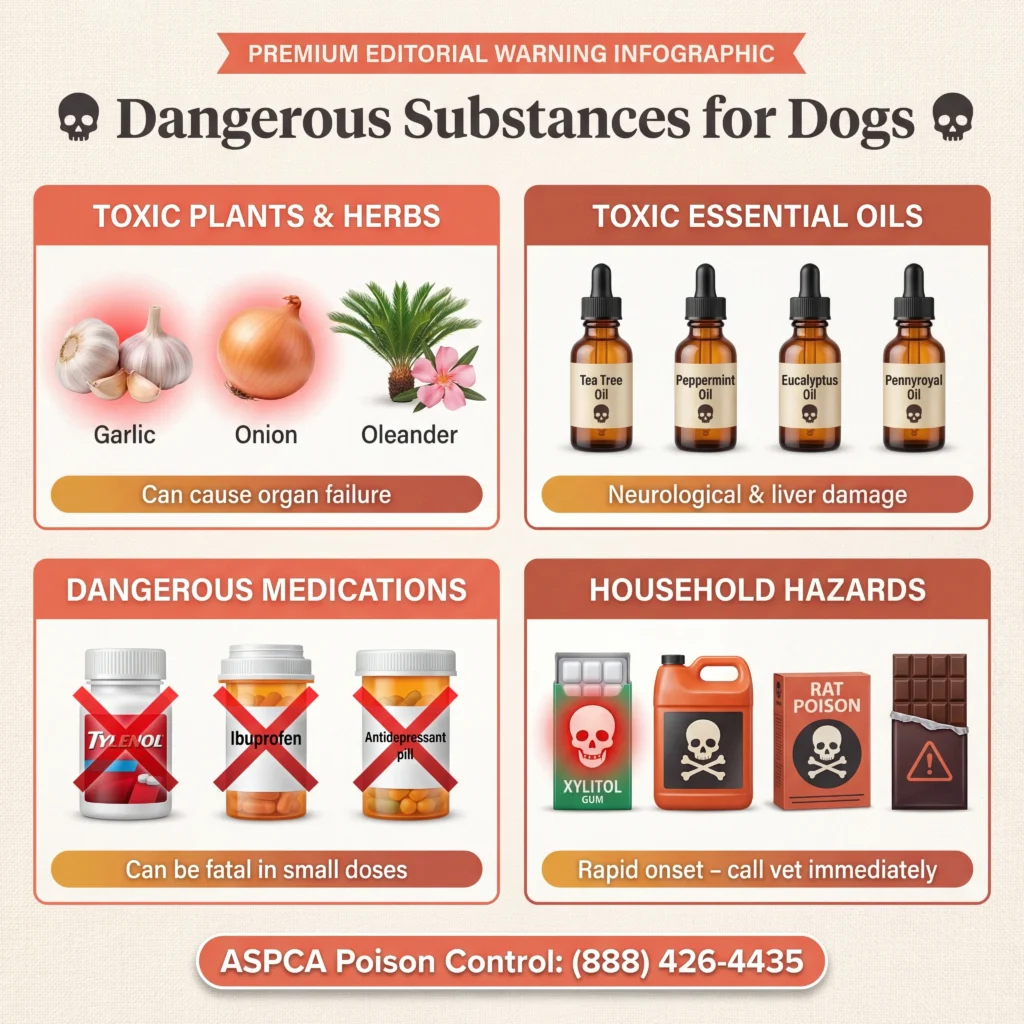
If your dog ingested something from this list, contact the ASPCA Animal Poison Control Center: (888) 426-4435. They charge a consultation fee but provide species-specific toxicology guidance that can save your dog’s life.
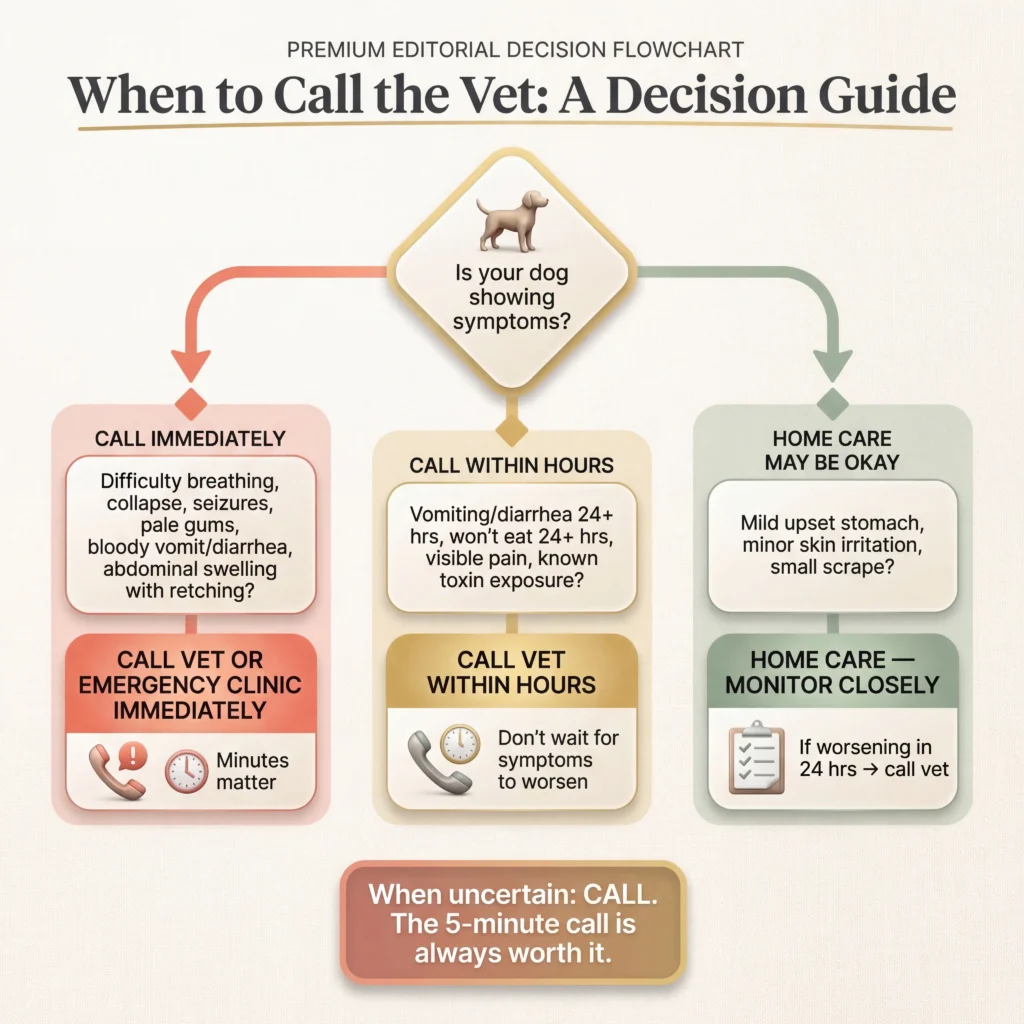
When to Call the Vet Instead of Treating at Home
Pain relief questions often prompt home remedy searches. But pain in dogs is difficult to assess, and the wrong intervention can mask symptoms your vet needs to see.
Call Immediately If You See
Difficulty breathing or rapid, labored breathing (indicates respiratory distress, allergic reaction, or heart problems).
Pale or blue gums (check the color of the tissue above the teeth; this indicates oxygen deprivation or blood loss).
Collapse, extreme lethargy, or inability to stand (could indicate internal bleeding, poisoning, or cardiac event).
Repeated vomiting (more than twice in an hour, or any vomit containing blood).
Bloody diarrhea (indicates intestinal damage or serious infection).
Seizures or tremors (possible toxin exposure or neurological emergency).
Abdominal swelling with unproductive retching (possible bloat/GDV; this is a surgical emergency with a survival window measured in hours).
Call Within Hours If You See
Vomiting or diarrhea lasting more than 24 hours. Refusal to eat for more than one day. Visible pain when moving or being touched. Excessive drooling without obvious cause. Any known or suspected toxin ingestion, even if symptoms haven’t appeared.
Breeds with respiratory issues (Bulldogs, Pugs, French Bulldogs, Boston Terriers) may react more strongly to medications that cause sedation or affect breathing. Mention your dog’s breed when you call.
Call Your Vet Before The Symptoms Start
If your dog ate something potentially toxic, don’t wait to see what happens. Call your vet before the symptoms start. Early intervention changes outcomes. Inducing vomiting works best within one to two hours of ingestion. Activated charcoal binds toxins in the gut but only if given early enough. Waiting until symptoms appear often means the toxin has already absorbed.
Your vet’s office can tell you whether the situation is urgent, whether home monitoring is appropriate, or whether you need emergency care. The five-minute phone call is always worth it.
What I’ve Learned — Oren’s Take
“The forums that recommended a raw diet for my dog never mentioned calcium ratios or organ meat limits. When his bloodwork came back with elevated liver enzymes, I started questioning every piece of crowd-sourced advice I’d ever followed.
Now I check the actual toxicology data. I look for the compound responsible, the dose-dependent threshold, and the species-specific metabolism differences that make dogs react differently than humans. Most of the time, the answer isn’t ‘safe’ or ‘toxic.’ It’s ‘safe at this dose, in this form, for dogs without these conditions.’
The hardest part of writing about dog safety is watching people search for a green light to give their dog something questionable. If you’re here because your dog already ate something, call your vet or poison control first. Then read the article. The science will still be here after you’ve confirmed your dog is okay.”
— Oren Basurto, Dog Health & Safety Writer
Frequently Asked Questions
Q: What medicinal herbs are safe for dogs?
A: Basil, parsley, cilantro, thyme, rosemary, and dill are safe in small amounts (see dosing table above). Ginger and turmeric offer medicinal benefits but require careful dosing. Chamomile herb (not essential oil) can calm mild anxiety. Avoid any herb from the allium family, pennyroyal, or bay leaves.
Q: What essential oils cannot be used around dogs?
A: Tea tree, peppermint, eucalyptus, wintergreen, pennyroyal, pine, and citrus oils (lemon, orange, lime) are toxic. These contain compounds dogs cannot metabolize safely. Even diffused exposure causes problems in some dogs. Stick to lavender or chamomile if you must use oils, and only with proper dilution and ventilation.
Q: Can I give my dog human Benadryl?
A: Tablet-form diphenhydramine (the active ingredient) is often appropriate at 1 mg per pound of body weight. Avoid liquid formulations, which frequently contain xylitol. Confirm with your vet before the first dose, especially if your dog has heart conditions, glaucoma, or is pregnant.
Q: How do I know if my dog needs a vet or just a home remedy?
A: Home remedies suit mild, self-limiting issues: minor stomach upset lasting less than 24 hours, dry skin, small scrapes. Any symptom that’s severe (difficulty breathing, collapse), bloody (vomit or stool), or worsening over 24 hours requires veterinary evaluation. When uncertain, call your vet.
Q: Is coconut oil safe for dogs?
A: Topically, yes. Applied to dry skin or paw pads, coconut oil moisturizes without toxicity risk. Ingested in large amounts, it causes GI upset and potentially pancreatitis due to high fat content. A small amount (1/4 teaspoon per 10 pounds) in food is generally fine; don’t let your dog eat a whole jar.
Q: What should I do if my dog ate Tylenol?
A: Contact your veterinarian or ASPCA Poison Control (888-426-4435) immediately. Acetaminophen causes liver damage and a condition called methemoglobinemia in dogs. Treatment works best if started within hours of ingestion. Don’t induce vomiting without professional guidance.
Q: Are herbal supplements made for humans safe for dogs?
A: No. Human supplements contain doses calculated for human body weight and metabolism. They may also include xylitol, artificial sweeteners, or inactive ingredients toxic to dogs. Use only supplements formulated specifically for dogs, and verify the ingredient list.
Q: What about CBD oil for dogs?
A: CBD oil is marketed widely for dogs, with claims about anxiety, pain, and seizure management. Research is limited but growing. If you’re considering CBD, choose products specifically formulated for pets, verify third-party testing, and consult your vet first. Quality and concentration vary dramatically between brands.
Explore Dog Medication Safety In-Depth
Each guide below tackles a question that requires more than a quick answer. I’ve written them for the dog owner who needs exact dosing, breed-specific warnings, and what actually happens when things go wrong.
Pain and Discomfort
What Can I Give My Dog for Pain? — The complete breakdown of why most human painkillers fail dogs, which vet-prescribed options actually work, and the home comfort measures that help without risk.
Antihistamines and Allergy Relief
Can I Give My Dog Benadryl? — The weight-based dosing table every dog owner screenshots, plus the hidden xylitol danger in liquid formulas that most guides forget to mention.
How Much Zyrtec Can I Give My Dog? — Why reaching for Zyrtec-D instead of plain Zyrtec could put your dog in the emergency room, and how to get dosing right.
GI Medications and Remedies
Can I Give My Dog Pepto Bismol? — The salicylate connection that changes everything if your dog takes other medications. This one surprised me.
What Can I Give My Dog for Diarrhea? — The step-by-step bland diet protocol, when OTC meds might help, and the red flags that mean skip home treatment entirely.
Essential Oil Safety
Is Peppermint Oil Safe for Dogs? — Why the internet can’t agree on this one, and what the toxicology actually says about diffusing, topical use, and accidental ingestion.
Is Eucalyptus Safe for Dogs? — The difference between the plant and the oil, what diffuser exposure really does, and the poisoning symptoms that warrant an emergency call.
Herb and Spice Safety
Can Dogs Eat Rosemary? — Fresh versus dried, rosemary extract in commercial dog food, and the seizure concern that keeps circulating online.
Can Dogs Eat Black Pepper? — What piperine does inside your dog’s digestive system and when seasoned table scraps cross the line.
Can Dogs Have Cilantro? — Leaves versus coriander seeds, the detox claims that don’t hold up, and practical ways to add it to your dog’s diet.
Dangerous Medications
Can Dogs Have Tylenol? — The answer is always no. Here’s exactly what happens biochemically, and what to do if your dog already swallowed one.
Your Next Steps
Before you close this tab, save this number: ASPCA Poison Control (888) 426-4435. You’ll be glad you have it when you need it.
Start with the specific question that brought you here. If you’re wondering about a particular herb, oil, or medication, the Hub section above links to detailed guides on each one.
For general safety: keep a list of toxic substances somewhere accessible (on your fridge, in your phone notes). Know your dog’s weight in pounds; you’ll need it for any dosing question or poison control call.
When in doubt, call your vet. The information here helps you understand the science and make informed decisions, but it doesn’t replace professional veterinary guidance for your specific dog.
Choosing the right food when your dog has stomach issues matters too. The medication and remedy questions often connect to underlying dietary factors worth addressing.
— Oren Basurto
About the Author
Oren Basurto — Dog Health & Safety Writer
Oren Basurto writes about meat, fish, bone, herb, and medication safety for dogs at FetchOrSkip. His path into canine food safety started when he put his large-breed dog on a raw diet based on forum advice and the dog developed digestive problems and elevated liver enzymes within a month. The recipe had no nutritional balancing, and the vet visit that followed taught him more about canine nutrition than anything he’d read online. He started pulling up veterinary toxicology references whenever he encountered a food safety claim, and the gap between what forums said and what the data showed was wider than he expected.
Oren writes for dog owners who want to understand why a food is safe or dangerous, not just whether it is. He covers toxicity mechanisms, dosage thresholds, and preparation-dependent risks with the same precision he brought to his work in laboratory research. He has a biology background and is based in the Southwest.
Disclaimer: The information in this guide is based on personal research and experience managing a food-sensitive dog over several years. I am not a licensed veterinarian. For specific medical concerns, diagnosis, or treatment decisions, consult a qualified veterinarian. If your dog has ingested something potentially toxic, contact your veterinarian or the ASPCA Animal Poison Control Center (888-426-4435) immediately.