


DISCLAIMER: This article is for informational purposes only and does not constitute veterinary medical advice. Always consult your veterinarian before giving any medication to your dog. The information shared here reflects personal experience and research. Your dog’s health needs may differ. If your dog shows signs of severe pain or distress, seek emergency veterinary care immediately.
What Can I Give My Dog for Pain? Safe Options and What to Avoid
What can I give my dog for pain? If you’re asking this question, you need a real answer fast. The short version: do not give your dog ibuprofen, acetaminophen, or naproxen. These human pain relievers can cause kidney failure, liver damage, and gastrointestinal bleeding in dogs. The medications that actually help require a veterinarian’s guidance because the dosing, drug interactions, and your dog’s individual health profile all affect what’s safe.
I’ve been through this with my own large-breed dog. Joint stiffness after a rough hike, the kind where he wouldn’t put weight on his back leg for two days. My first instinct was to reach for something in the medicine cabinet. I didn’t. That decision probably saved me a much worse vet bill. What I learned from my vet and from managing my dog’s pain over the years is what this guide covers: which medications are actually safe, which ones will make things worse, and what you can do at home while you figure out next steps.
This article is part of the complete guide to herbs, oils and medication safety for dogs.
Why Human Pain Meds Are Dangerous for Dogs
Dogs metabolize drugs differently than humans do. That’s not a minor detail. A medication your body clears in a few hours can stay in your dog’s system long enough to cause organ damage. The dose makes the poison, and dogs hit toxic thresholds far faster than we do.
Here’s what you should never give your dog:
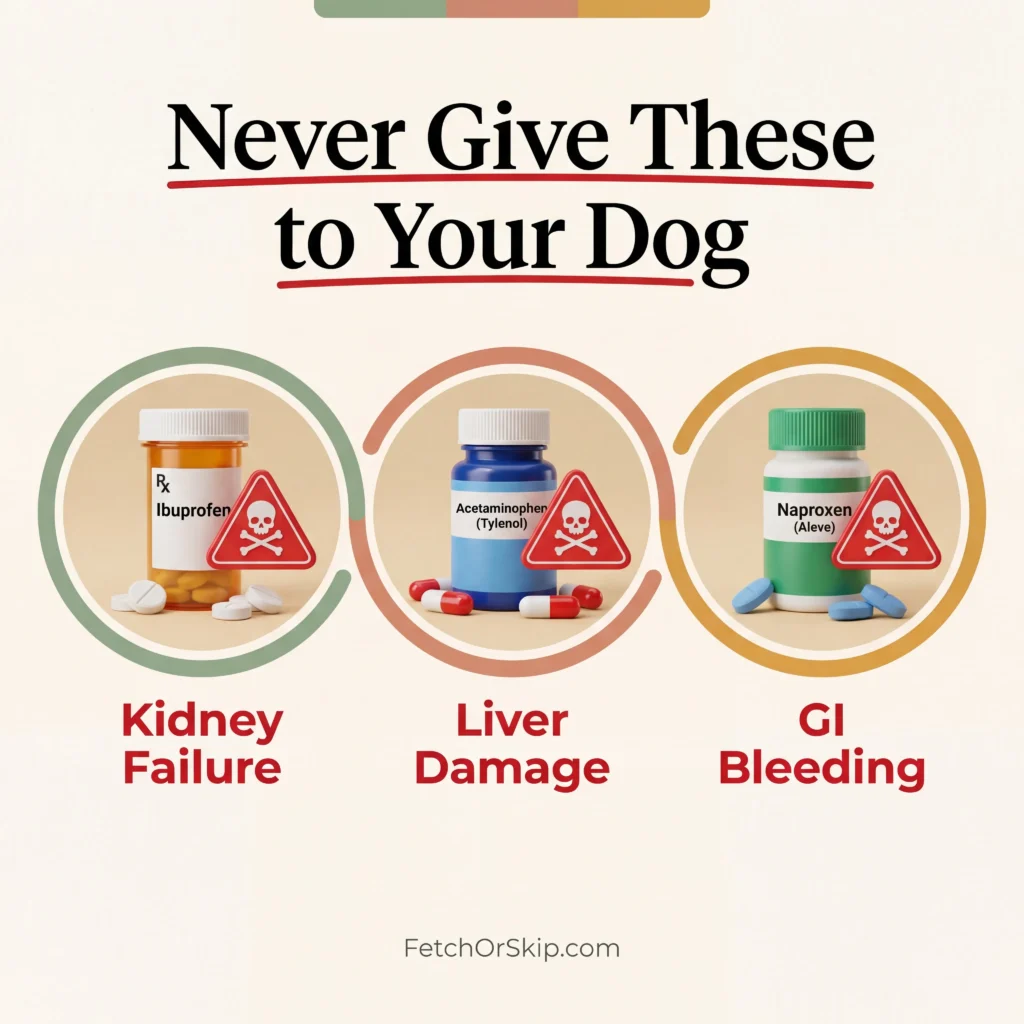
Medications to avoid completely:
- Ibuprofen (Advil, Motrin): causes stomach ulcers and kidney failure in dogs, even at low doses
- Acetaminophen (Tylenol): damages red blood cells and destroys liver tissue; cats are even more sensitive, but dogs are absolutely at risk
- Naproxen (Aleve): stays in a dog’s system far longer than in humans; the toxic threshold is dangerously low
The compound in acetaminophen that makes it toxic is the same reason it works in humans. Dogs lack the specific liver enzymes needed to break it down safely. The result is a buildup that damages red blood cells and causes methemoglobinemia, a condition where the blood can’t carry oxygen properly. If you want the full breakdown on why Tylenol specifically is a problem, I covered it in detail in the Tylenol and dogs guide.
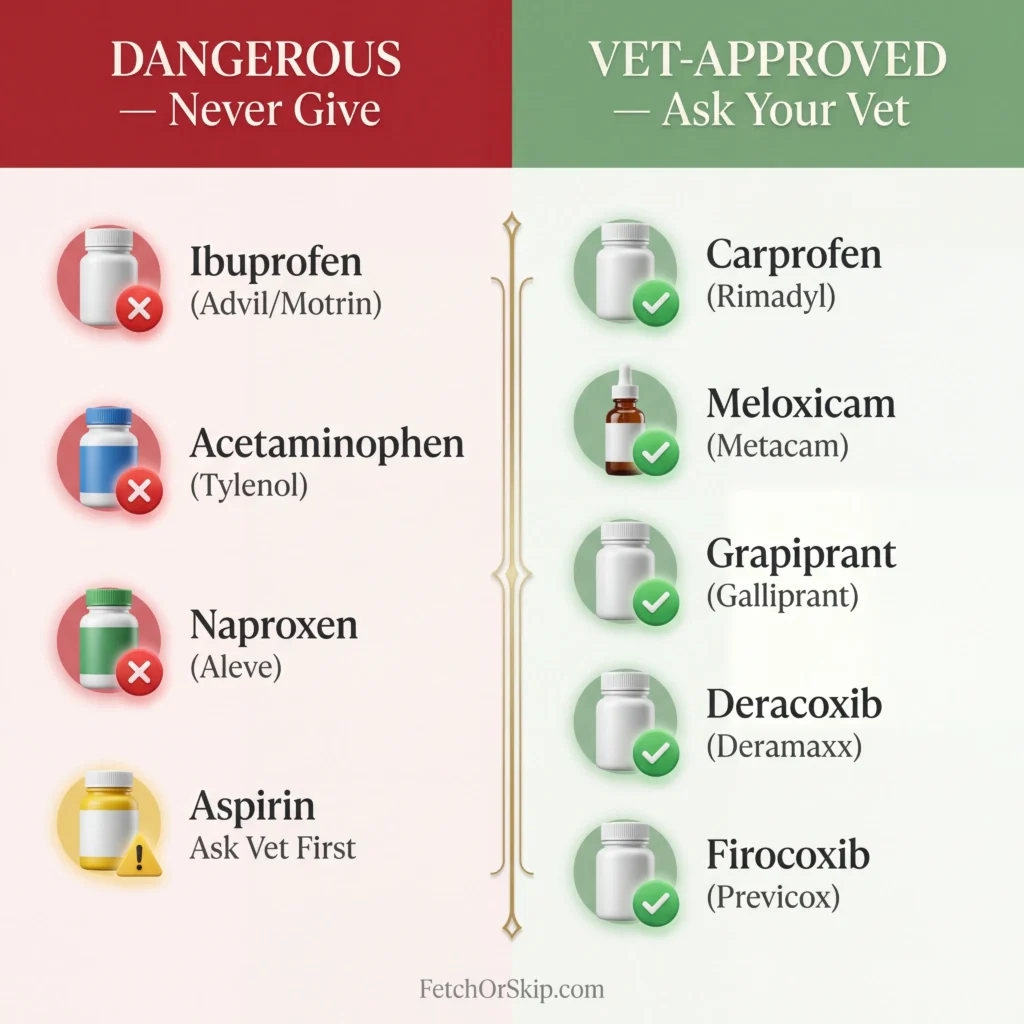
Aspirin sits in a gray zone. Some vets will recommend a specific dose for short-term use. Others won’t touch it because of gastrointestinal bleeding risk. Here’s the common misconception I see repeated online: people assume aspirin is safer because it’s “old” or “natural.” It isn’t. Aspirin inhibits platelet function in dogs just like it does in humans, and the margin between a therapeutic dose and a harmful one is narrower than most owners realize. The answer depends on your dog’s weight, kidney function, and whether they’re on any other medications. Don’t guess on this one. If you’re considering aspirin, call your vet first.
Vet-Prescribed Pain Medications
The safest pain medications for dogs are the ones formulated specifically for their biology. These require a prescription because dosing matters and because your vet needs to rule out contraindications based on your dog’s health history.
NSAIDs approved for dogs:
- Carprofen (Rimadyl, Novox): commonly prescribed for arthritis and post-surgical pain; one of the most studied options
- Meloxicam (Metacam): liquid or tablet form, once daily dosing; popular for long-term management
- Grapiprant (Galliprant): newer option that works through a different pathway; may cause fewer gastrointestinal side effects in some dogs
- Deracoxib (Deramaxx): often used after orthopedic surgery
- Firocoxib (Previcox): another option for osteoarthritis management
These drugs reduce inflammation by targeting COX enzymes, which are involved in the pain and swelling response. The tradeoff is that COX enzymes also protect the stomach lining and support kidney blood flow. That’s why NSAID use in dogs requires monitoring: blood work before starting, periodic rechecks, and watching for signs like vomiting, dark stool, or changes in appetite.
Age and weight matter. Senior dogs process medications more slowly, and kidney or liver function naturally declines with age. A dose that works for a young dog may accumulate to dangerous levels in an older one. Large breeds and small breeds also have different tolerances. Your vet will factor in your dog’s specific weight when calculating dosages; never assume you can scale a dose yourself based on human medication math.
For severe pain, vets sometimes prescribe opioids: buprenorphine, butorphanol, or tramadol. These are controlled substances with stronger effects and more significant side effects, including sedation and respiratory changes. Tramadol in particular has become more restricted in recent years; some vets have moved away from it as newer data questions its efficacy in dogs compared to humans. These medications are typically reserved for post-surgical recovery or cancer-related pain, not everyday discomfort.
Gabapentin shows up in chronic pain management, especially for nerve-related pain or when NSAIDs alone aren’t enough. My vet mentioned it as an option when my dog’s joint issues weren’t responding well to carprofen alone. We didn’t go that route, but it’s worth knowing the option exists.
Pro Tip from Oren: Ask your vet about combining a lower NSAID dose with fish oil supplements. In my experience tracking my dog’s recovery over several months, this combination allowed him to stay comfortable with less medication exposure. Not every dog responds the same way, but it’s a conversation worth having.
Your vet will want to know your dog’s full medication and supplement list before prescribing anything. Drug interactions matter. NSAIDs combined with steroids, for example, significantly increase the risk of gastrointestinal ulcers.
Joint Supplements That May Help
Supplements aren’t painkillers. They work over weeks or months, not hours. But for dogs with chronic joint issues, they can reduce the long-term need for stronger medications.
Commonly used joint supplements:
- Glucosamine and chondroitin: the most widely used combination; may support cartilage health and reduce inflammation over time
- Fish oil (omega-3 fatty acids): has documented anti-inflammatory effects; can be used alongside NSAIDs
- Green-lipped mussel extract: contains omega-3s plus glycosaminoglycans; some studies show benefit for dogs with osteoarthritis
- UC-II (undenatured type II collagen): works through a different mechanism than glucosamine; may reduce joint inflammation
The evidence for supplements is mixed. Some studies show modest benefit; others show nothing. What I can tell you from tracking my dog’s response over several months is that fish oil made a noticeable difference in his mobility. He went from hesitating before stairs to taking them without the pause he’d developed. Whether that’s the omega-3s or something else, I can’t say with certainty. I kept notes. The improvement was real.
One thing worth mentioning: timing matters with supplements. I give fish oil with my dog’s meal rather than on an empty stomach. Fat-soluble supplements absorb better with food, and it reduces the chance of digestive upset.
Don’t rely on supplements for acute pain. If your dog is limping badly or showing obvious distress, that’s a vet visit, not a supplement adjustment.
What Can I Give My Dog for Pain at Home? Non-Medication Options
While you figure out the medication situation, there are things you can do at home that don’t involve drugs at all.
Warm compresses work well for stiff joints. Use a towel soaked in warm (not hot) water, wring it out, and hold it against the affected area for 10 to 15 minutes. This increases blood flow and can reduce muscle tension. I’ve done this with my dog after long hikes when he’s clearly sore. He tolerates it better than I expected.
Pro Tip from Oren: Keep a dedicated towel for warm compresses. I microwave mine damp for about 30 seconds, test the temperature on my wrist, then apply. Having one ready to go makes the process faster when your dog needs relief.
Cold compresses are better for swelling or acute injuries. If your dog twisted something or has visible inflammation, cold reduces the swelling. Wrap ice or a cold pack in a towel; never apply directly to skin. Ten to fifteen minutes on, then off.
Limiting activity sounds obvious but gets overlooked. Dogs don’t self-regulate well when they’re excited. A dog with a sore leg will still try to chase a squirrel. Restrict movement, use leash walks only, and consider confining to a smaller area of your home if needed.
Comfortable bedding matters more than you might think. Orthopedic dog beds with memory foam support joints better than flat cushions. If your dog is sleeping on a hard floor, that’s making things worse.
Gentle massage around (not directly on) the painful area can help with muscle tension. Watch your dog’s response. If they pull away or snap, stop.
For dogs recovering from illness or surgery who aren’t eating well, some owners offer plain broth to encourage hydration and some calorie intake. If you’re considering that approach, check the chicken broth for dogs guide to make sure what you’re using doesn’t contain onion, garlic, or excessive sodium.
Signs Your Dog Is in Pain
Dogs don’t always make pain obvious. They’re wired to hide vulnerability. Knowing what to look for helps you catch problems earlier.
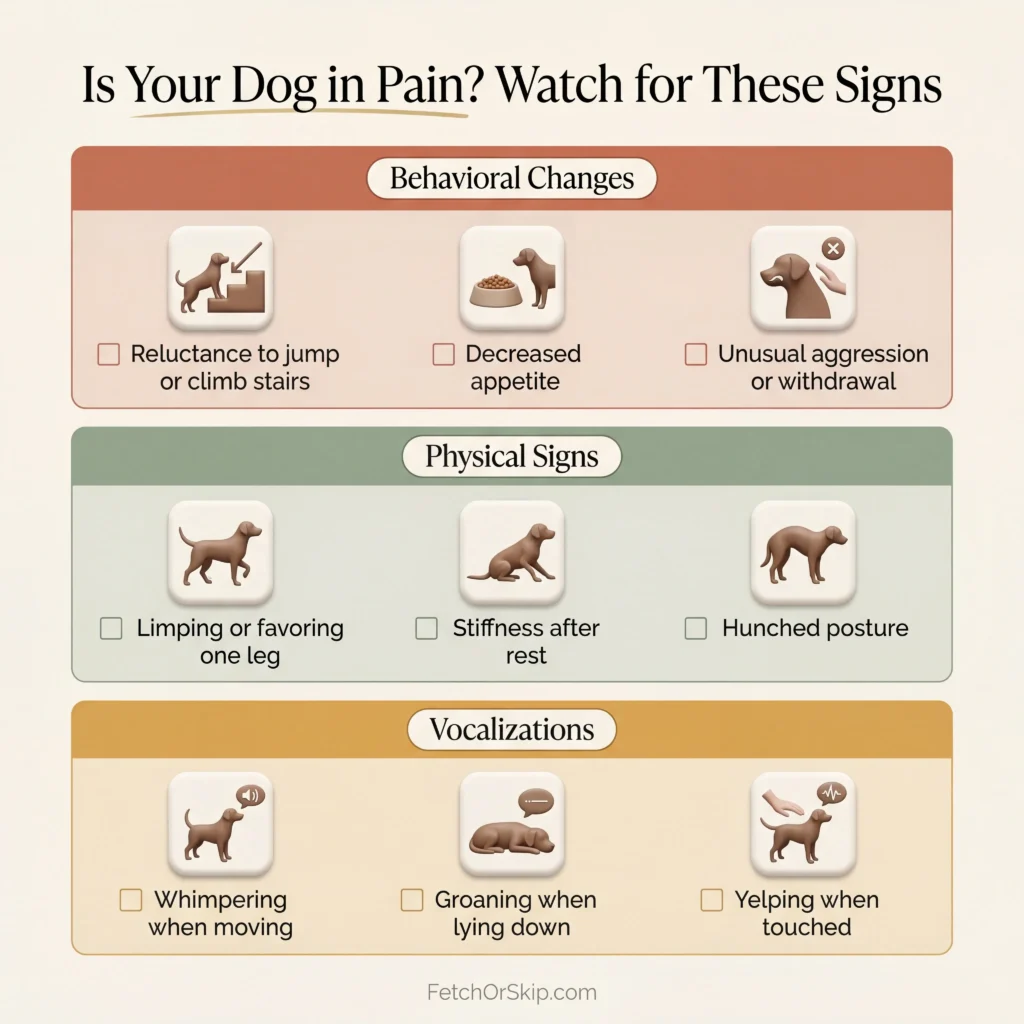
Behavioral changes:
- Reluctance to jump, climb stairs, or get up from lying down
- Decreased appetite or changes in eating behavior
- Unusual aggression or withdrawal (a normally friendly dog snapping when touched)
- Excessive licking or chewing at a specific area
- Restlessness, pacing, or inability to settle
Physical signs:
- Limping or favoring one leg
- Stiffness, especially after rest
- Hunched posture or arched back
- Panting when not hot or exercised
- Trembling or shaking
Vocalizations:
- Whimpering, whining, or yelping when moving or being touched
- Groaning when lying down or getting up
Some dogs vocalize. Many don’t. My dog has never whimpered from joint pain, but I know he’s hurting when he hesitates at the back door instead of bounding through it. That pause before the step down is my signal. You know your dog’s baseline behavior. Changes from that baseline are your signal.
When to skip home care and call the vet immediately: if the pain seems severe, if your dog won’t bear weight on a limb, if there’s visible swelling or an open wound, if the symptoms came on suddenly after an injury, or if pain persists more than 24 to 48 hours without improvement. Any of those warrants a call, not a wait-and-see approach.
Common Questions About Dog Pain Relief
Can I give my dog aspirin or Tylenol for pain?
Tylenol is toxic to dogs. Don’t give it. Aspirin is complicated: some vets prescribe it short-term at specific doses, but it carries real risks including stomach bleeding. The safest answer is to call your vet before giving either one. If your dog already ate a Tylenol, contact your vet or poison control immediately.
What can I give my dog for pain at home without medication?
Warm compresses for stiff joints, cold compresses for swelling, limited activity, comfortable bedding, and gentle massage around sore areas. These won’t replace medication for significant pain, but they help while you arrange a vet visit or wait for prescribed meds to take effect.
Is there any over-the-counter pain reliever safe for dogs?
No OTC human pain relievers are safe to give dogs without veterinary guidance. The ones formulated for humans (ibuprofen, acetaminophen, naproxen) have toxicity thresholds in dogs that are much lower than in people. There are no FDA-approved OTC pain medications specifically for dogs either.
How do I know if my dog’s pain is serious enough for a vet visit?
If your dog won’t bear weight on a limb, shows sudden severe pain, has visible injuries, or if the pain persists more than 24 to 48 hours without improvement, see a vet. Also watch for vomiting, bloody stool, lethargy, or refusal to eat alongside pain; those combinations suggest something more serious.
What about Benadryl for a dog in pain?
Benadryl (diphenhydramine) isn’t a pain reliever; it’s an antihistamine. It can help with allergic reactions and has mild sedative effects, but it won’t address pain directly. If your dog’s discomfort involves itching or swelling from an allergic reaction, Benadryl might help that specific issue. For actual pain management, you need different medications. The Benadryl for dogs guide covers when it’s appropriate and at what doses.
How long should I wait before taking my dog to the vet for pain?
For mild discomfort after exercise or a minor stumble, 24 hours of rest and observation is reasonable. If there’s no improvement by then, call your vet. For anything sudden, severe, or accompanied by other symptoms like vomiting or lethargy, don’t wait. Call immediately.
The Bottom Line on Dog Pain Relief
Three things to remember when your dog is in pain:
What not to give: ibuprofen, acetaminophen, naproxen. These cause organ damage in dogs. Full stop.
What actually helps: vet-prescribed NSAIDs like carprofen, meloxicam, or grapiprant; opioids for severe cases; gabapentin for nerve pain; joint supplements for long-term support.
What you can do right now: warm or cold compresses, rest, comfortable bedding, and close observation of symptoms. Then call your vet.
Don’t rely on your dog’s willingness to eat something as a sign it’s safe. Dogs will swallow things that hurt them.
Your next step: If your dog is currently in pain, call your vet today. Not tomorrow. Describe what you’re seeing, ask what you can do until the appointment, and get professional guidance specific to your dog’s situation.
If you’re dealing with a specific medication question, the guides on Pepto-Bismol for dogs and home remedies for dog diarrhea cover those topics in depth.
For the complete picture on medication safety, the herbs, oils and medication safety guide covers everything from essential oils to OTC drugs to herbal supplements.
— Oren Basurto
