
The marketing on the bag and the ingredient panel tell two different stories. I learned this after three months of comparing dog food toppers for my senior dog’s declining appetite. I tested over a dozen commercial products across five categories, and the pattern was consistent: the products with the flashiest claims often had the thinnest ingredient lists.
Dog food toppers are add-ons you mix into your dog’s regular food to increase palatability, add moisture, or boost specific nutrients. The category includes bone broth, freeze-dried raw, goat milk, wet food mixers, and powdered supplements.
Here’s what most topper guides won’t tell you: some of these products deliver real nutritional value, while others are essentially flavor tricks with premium price tags. The difference matters if you’re trying to help a picky eater, support a dog recovering from illness, or simply add variety without accidentally unbalancing a diet you’ve carefully chosen.
This guide breaks down the major topper types, which ones actually improve nutrition versus which rely on marketing hype, and how to introduce any topper without creating a dog who refuses plain kibble. If you’re evaluating your dog’s overall diet, the Dog Food Selection Guide covers the broader picture of choosing the right base food.
This article is for informational purposes only and is not veterinary advice. Consult your veterinarian for dietary recommendations specific to your dog’s health needs.
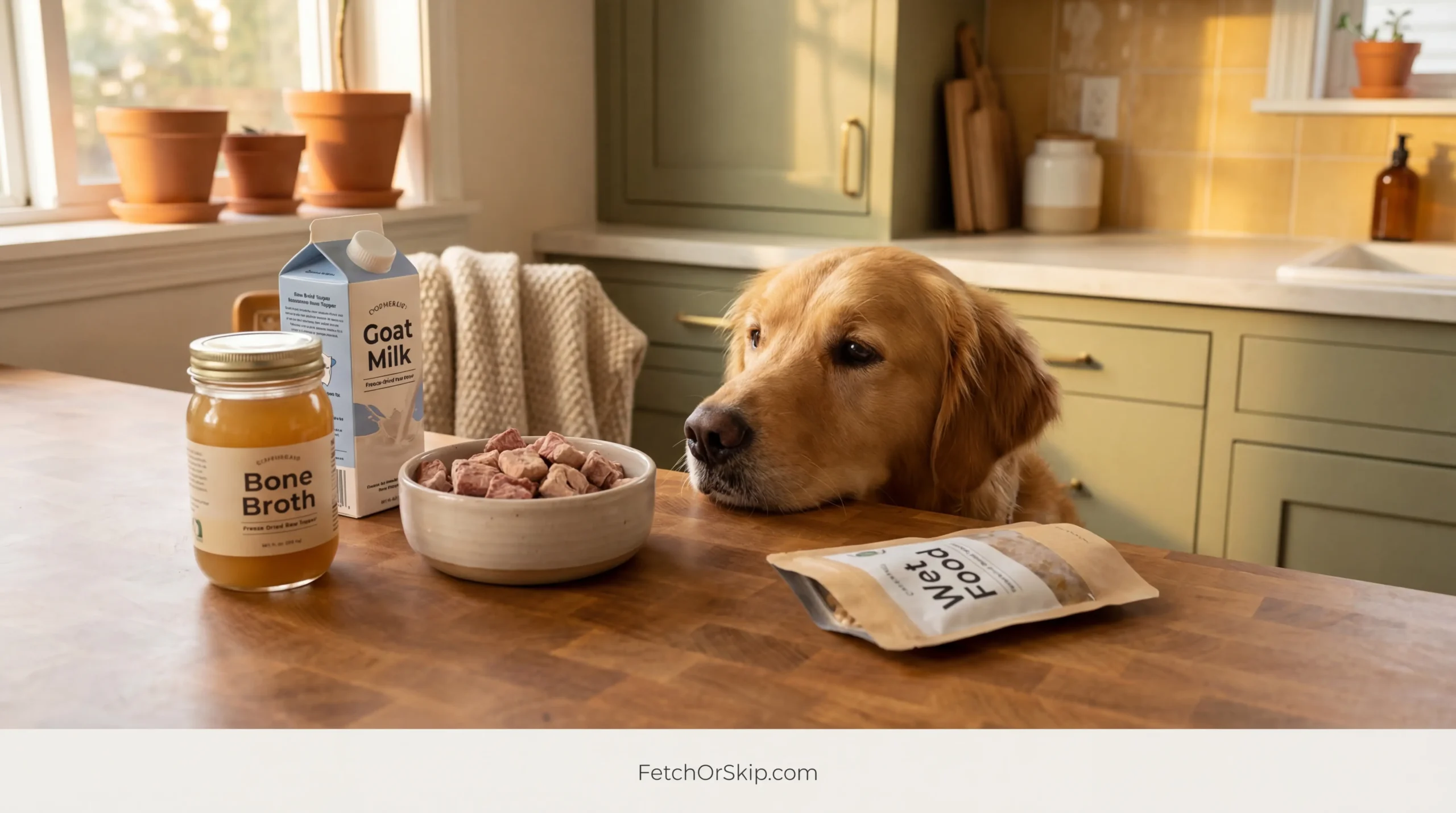
[IMAGE: Various dog food topper types arranged on kitchen counter – bone broth container, freeze-dried pieces, goat milk carton, wet food pouch]
Why Dog Food Toppers Have Become So Popular
Dog food toppers have become a significant category in pet retail because they solve problems that kibble alone sometimes can’t. The primary driver is picky eating: owners watch their dogs sniff a bowl of perfectly good food and walk away, and a topper seems like an easy fix. Illness recovery creates another common scenario. Dogs coming off surgery or dealing with appetite loss from medication often need extra encouragement to eat.
The topper market has grown alongside the broader “humanization” trend in pet food. Owners who cook with bone broth themselves find it intuitive to add it to their dog’s bowl. The logic makes sense on the surface. But the gap between what sounds healthy and what actually benefits your dog nutritionally is wider than most marketing suggests.
I track what goes into my three dogs’ bowls with the same attention I give to reading the ingredient panel on their kibble. My household includes two seniors (one medium-sized with food allergies, one larger mixed breed) and a younger rescue who’s perpetually suspicious of anything new. When my older dog started leaving food in her bowl after her allergy diagnosis, I tested several topper types over about eight weeks and logged her response to each.
The results surprised me. The products that excited her most weren’t always the ones with the best nutritional profiles. Palatability and nutritional value don’t automatically go together.
The 10% rule matters here. Veterinary nutritionists generally recommend that toppers and treats combined shouldn’t exceed 10% of a dog’s daily caloric intake. Go beyond that threshold and you risk unbalancing a diet that was formulated to be complete.
Types of Dog Food Toppers
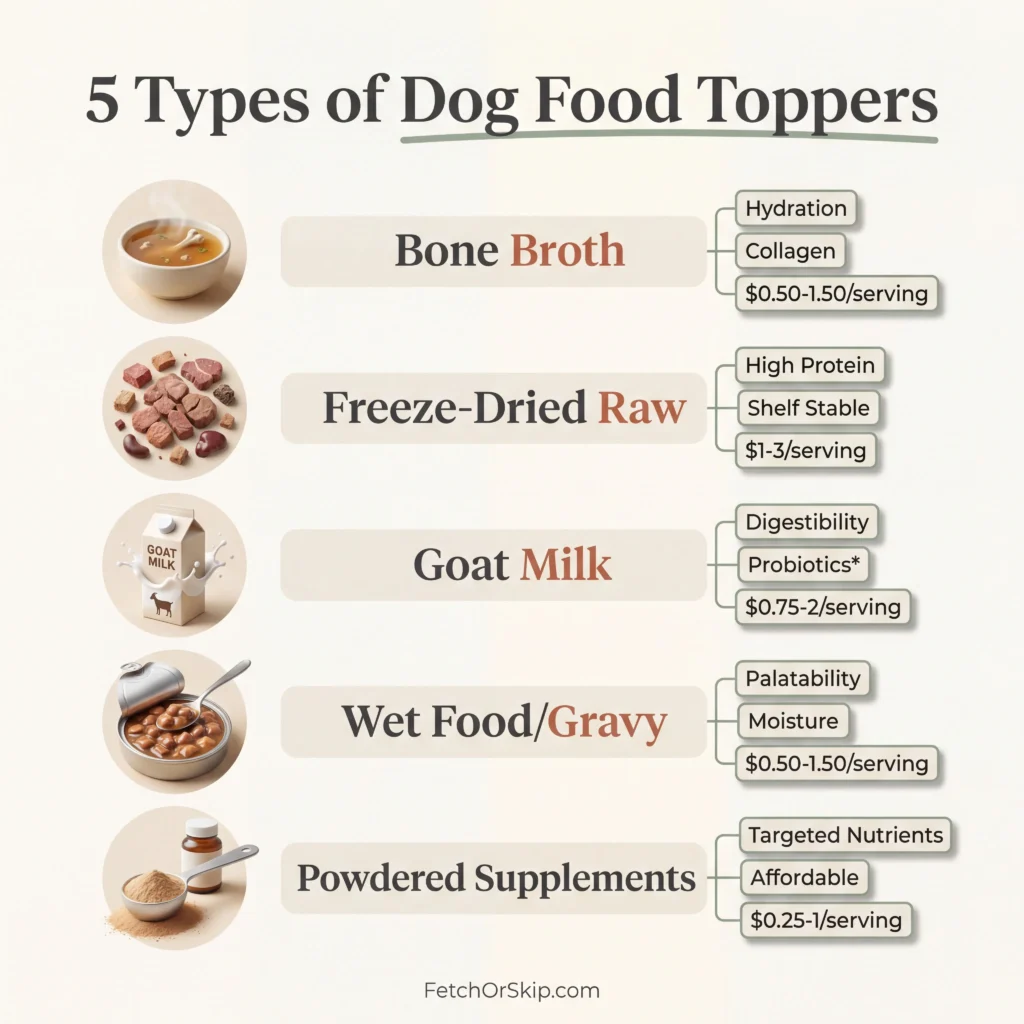
The topper category breaks down into five main types, each with different storage requirements, price points, and nutritional profiles. Understanding what you’re actually buying helps separate useful products from expensive flavor sprinkles.
Prices shown are approximate ranges at time of writing and may vary by retailer.
Bone Broth Toppers
Bone broth products come as liquid pouches, concentrated pastes, or powders you rehydrate. Brands like Brutus Broth and Native Pet offer popular options in this category. The appeal is moisture (helpful for dogs on dry kibble who don’t drink enough water) plus collagen and amino acids from the simmering process. Quality varies enormously. Some products are actual slow-cooked broth; others are flavored water with minimal protein content. Check the guaranteed analysis for protein percentage. A broth with less than 5% protein is mostly water and salt.
Freeze-Dried Raw Toppers
These are raw meat and organ pieces that have been freeze-dried for shelf stability. Stella & Chewy’s and Primal are among the more established brands in this space. The process preserves nutrients better than cooking, and dogs typically find the texture and smell highly palatable. The trade-off is cost: freeze-dried toppers run significantly more per serving than other options. They’re also calorie-dense, so a small amount goes further than it looks.
Goat Milk Toppers
Goat milk has become trendy in pet nutrition circles, marketed as easier to digest than cow’s milk and packed with probiotics. The digestibility claim has some basis (goat milk fat globules are smaller), but the probiotic benefit depends entirely on whether the product contains live cultures. Pasteurized goat milk has killed the bacteria that would provide probiotic benefit. Raw goat milk products exist but require refrigeration and careful handling. Read labels carefully.
Wet Food and Gravy Toppers
These range from gravy pouches to chunky wet food designed for mixing. Products like Wellness Bowl Boosters or The Honest Kitchen Pour Overs fall into this category. They add moisture and typically have strong aromas that attract picky eaters. The nutritional quality mirrors the broader wet food market: some products use whole proteins and recognizable ingredients, others rely on by-products and fillers. Ingredient order tells the story.
Powdered Supplements
This category includes everything from single-ingredient powders (pumpkin, bone meal) to complex supplement blends. They’re the most shelf-stable option and often the most affordable per serving. Effectiveness depends entirely on what’s in the powder and whether your dog actually needs it.
| Topper Type | Avg Cost/Serving | Shelf Life | Best For | Watch Out For |
|---|---|---|---|---|
| Bone Broth | $0.50-1.50 | 7-14 days opened | Hydration, picky eaters | Low protein products |
| Freeze-Dried Raw | $1.00-3.00 | Months sealed | Protein boost, palatability | Calorie density |
| Goat Milk | $0.75-2.00 | 7-10 days opened | Digestive support | Pasteurized = no probiotics |
| Wet Food/Gravy | $0.50-1.50 | 3-5 days opened | Picky eaters, moisture | Filler ingredients |
| Powders | $0.25-1.00 | Months | Specific supplements | Unnecessary additives |
Toppers That Add Real Nutritional Value
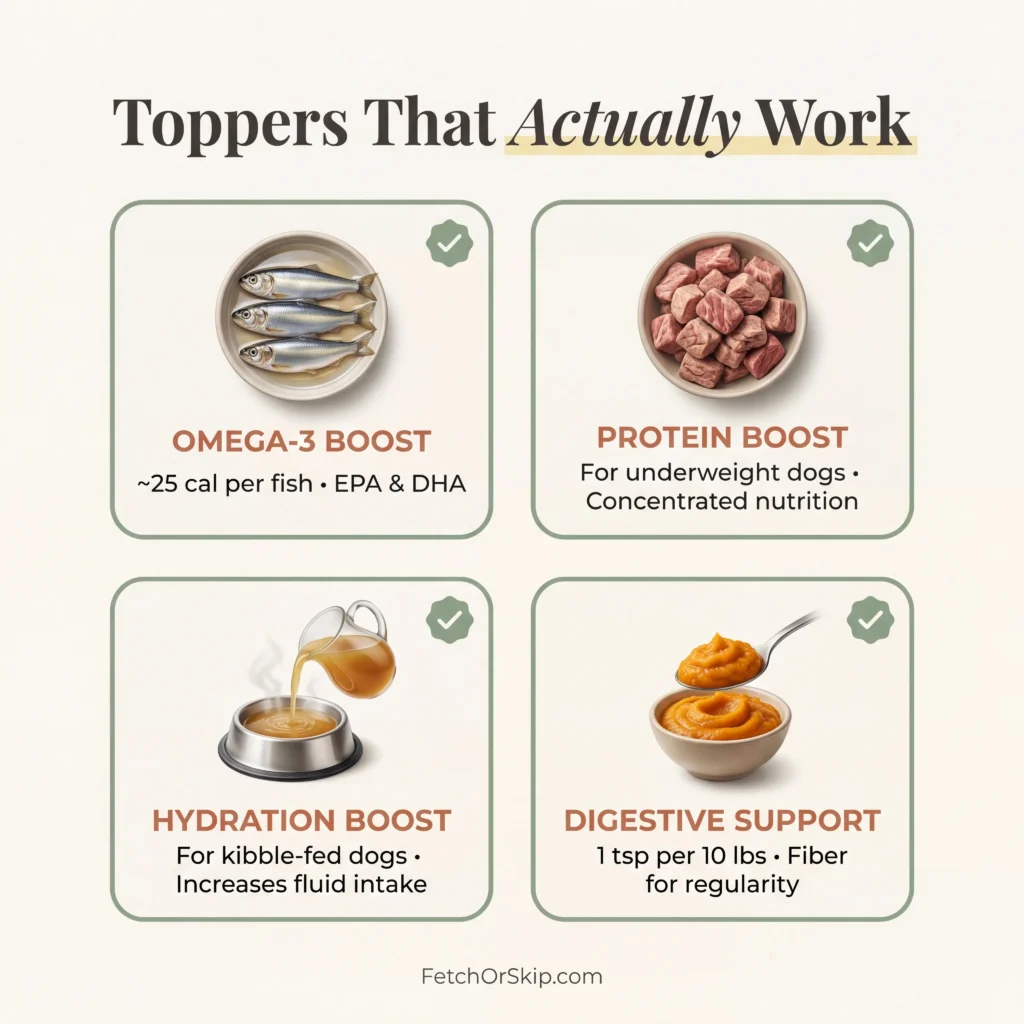
Not every topper is marketing dressed as nutrition. Some products and homemade additions genuinely fill gaps or provide benefits your dog’s base food might lack. The best toppers for dog food are ones that match an actual need rather than adding things because they sound healthy.
Omega-3 Sources
If your dog’s coat is dull or they deal with skin issues, omega-3 fatty acids can make a measurable difference. Sardines packed in water (not oil) are one of the most cost-effective options: approximately 25 calories per small fish with meaningful EPA and DHA content. Fish oil supplements work similarly but lack the protein. I add half a sardine to my older dog’s bowl twice a week. Her coat texture improved noticeably within about six weeks, going from dry and slightly flaky to smoother with more shine.
Protein Boosters for Underweight Dogs
Dogs recovering from illness or struggling to maintain weight can benefit from added protein. Freeze-dried raw toppers like those from Stella & Chewy’s or Instinct deliver concentrated protein without much volume. Cooked lean chicken or turkey works too, though you’re adding prep time. The goal is increasing protein intake without dramatically increasing meal bulk for dogs with small appetites.
Hydration for Kibble-Fed Dogs
Some dogs simply don’t drink enough water, and kibble provides almost no moisture (typically 10% or less). Bone broth or water-based toppers can push fluid intake up meaningfully. For my younger rescue who ignores her water bowl half the day, adding a few tablespoons of low-sodium broth to her kibble increased her fluid intake in a way that showed up in her coat and energy levels.
Digestive Support
Plain canned pumpkin (not pie filling) is genuinely useful for dogs with occasional digestive irregularity. The fiber helps with both loose stool and constipation. About one teaspoon per 10 pounds of body weight is the standard guidance. This is one case where a simple, single-ingredient topper outperforms most commercial “digestive health” blends that charge premium prices for the same fiber plus unnecessary additives.
Pro Tip from Liora: When adding omega-3 rich toppers like sardines, start with a quarter of a fish for medium dogs and watch for any digestive response over 2-3 days before increasing. My spreadsheet shows my dogs tolerate sardines better when introduced alongside their regular food rather than on an empty stomach.
For guidance on specific whole foods you might add, Sable covers the fruit and vegetable safety side in her guides if you’re looking for quick answers on individual ingredients like safe fruits for dogs.
Toppers to Avoid or Use Sparingly
This is where the topper conversation usually goes silent. Most guides recommend products; few warn you away from them. But I’ve tracked enough topper experiments across my three dogs to know that some popular options deserve skepticism.
High-Calorie Toppers That Sabotage Weight Management
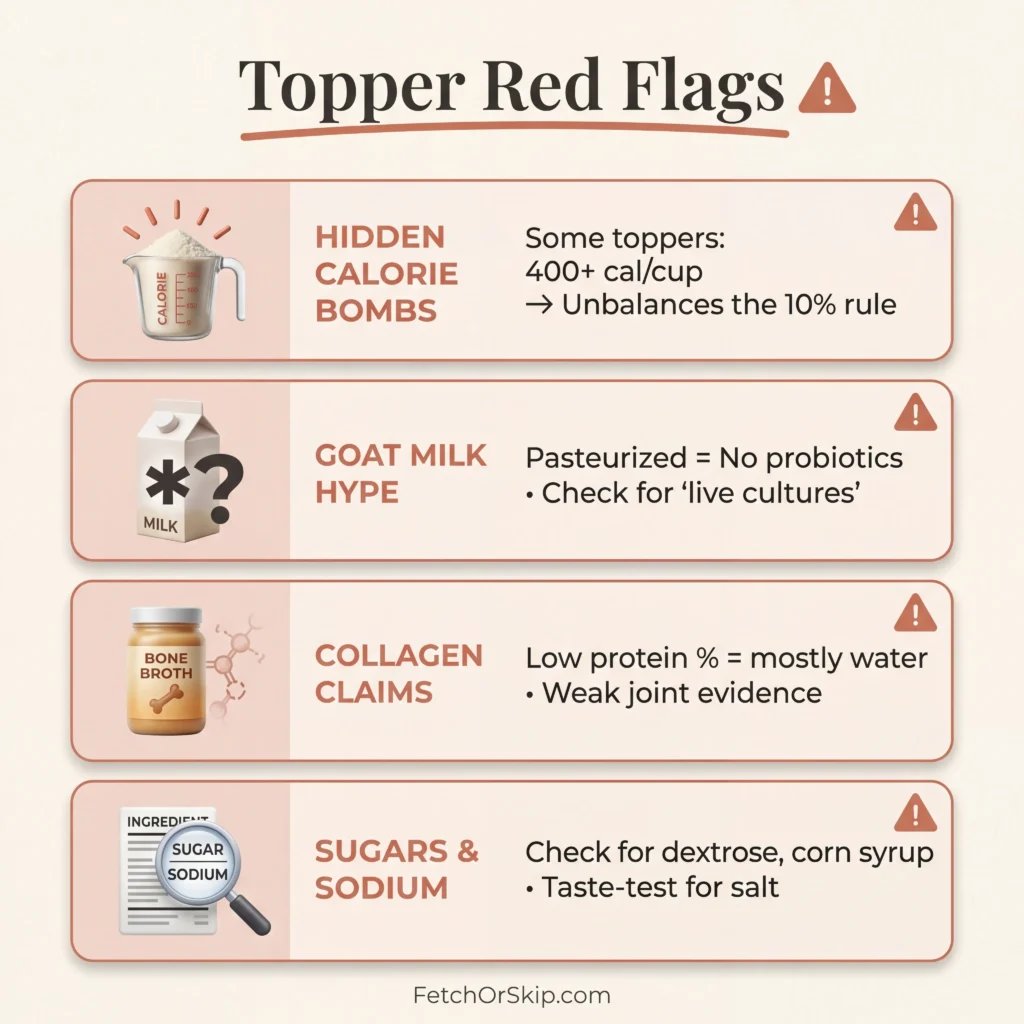
Some freeze-dried dog food toppers pack over 400 calories per cup. If you’re adding a quarter cup to your dog’s kibble without adjusting the kibble portion, you’ve just added 100+ calories. For a 30-pound dog whose maintenance intake might be 800-900 calories daily, that’s over 10% of their entire day from what looks like a small scoop. The topper package rarely makes this math obvious. I calculate calories per tablespoon for any topper I use regularly and write the number on the container. The results have changed my buying decisions more than once.
Goat Milk Hype vs. Reality
Goat milk toppers occupy a strange marketing space where “natural” and “ancestral” language obscures what the product actually delivers. The probiotic claims require live cultures, which pasteurization kills. If the label doesn’t specifically say “raw” or “contains live cultures,” assume the probiotic benefit is minimal to none. The “easier to digest” benefit is real but minor for most dogs. And the calorie content adds up quickly. One popular brand runs around 60 calories per quarter cup. For a small dog, that’s a significant portion of daily intake spent on what amounts to flavored milk. It’s not harmful; it’s just not the superfood the marketing implies.
Bone Broth Collagen Claims
The collagen peptides in bone broth might support joint health. Or they might get broken down in digestion like any other protein and provide no specific joint benefit. The research on oral collagen supplementation in dogs is thin. What’s clear is that most commercial bone broths contain far less collagen than the marketing suggests. A product with “collagen” prominent on the label but only 3% protein is mostly water. If joint support is your goal, a dedicated joint supplement with glucosamine and chondroitin has better evidence behind it.
Anything With Added Sugars or Excessive Sodium
Check ingredient lists for dextrose, corn syrup, or other sweeteners. Some gravy-style toppers include them for palatability. Sodium content varies wildly too. Dogs need some sodium, but toppers shouldn’t be a significant source. If a broth product tastes salty to you (and yes, I’ve taste-tested the ones I give my dogs), it’s probably higher in sodium than ideal.
How to Introduce a Topper Without Upsetting Your Dog’s Stomach
The “toppers create picky eaters” concern comes up constantly in dog owner discussions, and it’s not unfounded. The pattern looks like this: owner adds a tasty topper, dog becomes more enthusiastic about meals, owner feels good, dog eventually starts leaving the kibble and eating only the topper, owner escalates to more enticing toppers, dog holds out for better offerings. You’ve accidentally trained a negotiator.
Always introduce new foods gradually. If your dog shows signs of digestive upset that persist beyond 24-48 hours, consult your veterinarian.
Start Small and Stay Consistent
Begin with about a teaspoon of any new topper, regardless of the product’s suggested serving size. Watch for digestive response over 2-3 days before increasing. This applies even to “gentle” options like plain pumpkin. Every dog’s gut flora is different. My younger rescue can handle sudden food additions without issue; my senior dog needs a full week of gradual introduction for anything new.
Mix Thoroughly
This one matters more than it seems. If you plop a topper on top of kibble, your dog can eat around the kibble and focus on the topper. Mix it in so every bite includes some of both. The goal is improving the meal, not creating a two-tier dining experience where your dog learns to wait for the good stuff.
Rotate Instead of Escalating
Rather than adding more topper when your dog seems less excited, rotate between 2-3 different dog food toppers on different days. Novelty maintains interest without increasing quantity. I keep freeze-dried, broth, and plain pumpkin in rotation. My dogs don’t get bored, and none of them refuse meals when I occasionally serve plain kibble.
The Plain Kibble Test
Every few weeks, serve a meal with no topper. This is standard advice from veterinary nutritionists, and I’ve found it genuinely useful. If your dog refuses it entirely, you’ve likely gone too far with topper dependence. Healthy dogs with normal appetites will eat plain food when hungry, even if they prefer enhanced meals. A dog who won’t touch acceptable food after 24 hours of holding out is either ill (check with your vet) or has learned that waiting produces better options.
Pro Tip from Liora: I log which topper I use each day in a simple spreadsheet alongside my dogs’ stool quality and enthusiasm scores (1-5). After three months, patterns emerge that you’d never notice otherwise. My data showed that bone broth works best for my picky rescue on days after long walks, while freeze-dried works better on lower-activity days.
If you’re considering freeze-dried food as a topper, the cost and calorie density require more careful portioning than other options.
FAQ
Are food toppers good for dogs?
Toppers can be beneficial when they address a specific need: encouraging a picky eater, adding moisture to a dry diet, or supplementing nutrients a base food lacks. They become problematic when used in excess (beyond 10% of daily calories), when they’re high in sodium or fillers, or when they create mealtime dependency. I use toppers for two of my three dogs; the third does fine without them. The answer depends on your dog’s individual situation, not on whether toppers are universally good or bad.
What are the healthiest food toppers for dogs?
Omega-3-rich options like sardines or fish oil provide documented benefits for skin and coat. Plain canned pumpkin offers useful fiber for digestive regularity. Freeze-dried raw toppers add concentrated protein without heavy processing. The “healthiest” label depends on what your dog actually needs. A hydration topper is healthiest for a dog who won’t drink water; it’s unnecessary for a dog who drinks plenty.
What is a good homemade topper for dog food?
Sardines in water, cooked lean chicken (unseasoned), plain canned pumpkin, and scrambled eggs are all simple homemade options with known nutritional profiles. The advantage of homemade is cost control and ingredient transparency. The disadvantage is convenience; commercial toppers are shelf-stable and portion-controlled. I use commercial dog food toppers for routine meals and homemade additions when I’m already cooking.
Do dog food toppers make dogs picky eaters?
They can, but the topper itself isn’t the cause. The pattern that creates pickiness is inconsistent use, escalating richness, and caving when a dog refuses plain food. Used consistently at the same modest amount, mixed into food rather than layered on top, and with occasional plain meals, toppers don’t inherently cause pickiness. The human behavior around the topper matters more than the topper itself. My three dogs have had toppers for years and still eat plain kibble when I test them.
How much dog food topper should I add?
The standard guideline is that toppers plus treats shouldn’t exceed 10% of daily caloric intake. For a 30-pound dog eating roughly 900 calories daily, that’s 90 calories maximum from toppers. Most topper packages don’t display calories prominently, so you may need to calculate based on the guaranteed analysis or manufacturer’s website. I worked out calories-per-tablespoon for the toppers I use regularly and wrote them directly on the containers with a permanent marker.
Making Topper Decisions Based on Data, Not Marketing
Three things determine whether a topper is worth buying: it addresses a real need your dog has, the ingredient quality justifies the price, and you can use it consistently without exceeding the 10% calorie guideline.
- Check the guaranteed analysis before the marketing claims
- Calculate cost per serving, not just price per package
- Match the topper to a specific goal (hydration, protein, palatability) rather than adding it because it sounds healthy
- Test with plain kibble periodically to avoid dependency
For dogs with specific protein requirements or sensitivities, lamb-based foods and toppers offer an alternative to chicken-heavy options that dominate the market.
Your dog’s response to the food matters more than the brand’s claims about it. The topper that works is the one your dog eats consistently, that fits within the calorie math, and that you can afford to use long-term. Sometimes that’s a premium freeze-dried product; sometimes it’s a can of sardines from the grocery store.
For the complete picture on choosing your dog’s base diet before adding toppers, see the Dog Food Selection Guide.
— Liora Kittredge
