

By Sable Ingraham | Dog Food Safety Writer | Published: March 12, 2026 | 14 min read
Your dog just grabbed something off the counter. Maybe it was a grape that rolled onto the floor. Maybe it was a chunk of mango you were cutting. Now you’re here, trying to figure out which fruits dogs can and cannot eat — and whether you need to panic. I’ve been in your exact shoes more times than I want to admit.
Quick answer: Most fruits are safe for dogs in small amounts, but a handful are genuinely dangerous. Grapes and raisins can cause kidney failure. Cherry pits contain cyanide. Citrus like grapefruit causes stomach upset. The safe list includes blueberries, watermelon (seedless), apples (no seeds), and most berries. The key is knowing which fruits fall into which category and how much your dog can actually handle.
This guide shares personal experience and general information about dog food safety. It is not veterinary medical advice. Always consult your veterinarian for guidance specific to your dog’s health. If your dog has eaten something potentially toxic, contact your vet or the ASPCA Animal Poison Control Center (888-426-4435) immediately. Don’t wait for symptoms to appear.
Table of Contents
Introduction
I started paying attention to fruit safety after my dog grabbed a grape off the kitchen floor while I was cooking dinner. One grape. I spent the next hour reading conflicting information online, getting more stressed with every article. One site said a single grape could kill a small dog. Another said it was probably fine. I ended up calling my vet, feeling like I was overreacting.
That call taught me something important. My vet didn’t panic. She asked how much my dog weighed, how many grapes she might have eaten, and told me what symptoms to watch for. She gave me a clear answer when the internet couldn’t.
This guide is the clear answer I couldn’t find that night. I’ll walk you through which fruits are actually safe for dogs, which ones are legitimately dangerous, how much fruit is too much, and what to do if your dog eats something they shouldn’t. I’ve spent years tracking what my own dogs have eaten (one of them will eat literally anything), calling my vet more than I’d like, and cross-referencing what the internet says against what actually happens.
You’ll also find links to detailed guides on specific fruits throughout this page. If your dog just ate blueberries or you’re wondering about mangos, those deep-dives cover everything from serving sizes to prep tips.
Let’s sort this out.
Which Fruits Are Safe for Dogs
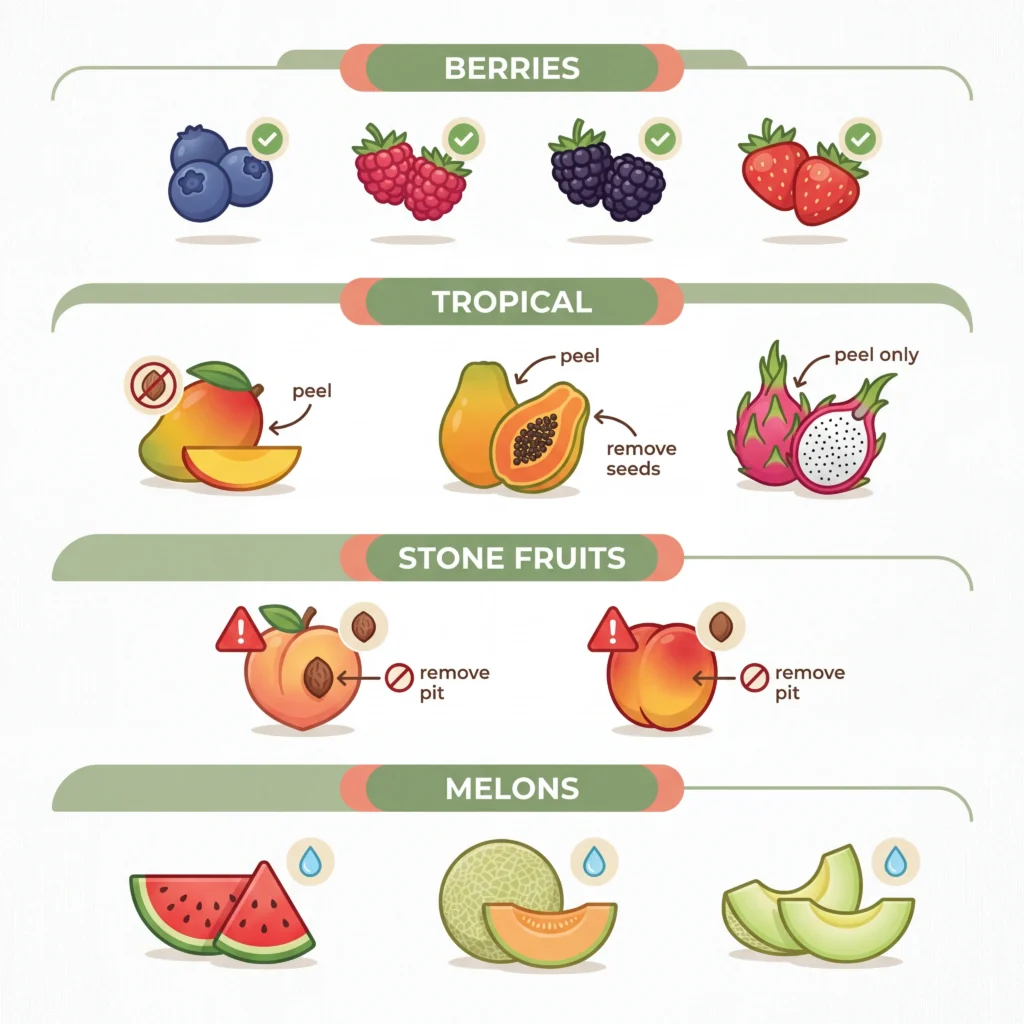
Most fruits you’d find in your kitchen are fine for dogs in moderation. That’s the good news. The catch is that “fine” doesn’t mean “give them a whole bowl.” It means a few pieces as an occasional treat.
Berries Your Dog Can Enjoy
Berries are some of the safest fruits for dogs. Blueberries are basically the gold standard when it comes to dog-friendly fruit. Low in sugar, packed with antioxidants, and small enough that choking isn’t a concern for most dogs. My older dog gets a few every time I’m snacking on them. She’s never had a single issue.
Raspberries are safe too, with one weird caveat. They contain trace amounts of naturally occurring xylitol. Before you worry too much about that, the amount is so small that your dog would need to eat cups and cups of raspberries before it became a problem. A handful here and there is perfectly fine.
Blackberries fall into the same safe category. Low sugar, good antioxidants, no toxic compounds. Cranberries are technically safe, but most dogs hate how tart they are. If your dog actually wants to eat them, fresh or frozen cranberries are the way to go. Skip the dried ones from the store since those are usually loaded with added sugar.
Tropical Fruits That Work
Tropical fruits get tricky because preparation matters more. Mango flesh is safe and most dogs love the sweetness. But the skin contains urushiol, the same irritating compound found in poison ivy. And the pit is a choking hazard plus contains small amounts of cyanide. So: peel it, remove the pit, cut it into chunks. Then it’s fine.
Papaya follows similar rules. The flesh is actually good for digestion because of an enzyme called papain. But the seeds need to go. Same story with dragon fruit. The flesh and those tiny black seeds are both safe. Just don’t let your dog eat the skin.
Stone Fruits Need Pit Removal
Peaches and nectarines are safe once you remove the pit. This part is not optional. Stone fruit pits contain amygdalin, which breaks down into cyanide when crushed or chewed. One pit probably won’t kill your dog, but it can cause serious digestive blockage if swallowed whole, and the cyanide risk is real if they crack it open.
I keep a rule in my house: if it has a pit, the pit goes straight into the trash before the fruit goes anywhere near the dogs. My younger dog once grabbed a peach pit off the counter before I could stop her. She didn’t swallow it (thank god), but watching her try to gnaw on it was enough to make me rethink my countertop habits.
Melons Are Great for Hydration
Melons like cantaloupe, honeydew, and watermelon are excellent for dogs, especially in summer. They’re mostly water, which helps with hydration. The sugar content is higher than berries, so don’t go overboard, but a few chunks make a great hot-weather treat.
Remove the seeds from watermelon. They’re not toxic, but they can cause intestinal blockage if your dog eats too many. And definitely remove the rind. It’s tough to digest and can cause stomach upset or blockage.
If you want to explore vegetables your dog can safely eat alongside fruits, that’s another option for healthy treat variety.
Fruits That Are Toxic or Risky for Dogs
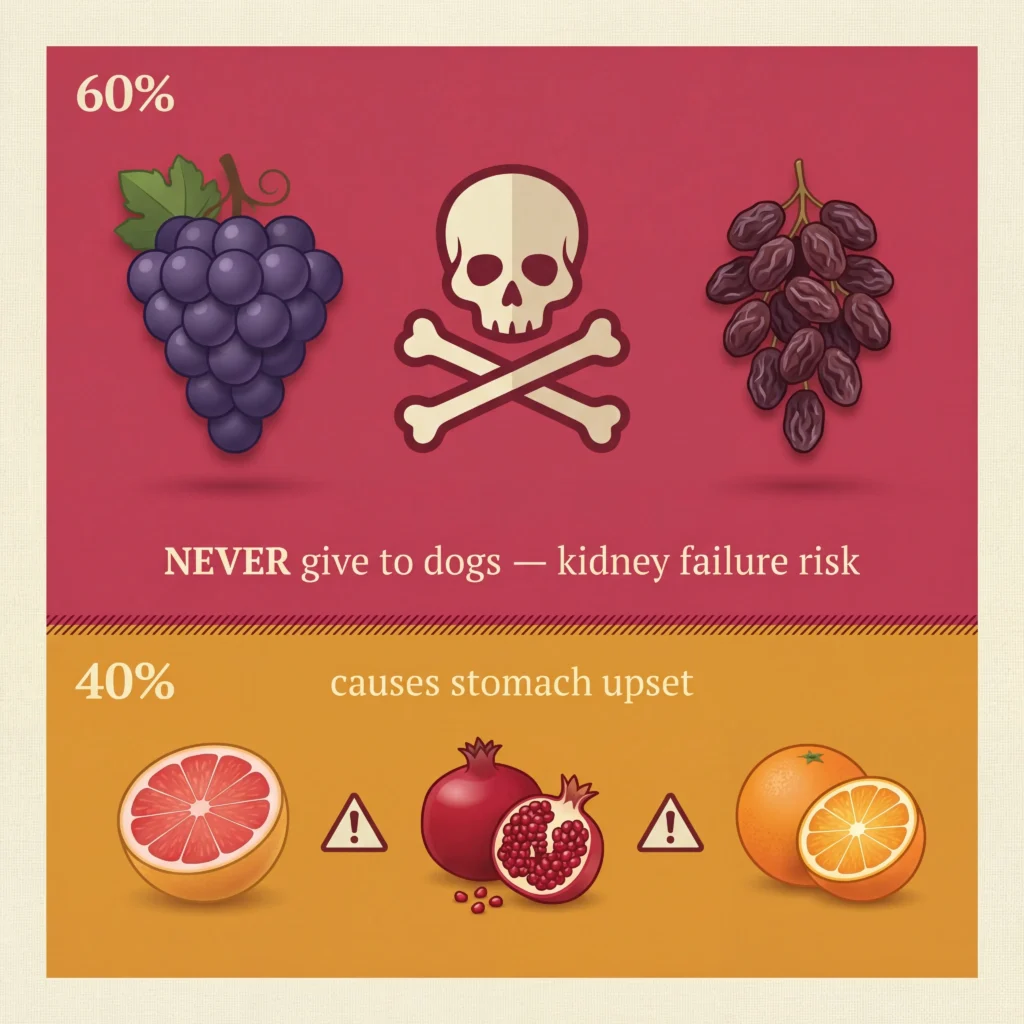
So here’s the deal. Some fruits aren’t just “not great” for dogs. They’re genuinely dangerous. These are the ones to memorize and keep away from your dog entirely.
Grapes and Raisins: The Most Dangerous Fruit
Grapes and raisins are toxic to dogs. Full stop. The frustrating part is that nobody knows exactly why. Researchers have been trying to figure out the specific toxic compound for years. Recent research suggests tartaric acid may be involved, but it hasn’t been definitively confirmed.
What we do know is that grape toxicity is unpredictable. Some dogs eat grapes and seem fine. Others eat one or two and develop acute kidney failure. There’s no way to predict which dogs will react badly. Size doesn’t seem to be the deciding factor either. I’ve read about large dogs getting sick from a few grapes and small dogs eating several with no apparent symptoms.
My vet put it bluntly: treat every grape like it’s the one that could cause a problem. I keep grapes in a sealed container on a high shelf now. It’s not paranoia if it keeps my dogs safe.
If your dog eats grapes or raisins, call your vet immediately. Don’t wait to see if symptoms develop. Early intervention matters with grape toxicity.
Citrus Risks: Grapefruit Is the Worst
Grapefruit is the citrus fruit dogs should skip entirely. It contains psoralen compounds that cause gastrointestinal irritation and can lead to photosensitivity (increased sensitivity to sunlight). The flesh, peel, and pith are all problematic.
Other citrus fruits like oranges and lemons are less dangerous but still not ideal. The high acidity upsets most dogs’ stomachs, and the essential oils in the peel can cause issues. If your dog grabbed a small piece of orange, they’ll probably be fine. But citrus shouldn’t be a regular treat.
Pomegranate: Not Technically Toxic, But Not Worth It
Pomegranate falls into a weird category. It’s not technically toxic, but it causes stomach upset in most dogs because of the tannin content. Tannins are compounds that create that astringent, mouth-puckering quality. They irritate the digestive system and often lead to vomiting and diarrhea.
If your dog ate a few pomegranate seeds, they’ll probably be uncomfortable but okay. But there’s no good reason to feed pomegranate deliberately. Better antioxidant options exist (like blueberries) that don’t upset your dog’s stomach.
Pits, Seeds, and Stems: The Hidden Dangers
The flesh of most stone fruits is safe. The problem is everything else. Cherry pits, apple seeds, peach pits, nectarine pits, and apricot pits all contain cyanide compounds. Specifically, they contain amygdalin, which releases hydrogen cyanide when metabolized.
A single apple seed won’t harm your dog. But if your dog somehow ate a bunch of apple cores or cracked open multiple stone fruit pits, cyanide poisoning becomes a real risk. Symptoms include dilated pupils, difficulty breathing, bright red gums, and in severe cases, seizures.
The practical rule: always remove pits and seeds before giving fruit to your dog. Compost them or put them in a dog-proof trash can. My dogs have both figured out how to knock over the regular kitchen trash, so I use one with a locking lid now.
How Much Fruit Can a Dog Eat Safely
The amount changes everything when it comes to fruit and dogs. Even safe fruits can cause problems if your dog eats too much.
The 10% Rule
Treats of any kind (including fruit) should make up no more than 10% of your dog’s daily calories, according to most veterinary guidelines. For a 30-pound dog eating about 800-900 calories per day, that’s roughly 80-90 calories from treats. A cup of blueberries has around 85 calories. A medium banana has about 100.
This doesn’t mean your dog should eat a whole cup of blueberries in one sitting. It means if fruit is the only treat they’re getting that day, that’s roughly the upper limit.
Serving Sizes by Dog Size
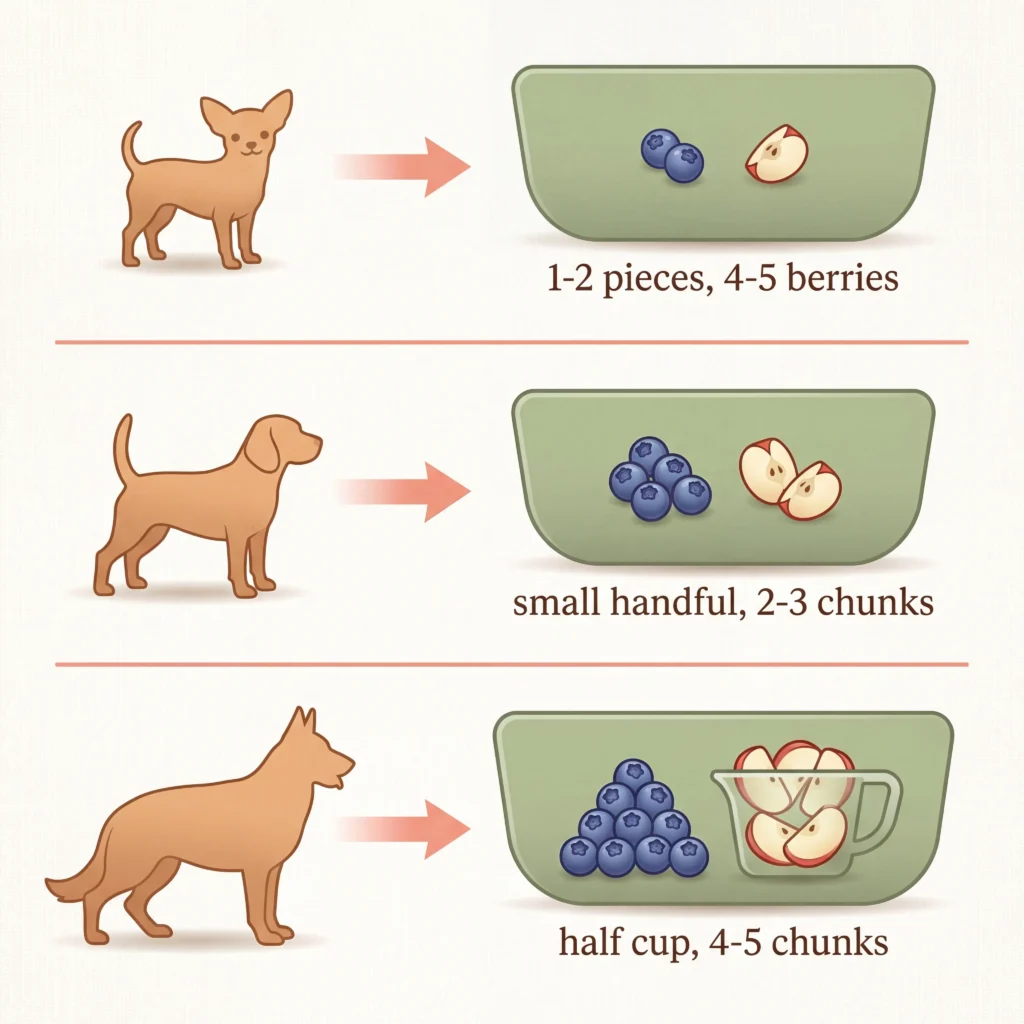
Here’s a rough guide that’s worked for my household:
Small dogs (under 20 pounds): 1-2 small pieces of fruit or 4-5 berries. Think of it as a taste, not a snack.
Medium dogs (20-50 pounds): A small handful of berries or 2-3 chunks of larger fruit. My older dog (around 45 pounds) gets maybe 5-6 blueberries at a time.
Large dogs (50+ pounds): Up to half a cup of berries or 4-5 chunks of larger fruit. Still not a meal replacement. Just a treat.
These are starting points. Every dog is different. Some dogs have sensitive stomachs that can’t handle much fruit at all. Others seem to tolerate larger amounts fine. Start small and see how your individual dog responds.
Why Moderation Matters
Fruit contains natural sugars. Even though these aren’t the same as added sugars in processed foods, too much can still cause digestive upset. Diarrhea is the most common result of too much fruit. Some dogs also get gassy.
Dogs with diabetes or weight issues need extra caution. The sugar content in fruit, while natural, still affects blood sugar. If your dog has any health conditions, check with your vet before adding fruit to their diet.
For dogs who love sweet snack alternatives, fruit can be a healthier option than processed treats, but the moderation rule still applies.
Preparing Fruit for Your Dog
I learned most of these prep rules through trial and error (or from my vet after calling about something my dog ate). Here’s what actually matters.
Washing Matters
Wash all fruit before giving it to your dog. Pesticide residue, wax coatings, and bacteria from handling can all cause issues. This applies even to fruits where you’re removing the peel. Better safe than sorry.
Removing the Dangerous Parts
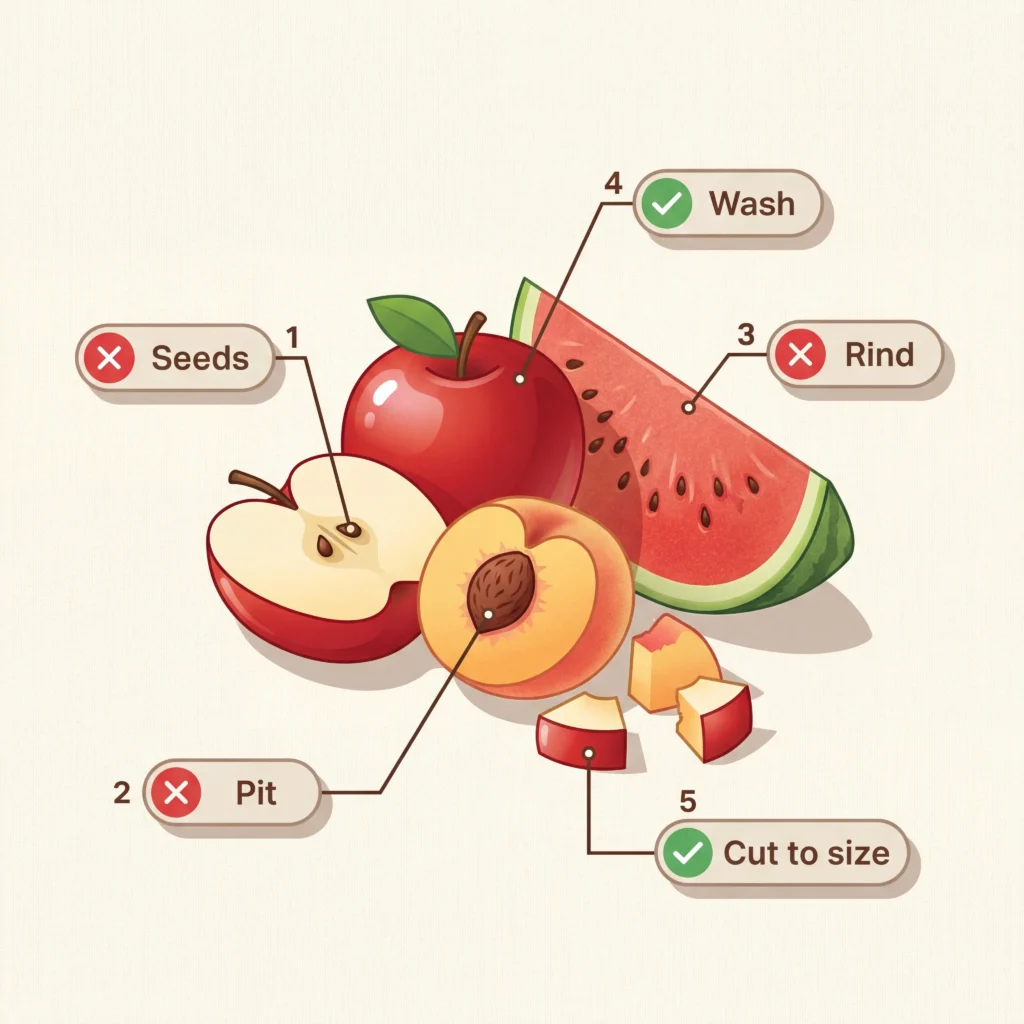
Always remove:
- Pits from stone fruits (peaches, nectarines, cherries, plums)
- Seeds from apples and pears
- Rinds from melons
- Skin from mangos, papayas, and dragon fruit
- Stems and leaves from strawberries (not dangerous, but not digestible)
The pit removal is the most critical. As mentioned earlier, stone fruit pits contain cyanide compounds and present a choking or blockage hazard. I’ve made it a habit to remove pits immediately when I cut stone fruit, before I even think about eating it myself.
Cutting to the Right Size
Cut fruit into pieces appropriate for your dog’s size. What’s fine for a Great Dane could be a choking hazard for a Chihuahua. My rule of thumb: pieces should be small enough that if your dog swallowed without chewing (which dogs do constantly), they’d pass through without causing problems.
For frozen fruit, let it thaw slightly before giving it to your dog. Fully frozen chunks can be hard on teeth, especially for older dogs.
Fresh vs. Frozen vs. Dried
Fresh fruit is usually the best option. You control what’s in it.
Frozen fruit works well too, especially for summer treats. Just make sure it’s plain fruit with no added sugar or syrup.
Dried fruit is trickier. When water is removed, sugar becomes concentrated. A few dried dates or figs have way more sugar than the same amount of fresh fruit. Some dried fruits also have added sugar or are coated in syrup. If you’re giving dried fruit at all, it should be occasional and in very small amounts.
What to Do If Your Dog Ate Something Toxic
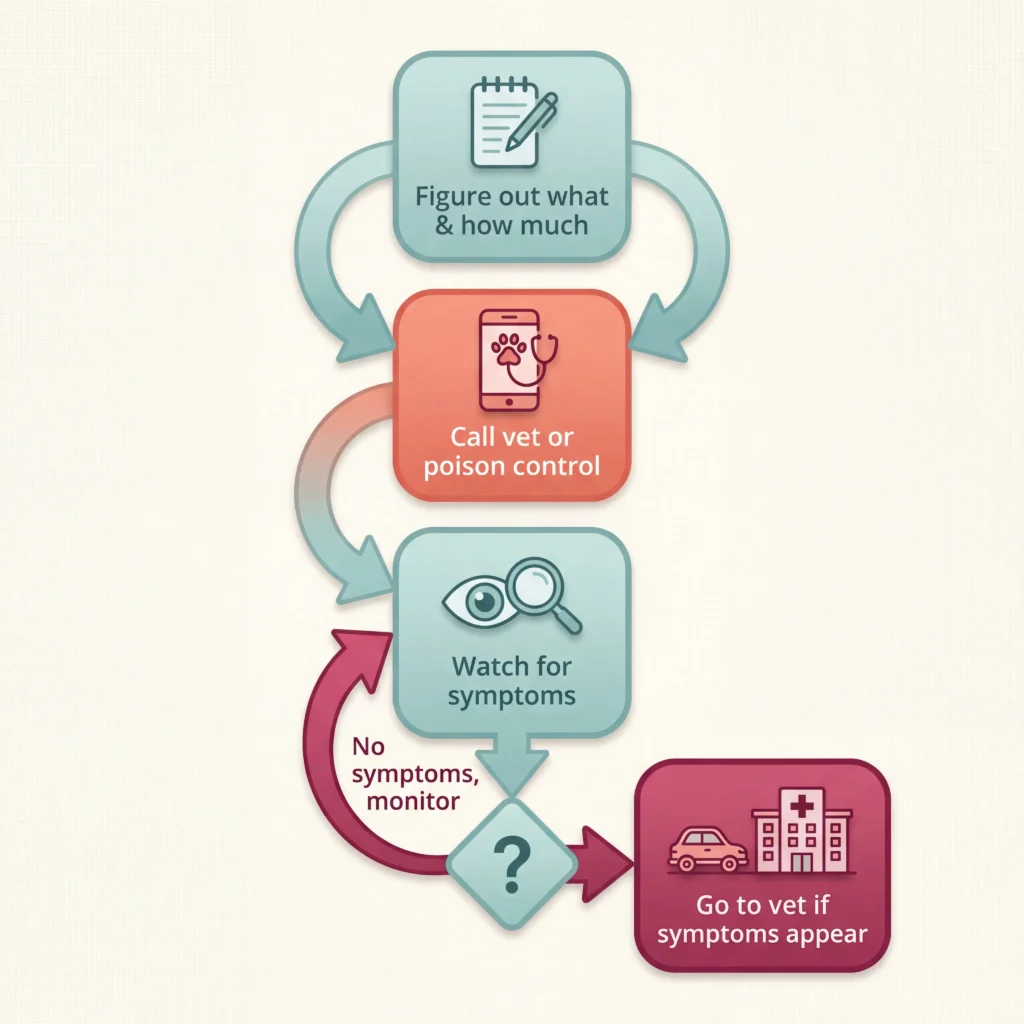
Don’t panic, but also don’t ignore it. Here’s the process I’ve learned from multiple vet calls (trust me on this one).
Step 1: Figure Out What and How Much
Before you call anyone, gather information. What did your dog eat? Approximately how much? When did they eat it? How much does your dog weigh?
Your vet or poison control will ask these exact questions. Having answers ready speeds up getting help.
Step 2: Call Your Vet or Poison Control
For potentially toxic foods like grapes, call your vet immediately. If it’s after hours and your regular vet isn’t available, call an emergency vet clinic or the ASPCA Animal Poison Control Center at 888-426-4435. There’s a fee for the poison control hotline, but they have veterinary toxicologists on staff 24/7.
Do not induce vomiting unless a vet or poison control specifically tells you to. For some substances, vomiting can cause more harm than leaving it in the stomach.
Step 3: Watch for Symptoms
If the vet says to monitor at home, here’s what you’re watching for:
- Vomiting or diarrhea
- Lethargy or unusual tiredness
- Loss of appetite
- Excessive thirst or urination
- Difficulty breathing
- Tremors or seizures
- Changes in gum color (pale, blue, or bright red are all concerning)
Symptoms can appear anywhere from 30 minutes to 24+ hours after ingestion, depending on what they ate.
Step 4: Don’t Wait If Things Look Bad
If your dog shows any concerning symptoms, go to the vet. Don’t wait to see if it gets worse. With something like grape toxicity, kidney damage can progress quickly. Early treatment dramatically improves outcomes.
I’d rather feel silly for an unnecessary vet visit than regret not going. My vet has told me this multiple times.
For meat-related food safety questions or understanding protein as an alternative to fruit treats, Oren covers the meat and bone safety side in his guides if you’re looking for that information.
Signs of a Bad Reaction to Fruit
Even safe fruits can cause problems for individual dogs. Here’s how to tell if your dog isn’t tolerating something well.
Digestive Upset
The most common reaction is digestive upset. This looks like:
- Loose stool or diarrhea
- Vomiting
- Excessive gas
- Loss of appetite for their regular food
- Stomach gurgling (borborygmi)
If your dog has mild digestive upset after eating fruit, it usually resolves on its own within 24-48 hours. Skip the fruit next time, or try a smaller amount.
Allergic Reactions
True fruit allergies are rare in dogs, but they do happen. Signs include:
- Itching, especially around the face, ears, and paws
- Hives or skin redness
- Swelling around the muzzle or eyes
- Vomiting or diarrhea (can indicate allergy or intolerance)
Severe allergic reactions (anaphylaxis) are rare but require immediate veterinary attention. If your dog has difficulty breathing, collapses, or shows extreme facial swelling after eating anything, that’s an emergency.
Choking or Obstruction
If your dog ate a pit, large chunk, or rind, watch for signs of choking or obstruction:
- Gagging or retching without producing anything
- Pawing at the mouth
- Drooling excessively
- Refusing to eat
- Abdominal pain (hunched posture, whimpering when belly is touched)
- Constipation or straining to defecate
Intestinal obstruction is a veterinary emergency. If you suspect your dog swallowed something that’s stuck, don’t wait.
When to Call the Vet
Call your vet if:
- Symptoms last more than 24-48 hours
- Your dog seems in pain
- There’s blood in vomit or stool
- Your dog is lethargic or unresponsive
- You suspect they ate something toxic
Better to call and find out everything’s fine than to wait and discover it wasn’t.
Fruits by Safety Level Quick Reference
Here’s the summary table for quick reference. Print it out and stick it on your fridge if that helps. I have something similar in my kitchen.
| Safety Level | Fruits | Notes |
|---|---|---|
| Safe (prep and moderation required) | Blueberries, raspberries, blackberries, strawberries, watermelon, cantaloupe, honeydew, apples, pears, bananas, mango, papaya, dragon fruit, peaches, nectarines | Remove pits, seeds, rinds, and stems. Cut to appropriate size. |
| Use Caution (small amounts only) | Cranberries, oranges, dates, figs | Higher sugar, tart, or potential digestive effects. Skip dried versions with added sugar. |
| Avoid (causes upset in most dogs) | Pomegranate, grapefruit, lemons, limes | Tannins, psoralens, or high acidity cause digestive problems. |
| Toxic (never give to dogs) | Grapes, raisins | Can cause kidney failure. No safe amount. |
General rules that apply to all fruits:
- Remove pits, seeds, and cores
- Remove rinds and tough skins
- Wash thoroughly
- Cut to appropriate size for your dog
- Start with small amounts
- Watch for reactions
Explore Dog-Safe Fruits In-Depth
I’ve put together detailed guides on specific fruits if you want the full breakdown. Each one covers everything from nutritional benefits to exact serving sizes to what happens if your dog eats too much.
Berries
- Can Dogs Eat Blueberries? – The safest fruit option for most dogs. Low sugar, high antioxidants, and almost no prep required.
- Can Dogs Have Raspberries? – Yes, but the natural xylitol content means moderation matters. This one surprised me when I first researched it.
- Blackberries Guide ? – Another safe berry with solid nutritional value. Good for dogs in their senior years.
- Can Dogs Have Cranberries? – Fresh is fine, but skip the dried kind and cranberry sauce. The UTI benefit is real but overstated.
Tropical Fruits
- Can Dogs Eat Mangos? – Safe when prepared correctly. The skin issue (urushiol) is something most fruit safety lists miss entirely.
- Can Dogs Eat Papaya? – The digestive enzyme angle makes this one interesting. Seeds need to go.
- Dragon Fruit Guide ? – Exotic but surprisingly dog-friendly once you remove the skin.
Stone Fruits
- Peaches guide ? – Fresh peach flesh is great. Canned peaches in syrup are not. Pit removal is critical.
- Can Dogs Eat Nectarines? – Same rules as peaches. The pit danger is serious.
Melons
- Can Dogs Eat Melon? – Covers cantaloupe, honeydew, and watermelon together. Great for summer hydration.
Caution and Avoid
- Can Dogs Eat Pomegranate? – Most vets say skip it. The tannin content causes stomach problems in most dogs.
- Can Dogs Eat Grapefruit? – No. This is the citrus fruit to avoid entirely.
- Can Dogs Eat Dates? – Technically safe, but the sugar content is extremely high. Very small amounts only.
- Can Dogs Eat Figs? – The sap and leaves cause skin irritation. The flesh is okay in small amounts.
What I’ve Learned About Feeding Fruit to Dogs
Sable’s Take:
I used to think fruit safety for dogs was simple. Safe or toxic. Yes or no. After years of researching this stuff (and a few too many panicked vet calls), I’ve figured out it’s more complicated than that.
The biggest lesson? Context matters more than any generic safe/toxic list. A blueberry that falls on the floor is not the same situation as your dog eating a whole bowl of grapes. One requires no action. The other requires immediate veterinary care.
I’ve also learned that my dogs are individuals. My older dog tolerates most fruits fine. My younger dog gets the runs if she eats more than a few pieces of anything new. One of them will spit out cranberries with visible disgust. The other one would eat an entire watermelon if I let her (learned that one the hard way).
The advice that’s served me best came from my vet: when in doubt, call. I’ve made plenty of calls that turned out to be nothing. But I’ve also caught a couple situations early because I didn’t wait to see if things got worse.
Fruit can be a great addition to your dog’s treat rotation. Just know what’s safe, prep it correctly, don’t overdo it, and keep the grapes on a high shelf in a sealed container.
— Sable
5 Common Fruit Feeding Mistakes (And How to Avoid Them)
Mistake #1: Assuming “Safe for Humans” Means “Safe for Dogs”
Why it happens: We share our lives with our dogs. It feels natural to share our food too.
The fix: Some human-safe foods are genuinely dangerous for dogs. Grapes are the clearest example. They’re healthy for us and toxic for dogs. Always verify before sharing.
I made this mistake with avocado once. Read a blog that said the flesh was safe. Fed my dog a piece. She threw up twice that evening. My vet reminded me that even foods that aren’t technically toxic can still upset individual dogs.
Mistake #2: Forgetting About Pits and Seeds
Why it happens: When you’re eating a peach, you eat around the pit automatically. It’s easy to forget your dog won’t do the same.
The fix: Remove pits and cores before fruit goes anywhere near your dog. Make it a habit. I take the pit out immediately when cutting stone fruit now, before I even start eating.
Mistake #3: Giving Too Much at Once
Why it happens: Your dog loves blueberries. You want to make them happy. More seems better.
The fix: Start with tiny amounts. Even safe fruits can cause digestive upset in large quantities. The 10% rule exists for a reason. My older dog once ate half a banana I dropped on the floor. The diarrhea that followed was memorable.
Mistake #4: Not Watching for Individual Reactions
Why it happens: A food is on the “safe” list, so we assume it’s fine for every dog.
The fix: Your dog is an individual. Safe in general doesn’t mean safe for your specific dog. Introduce new fruits slowly and watch how your dog responds over 24-48 hours.
Mistake #5: Panicking Over the Wrong Things
Why it happens: There’s so much conflicting information online. Everything sounds dangerous.
The fix: Know the actually dangerous stuff (grapes, raisins, large amounts of xylitol-containing foods) and don’t stress about the rest. One blueberry on the floor is not an emergency. When in doubt, call your vet. That’s what they’re there for.
Frequently Asked Questions
Q: What fruit is toxic for a dog?
A: Grapes and raisins are the most dangerous. They can cause acute kidney failure in dogs, and there’s no way to predict which dogs will react badly. Even small amounts are risky. Other fruits to avoid include grapefruit (causes GI upset and photosensitivity) and any fruit with pits or seeds still intact (cyanide risk). If your dog eats grapes or raisins, call your vet immediately.
Q: Which fruits are not toxic to dogs?
A: Most common fruits are safe when prepared properly. The safe list includes blueberries, strawberries, raspberries, blackberries, watermelon (seedless), cantaloupe, honeydew, apples (no seeds), pears (no seeds), bananas, mango (no skin or pit), papaya (no seeds), peaches (no pit), and nectarines (no pit). Always remove pits, seeds, and rinds before feeding.
Q: What fruit can a dog eat daily?
A: If you’re giving fruit daily, stick to low-sugar options in small amounts. Blueberries are my go-to. They’re low in sugar, high in antioxidants, and tiny enough that portion control is easy. A few berries a day for a medium-sized dog is reasonable. Just remember that even daily treats should stay within the 10% of calories rule. Fruit is a treat, not a dietary staple.
Q: How do I know if my dog is having a bad reaction to fruit?
A: Watch for digestive upset first. Loose stool, vomiting, excessive gas, or loss of appetite are all signs your dog isn’t tolerating something well. These usually resolve in 24-48 hours. More serious signs include lethargy, blood in stool or vomit, difficulty breathing, or seizures (rare but possible with toxic fruits). If symptoms are severe or don’t improve, call your vet. I’ve called over mild diarrhea before and my vet was perfectly happy to reassure me.
Q: Can puppies eat the same fruits as adult dogs?
A: Puppies can eat the same safe fruits, but in even smaller amounts. Their digestive systems are still developing. Start with tiny pieces, one type at a time, and watch for reactions. I’d stick to simple options like blueberries or small pieces of banana rather than anything that requires extensive prep. And definitely wait until they’re eating solid food reliably before adding treats.
Q: Are dried fruits safe for dogs?
A: Fresh or frozen is better than dried. When fruits are dried, the sugar becomes concentrated. A few dates have way more sugar than the same volume of fresh fruit. Some dried fruits also have added sugar or preservatives. If you do give dried fruit, keep it to very small amounts and check the ingredients for anything added. And never give dried grapes (raisins). Those are toxic regardless of form.
Q: My dog ate a grape. What do I do?
A: Call your vet or the ASPCA Animal Poison Control Center (888-426-4435) immediately. Don’t wait to see if symptoms develop. Grape toxicity is unpredictable, and early treatment improves outcomes significantly. Have information ready: your dog’s weight, approximately how many grapes they ate, and when they ate them. Your vet will advise whether your dog needs to come in or can be monitored at home.
Your Next Steps
You’ve got the full picture now. Here’s where to go from here.
Start with the basics. If you’re new to giving your dog fruit, blueberries are the safest starting point. Low sugar, no prep beyond washing, and dogs generally love them.
Make a mental note of what’s dangerous. Grapes and raisins are the big ones. Keep them out of reach. When I moved my grapes to a sealed container on a high shelf, it removed the worry entirely.
When something goes wrong, you know what to do. Call your vet. Don’t spiral through search results trying to figure out if it’s serious. One phone call gets you a real answer. I keep my vet’s number and the poison control hotline saved in my phone for exactly this reason.
Keep it off the counter and you won’t have to Google this again.
— Sable
About the Author
Sable Ingraham — Dog Food Safety Writer
Sable Ingraham writes about dog food safety for FetchOrSkip. Her path into this topic started the way most dog owners’ worst evenings do: her dog ate something off the kitchen floor and she couldn’t get a clear answer about whether it was dangerous. After a panicked call to her vet and a deep rabbit hole of contradictory information online, she started keeping track of which foods were actually safe, which ones weren’t, and where the popular lists got it wrong.
Over the years, she’s tracked food reactions in both her dogs, called poison control more than she’d like to admit, and built a working knowledge of dog food safety through direct experience and vet consultations. Sable writes for the dog owner standing in their kitchen trying to figure out if they need to worry. Her goal is to be the clear, honest answer she couldn’t find that first night.
Remember: This guide is based on personal experience and general information. It is not a substitute for professional veterinary advice. When in doubt about your dog’s health, always consult your veterinarian.