By Oren Basurto | Dog food safety writer with a biology background and years of hands-on feeding experience | Published: March 13, 2026 | Updated: March 13, 2026 | 14 min read
Quick answer: Yes, dogs can eat meat, fish, and bones safely when you know the rules. But not all proteins are equal, and bones are where most owners get into trouble.
The short version:
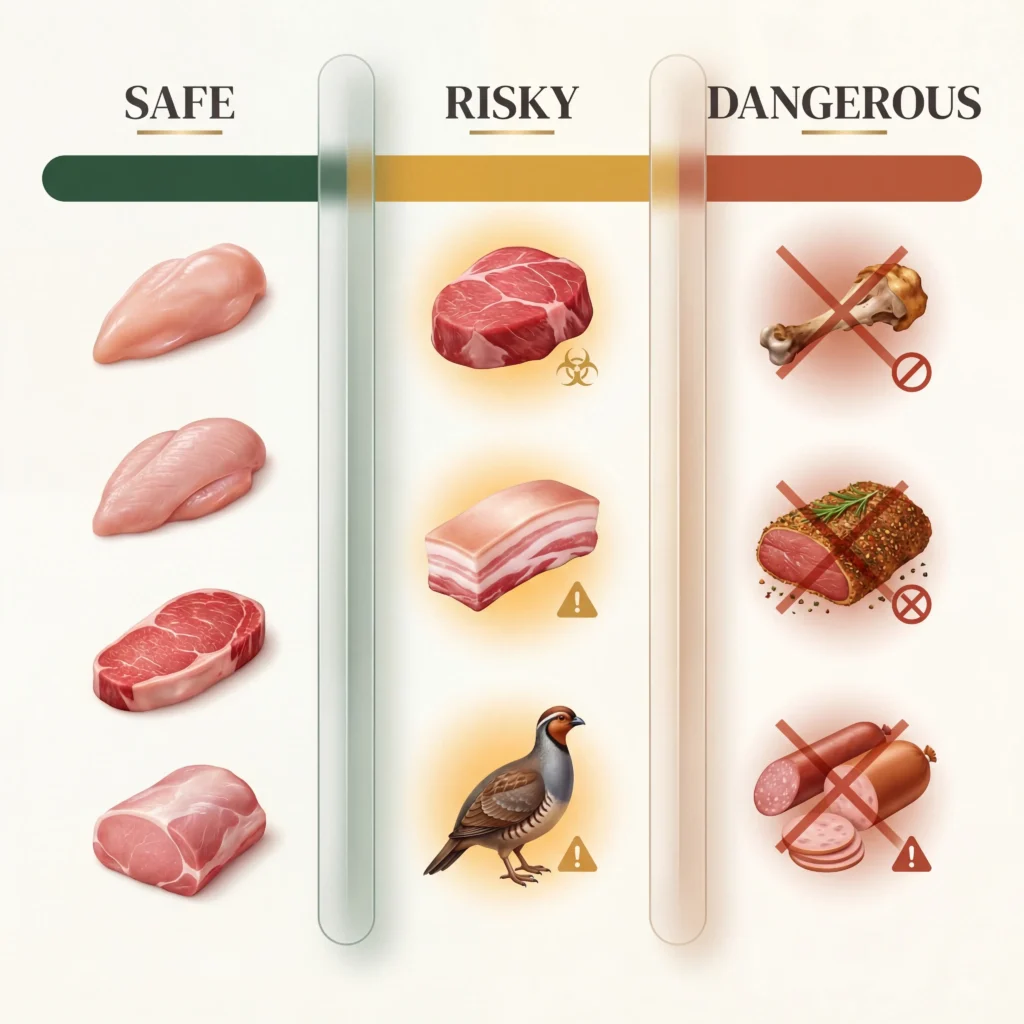
- Safe: Lean cooked meats (chicken, turkey, beef, pork loin), most cooked fish (salmon, sardines, cod, whitefish)
- Risky: Raw meat (pathogen risk), raw fish (parasites), high-mercury fish (tuna, swordfish)
- Dangerous: Cooked bones (splinter), seasoned or processed meats (toxic ingredients), fish bones (choking hazard)
Red meat, poultry, and many fish species provide excellent nutrition when prepared correctly. The real risks come from raw meat pathogens, cooked bone splintering, and high-mercury fish species. This guide breaks down exactly which proteins are safe, which preparation methods matter, and what to do if your dog eats something they shouldn’t have.
Table of Contents
Introduction
Most dog food safety advice online treats protein like a yes-or-no question. It’s not. The same cut of pork that’s perfectly safe when cooked plain becomes a pancreatitis risk when it’s seasoned and fatty. A raw salmon fillet can carry a parasite that kills over 90% of untreated dogs. And that cooked chicken bone your dog grabbed off your plate? It can splinter into fragments sharp enough to perforate an intestine.
I learned this the hard way. My dog spent about a month on a raw diet that an online forum swore was the gold standard for large breeds. Within weeks, he had intermittent diarrhea and elevated liver enzymes. The vet told me the recipe I’d been following had no nutritional balancing: too much organ meat, not enough calcium. Forum advice isn’t research. That experience changed how I approach every protein question.
This guide covers the full territory of meat, fish, and bones safe for dogs: red meat, poultry, fish, shellfish, bones, organ meats, and processed meats. You’ll find specific guidance on which proteins are safe, how preparation changes the risk profile, and what to do when something goes wrong. I’ve pulled from veterinary toxicology references, FDA advisories on raw pet food, and several years of managing a food-sensitive dog through trial-and-error dietary adjustments.
If you’re here because your dog just ate something and you’re worried, start with the specific section that matches your situation. If you want the full picture, read straight through.
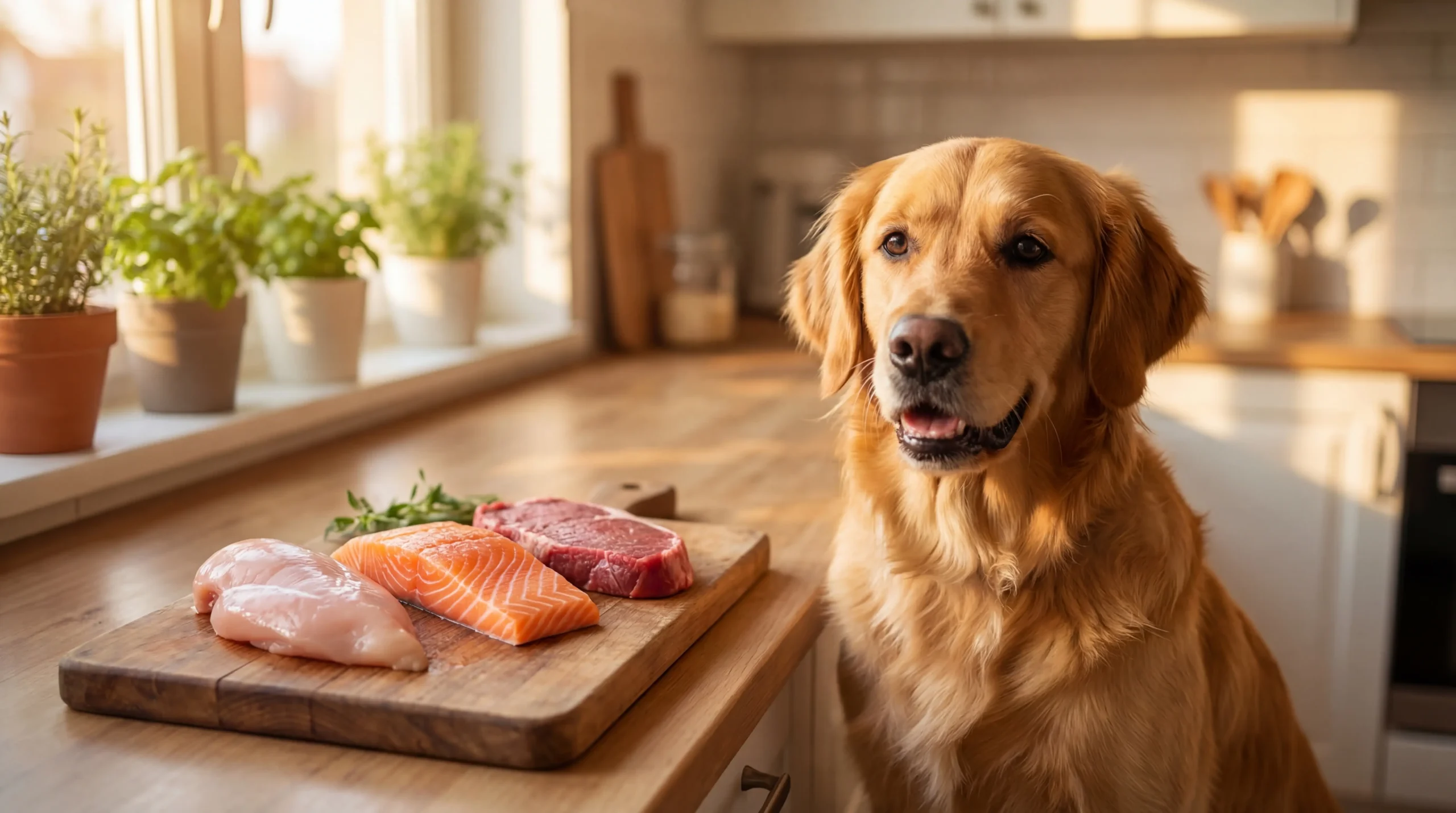
[IMAGE: Various safe proteins for dogs arranged on cutting board – chicken breast, salmon fillet, lean beef]
Safe Meats for Dogs
Dogs are facultative carnivores. Their digestive systems evolved to process animal protein efficiently, and meat provides amino acids they can’t synthesize on their own. But “dogs can eat meat” is the start of the conversation, not the end.
The safest meats for dogs share three characteristics: lean cuts, plain preparation, and thorough cooking. Chicken breast, turkey breast, lean beef, and plain cooked pork loin all fit this profile. These proteins deliver high bioavailability without the fat content that triggers gastrointestinal upset or pancreatitis in sensitive dogs.
Here’s what the data actually shows: the protein source matters less than the preparation. A lean pork chop cooked without seasoning is safer than a fatty chicken thigh cooked in butter and garlic. The fat percentage and the additives determine the risk, not the animal it came from.
Red meat considerations: Beef and lamb are nutrient-dense but higher in fat than poultry. Stick to lean cuts like sirloin, flank, or round. Ground beef works if you drain the fat after cooking. My dog tolerates leaner ground beef well; anything with higher fat content and his stool gets loose within a day.
Poultry guidance: Chicken and turkey are excellent lean protein sources. Remove the skin before serving (it’s mostly fat) and never include bones from cooked poultry. Turkey gets a seasonal spike in vet visits every November because owners share Thanksgiving leftovers without removing the skin, bones, and seasoned stuffing.
What three meats should dogs avoid? The riskiest proteins fall into three categories: high-fat processed meats (bacon, sausage), seasoned or cured meats (anything with garlic, onion, or excessive salt), and wild game that hasn’t been properly inspected (potential parasites and pathogens). These aren’t technically “meat types” but preparation categories that turn safe proteins into hazards.
Organ Meats: Nutrient-Dense but Dose-Dependent
Organ meats deserve careful attention. Liver, kidney, and heart provide concentrated nutrients that muscle meat doesn’t offer in the same quantities. Liver is particularly rich in vitamin A, iron, and B vitamins. Kidney provides selenium and B12. Heart is an excellent source of taurine, an amino acid some dogs need supplemented.
The catch: organ meats should make up no more than 5-10% of your dog’s total protein intake. Too much liver causes vitamin A toxicity over time, with symptoms including bone abnormalities, joint pain, and in severe cases, neurological issues. The AVMA notes that nutritional imbalances are a common problem in home-prepared diets. I include organ meat in my dog’s diet about once a week, treating it as a supplement rather than a staple.
Protein Allergies: When Safe Meats Cause Problems
Some dogs develop allergies or intolerances to specific proteins, even ones that are otherwise safe. Chicken is actually one of the more common protein allergens in dogs, followed by beef. Signs of a protein allergy include chronic itching (especially ears and paws), recurrent ear infections, and digestive upset that doesn’t resolve.
If you suspect a protein allergy, the gold standard is an elimination diet under veterinary supervision: feeding a single novel protein your dog has never eaten before (like venison or duck) for 8-12 weeks, then reintroducing previous proteins one at a time to identify the trigger. This is tedious but it’s the only reliable method. Blood tests for food allergies in dogs have poor accuracy.
Fish Dogs Can and Cannot Eat
Fish is where most online food safety lists fall apart. They’ll tell you “fish is safe for dogs” without mentioning salmon poisoning disease, mercury accumulation, or thiaminase enzymes. Two different risks, same food category.
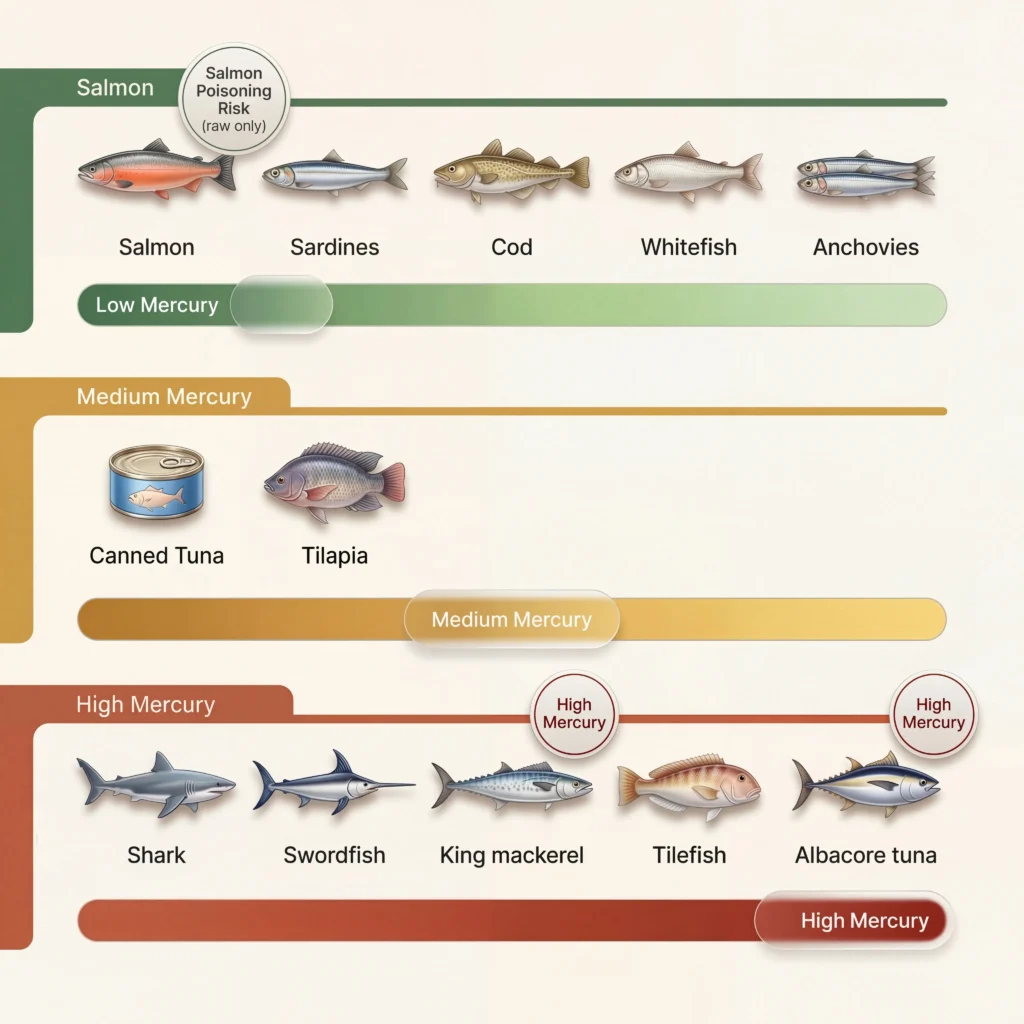
Safe fish for dogs: Short-lived species with low mercury accumulation are your best options. This includes salmon (cooked), sardines, herring, whitefish, cod, flounder, and anchovies. These fish are typically harvested young, before mercury builds up in their tissues, and they provide omega-3 fatty acids that support coat health and reduce inflammation.
Fish to avoid: Large, long-lived predatory fish accumulate mercury throughout their lives. Shark, swordfish, king mackerel, tilefish, and albacore tuna carry the highest risk. The FDA’s fish consumption guidelines rank these as “choices to avoid” even for humans. Mercury poisoning in dogs causes neurological symptoms: tremors, loss of coordination, blindness. The damage is often irreversible by the time symptoms appear.
Is it safe for a dog to eat fish bones? No. Fish bones are small, brittle, and can lodge in your dog’s throat, stomach, or intestines. Unlike some larger raw bones that dogs can process, fish bones splinter regardless of whether they’re raw or cooked. Always debone fish completely before serving. If your dog swallowed fish bones and is gagging, drooling excessively, or pawing at their mouth, call your vet immediately.
Freshwater vs Saltwater Fish: Different Risk Profiles
The origin of the fish matters for safety assessment. Freshwater fish from certain regions carry specific parasitic risks that saltwater fish don’t share.
Freshwater concerns: The most significant is salmon poisoning disease, caused by a parasite found in salmon, trout, and steelhead from Pacific Northwest rivers. Freshwater fish are also more likely to contain thiaminase-producing bacteria (see below). Some freshwater sources have higher environmental contamination depending on local pollution.
Saltwater advantages: Ocean fish generally have lower parasite loads that affect dogs specifically. The salmon poisoning parasite doesn’t survive in saltwater salmon. However, saltwater fish can still harbor other parasites and bacteria eliminated by cooking. The larger predatory saltwater species (tuna, swordfish) carry the highest mercury loads.
The bottom line: Cook all fish regardless of origin. The freshwater vs saltwater distinction matters most for raw feeding advocates, and I don’t recommend raw fish for dogs under any circumstances.
Wild-Caught vs Farm-Raised: Quality Considerations
Wild-caught fish generally have better omega-3 profiles because of their natural diet. They’re less likely to contain antibiotic residues. The trade-off: potential exposure to environmental contaminants depending on where they were caught, and the salmon poisoning disease risk for Pacific Northwest freshwater species.
Farm-raised fish have more controlled conditions but variable quality depending on the farm’s practices. Some farms use antibiotics, artificial dyes (to make salmon flesh pink), and crowded conditions that increase disease. The FDA has stricter regulations for US farms, but imported farmed fish may not meet the same standards. If you’re buying farmed fish for your dog, US-sourced or farms with third-party sustainability certifications are safer bets.
For most dog owners, the wild vs farmed distinction matters less than cooking the fish properly and avoiding high-mercury species.
DEFINITION: Salmon Poisoning Disease (SPD)
A potentially fatal infection caused by the parasite Neorickettsia helminthoeca, found in salmon, trout, and steelhead from Pacific Northwest freshwater sources. Dogs are uniquely susceptible; the disease doesn’t affect humans or cats. Symptoms appear 5-7 days after ingestion and include fever, vomiting, diarrhea, and swollen lymph nodes. Without treatment, the fatality rate exceeds 90%. Cooking fish to 145°F kills the parasite completely.
The Thiaminase Problem
Certain raw fish contain thiaminase, an enzyme that destroys vitamin B1 (thiamine). Dogs fed large amounts of raw thiaminase-containing fish over time can develop thiamine deficiency, leading to neurological problems including seizures, loss of coordination, and in severe cases, death.
DEFINITION: Thiaminase
An enzyme found in certain raw fish species (carp, smelt, some herring, raw crayfish, mussels, and various freshwater fish) that breaks down thiamine (vitamin B1). Cooking deactivates the enzyme completely. Thiamine deficiency in dogs causes neurological symptoms including weakness, loss of appetite, and seizures.
This is another reason raw fish feeding requires more research than most forums suggest. Cooking deactivates thiaminase completely.
I feed my dog cooked salmon about once a week, deboned and plain. Raw salmon? Never. For a complete breakdown of fish safety by species, see the full fish safety guide.
[IMAGE: Cooked salmon fillet, deboned, on plate – safe preparation example]
Bone Safety Rules for Dogs
Bones are the single most contentious topic in dog feeding. Raw feeders insist they’re essential. Vets see the emergency cases. The truth sits somewhere specific: some bones are reasonably safe under supervision, others are genuinely dangerous, and the variable that matters most is whether they’ve been cooked.
The core rule: cooked bones splinter. This isn’t a myth or an exaggeration. Heat changes the molecular structure of bone, making it brittle. When a dog’s powerful jaw cracks a cooked bone, it fractures into sharp fragments that can perforate the esophagus, stomach, or intestinal walls. I learned this directly when my dog grabbed a cooked chicken bone off a plate. It splintered in his mouth. I had to pull fragments out before he swallowed them. Nothing required a vet visit that time, but I never made that mistake again.
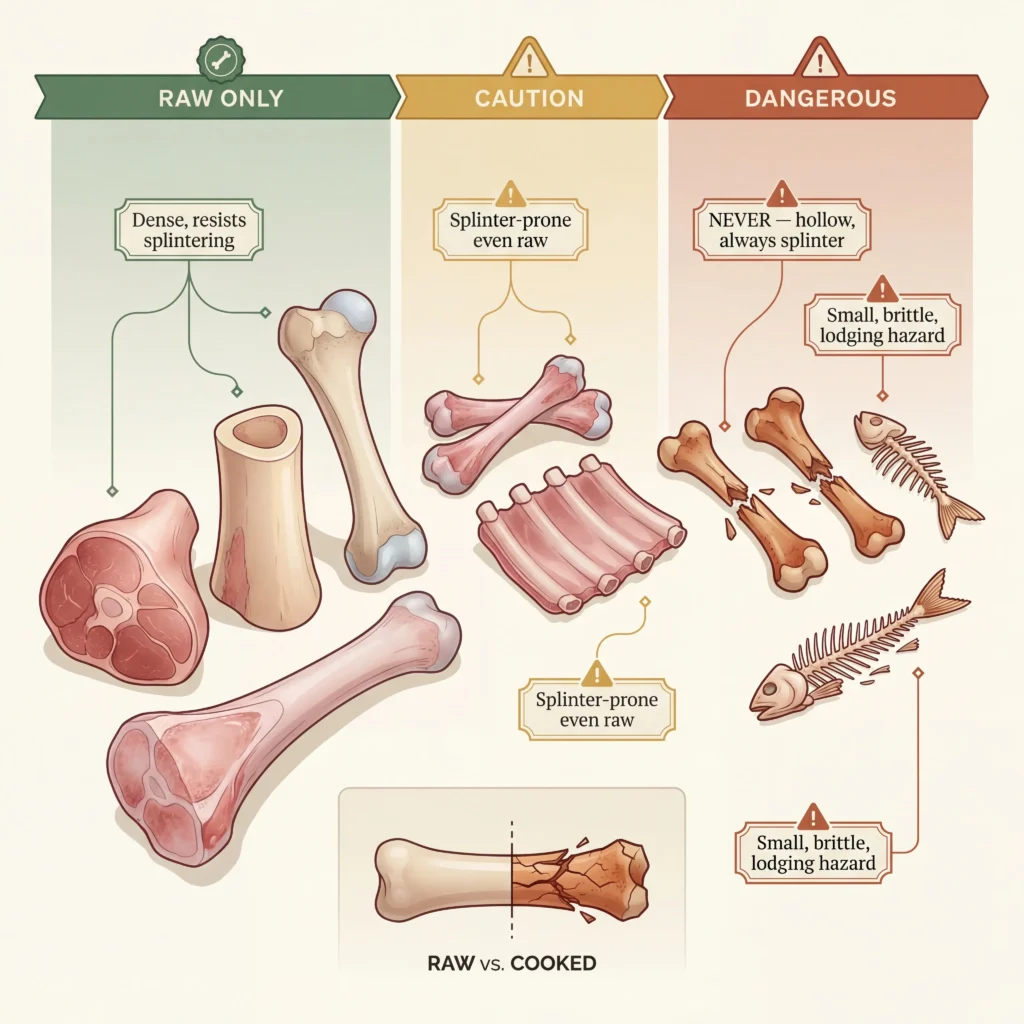
Bone Safety Comparison Table
| Bone Type | Raw | Cooked | Risk Level | Notes |
|---|---|---|---|---|
| Beef knuckle/marrow | Safer | NEVER | Low-Medium | Dense, resists splintering. Supervise. |
| Large lamb bones | Safer | NEVER | Low-Medium | Similar to beef. Size-match to dog. |
| Pork bones | Risky | NEVER | Medium-High | Splinter-prone even raw. |
| Rib bones (any) | Risky | NEVER | High | Shape allows cracking into shards. |
| Chicken bones | NEVER | NEVER | Very High | Hollow, thin-walled, always splinter. |
| Turkey bones | NEVER | NEVER | Very High | Same as chicken. |
| Fish bones | NEVER | NEVER | Very High | Small, brittle, lodging hazard. |
What meat bones are safe for dogs? If you’re going to give bones, raw bones from large animals are the safer option. Beef knuckle bones, beef marrow bones, and large raw lamb bones are dense enough to resist splintering under bite pressure. The key word is “safer,” not “safe.” Even raw bones carry risks: broken teeth from aggressive chewing, gastrointestinal blockages if large pieces are swallowed, and bacterial contamination from the raw surface.
Chicken bones and other poultry bones: Never, regardless of raw or cooked status. Poultry bones are hollow and thin-walled. They fracture easily and create sharp edges. Turkey and duck bones carry the same risk profile.
Pork and rib bones: High risk. Pork bones are denser than poultry but still prone to splintering when cooked. Raw pork bones are better than cooked, but the shape makes them easy to crack into dangerous fragments. Most vets recommend avoiding them entirely.
Size matching matters. A bone should be large enough that your dog can’t fit the whole thing in their mouth. If they can crack it in half or attempt to swallow it whole, it’s too small. I’ve watched my large-breed dog crack a raw beef bone in half with enough force to send a piece skidding across the floor. Match the bone size to your dog’s jaw strength.
Supervision is non-negotiable. Never leave a dog alone with any bone. Take it away when it gets small enough to swallow or when pieces start breaking off. If you hear a crack that doesn’t sound right, remove the bone immediately.
For the complete bone safety breakdown by type, see the full bone guide.
Raw vs Cooked Meat for Dogs
Raw and cooked are two different conversations here. The raw feeding movement makes compelling arguments about ancestral diets and enzyme preservation. Veterinary medicine points to documented pathogen risks and nutritional imbalances. Both sides have data. Neither has the complete picture.
The case for cooking: Heat kills pathogens. Salmonella, E. coli, Listeria, Campylobacter, and parasites like Trichinella (in pork) and Neorickettsia (in salmon) are eliminated by proper cooking temperatures. The FDA and AVMA both recommend against raw meat diets for dogs, primarily because of pathogen transmission risk to both dogs and the humans handling the food.
The case for raw: Proponents argue that cooking denatures proteins and destroys enzymes that aid digestion. They point to shinier coats, smaller stools, and improved energy in dogs fed raw diets. Some of these observations are real; whether they’re caused by the rawness specifically or by the overall higher quality of ingredients in home-prepared diets is debated.
What I’ve concluded after years of reading the data and managing my own dog’s diet: The pathogen risk is real and documented. The nutritional benefits of raw feeding can be achieved through properly cooked food with appropriate supplementation. The margin for error in raw feeding is narrow: contamination, nutritional imbalance, and bone fragment risks all require careful management.
If you choose to feed raw, source from reputable suppliers, handle the meat with the same precautions you’d use for your own raw chicken, and work with a veterinary nutritionist to ensure the diet is balanced. My dog is no longer on a raw diet. The forum-sourced recipe that made him sick taught me that enthusiasm isn’t expertise.
Cooking Guidelines: Temperature Matters More Than You Think
These aren’t suggestions. They’re the temperatures required to kill dangerous pathogens. Most home cooks underestimate how hot “fully cooked” actually needs to be. Use a meat thermometer; don’t guess.
| Protein Type | Internal Temperature | Rest Time | Key Pathogens Eliminated |
|---|---|---|---|
| Poultry (chicken, turkey) | 165°F (74°C) | None required | Salmonella, Campylobacter |
| Ground meats (any) | 160°F (71°C) | None required | E. coli, Salmonella |
| Whole cuts (beef, pork, lamb) | 145°F (63°C) | 3 minutes | Trichinella, E. coli (surface) |
| Fish | 145°F (63°C) | None required | Neorickettsia, Anisakis, bacteria |
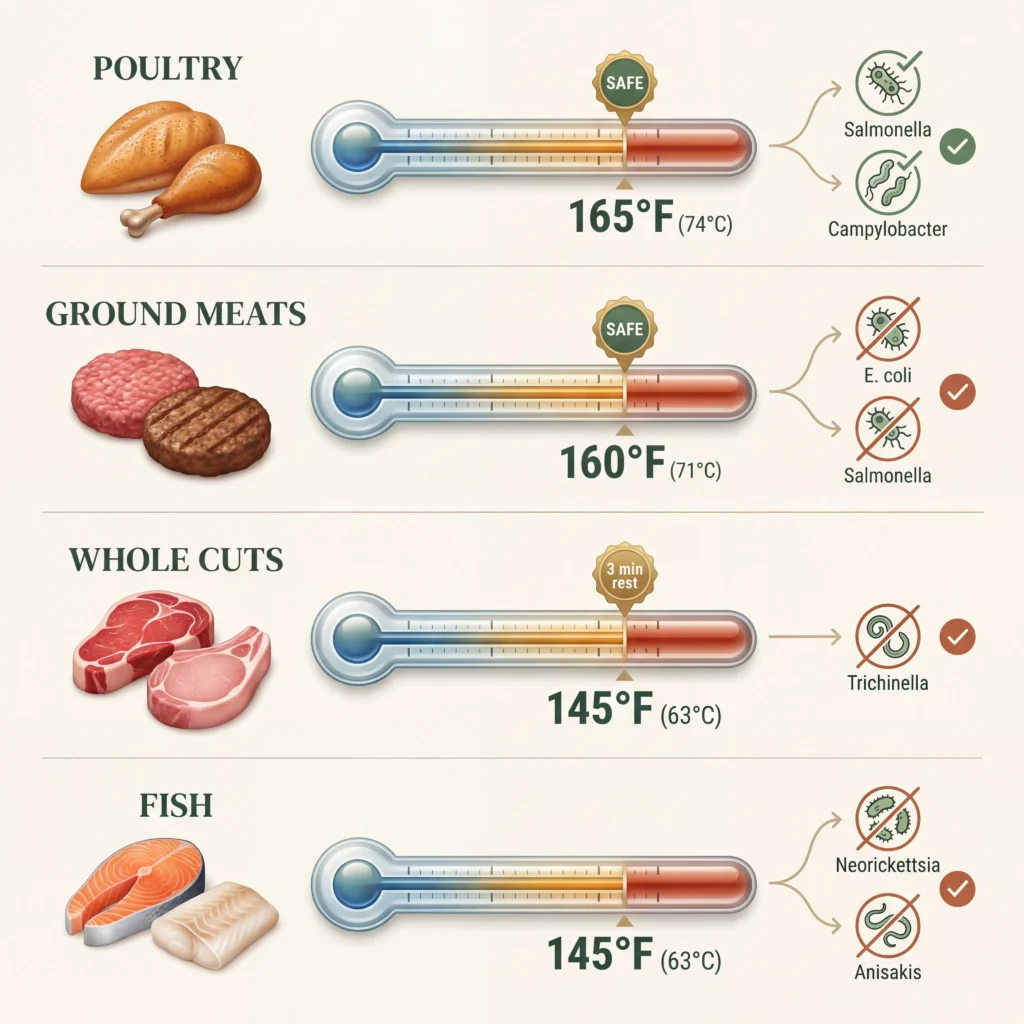
Why ground meat needs higher temps: Grinding mixes surface bacteria throughout the meat. A steak only needs surface cooking because pathogens can’t penetrate intact muscle. Ground beef has no “surface” anymore.
Plain preparation means no oil, butter, garlic, onion, salt, or seasoning blends. If you wouldn’t feed the seasoning to your dog directly, don’t cook the meat in it.
Processed Meats and Dogs
Processed meats are where “technically not toxic” collides with “genuinely bad for your dog.” Salami, hot dogs, bacon, sausage, deli meats, and pepperoni won’t kill your dog in a single serving. But the ingredient profiles make them poor choices for regular feeding.
The sodium problem: Processed meats are preserved with salt. A single slice of deli ham can contain 300-400mg of sodium. Dogs need far less sodium than humans, and chronic excess contributes to heart disease, kidney strain, and hypertension. One stolen slice isn’t an emergency. Regular feeding is a different calculation.
Hidden toxic ingredients: Many processed meats contain garlic powder, onion powder, or both. These alliums damage red blood cells in dogs, causing hemolytic anemia with repeated exposure. The dose makes the poison: a trace amount once won’t cause clinical signs. But processed meats often contain these seasonings in every serving, and the cumulative effect matters.
Fat content and pancreatitis: Bacon, sausage, and fatty deli meats can trigger acute pancreatitis in susceptible dogs. This isn’t a minor stomach upset. Pancreatitis causes severe abdominal pain, vomiting, and can be fatal in serious cases. Dogs with history of pancreatitis, small breeds, and overweight dogs face higher risk.
Nitrates and nitrites: These preservatives are common in cured meats. While the cancer risk in dogs isn’t as well-documented as in humans, the lack of nutritional benefit combined with the other risk factors makes these additives another reason to skip processed meats.
The bottom line on processed meats: Your dog grabbing a piece of pepperoni that fell on the floor isn’t a crisis. But these foods have no place in a planned diet. If you want to share protein with your dog, plain cooked meat is always the better choice.
Serving Sizes and Frequency
The dose makes the poison. This applies to beneficial foods too. Even safe proteins can cause problems when portion sizes are wrong or when treats displace balanced nutrition.
General protein serving guidelines:
| Dog Size | Single Protein Treat | Max Weekly Fish | Notes |
|---|---|---|---|
| Small (under 20 lbs) | 1-2 oz | 1 oz, 2x weekly | Watch fat content closely |
| Medium (20-50 lbs) | 2-4 oz | 2-3 oz, 2x weekly | Standard tolerance |
| Large (50-90 lbs) | 4-6 oz | 4-5 oz, 2x weekly | Higher calorie needs |
| Giant (90+ lbs) | 6-8 oz | 6 oz, 2x weekly | Portion by activity level |
These guidelines are based on veterinary nutrition recommendations for supplemental feeding. Your veterinarian will guide you on amounts specific to your dog’s age, weight, and health conditions.
These are supplemental treats, not meal replacements. The 10% rule applies: treats (including meat treats) should make up no more than 10% of your dog’s daily caloric intake. The other 90% should come from nutritionally complete food.
Frequency considerations: Variety matters more than frequency. Rotating between chicken, beef, fish, and other proteins exposes your dog to different amino acid profiles and reduces the risk of developing sensitivities from overexposure to a single protein source.
Pairing proteins with other foods: If you’re building homemade meals or toppers, balance proteins with appropriate vegetables and carbohydrates. Sable covers the vegetable safety side in her guides if you’re looking to pair proteins with plant-based additions. Sweet potato, green beans, and carrots all complement lean proteins well. Yes, dogs can have carrots safely.
When to reduce portions or frequency:
- After pancreatitis diagnosis (reduce fat, smaller portions)
- Kidney disease (may need protein restriction per vet guidance)
- Weight management (track treat calories carefully)
- Senior dogs with reduced activity (adjust portions to metabolism)
Your vet will want to know this: if you’re feeding significant amounts of home-prepared protein regularly, mention it at checkups. It affects how they interpret bloodwork and may require dietary adjustments.
Explore Meat, Fish and Bone Safety Topics
This pillar covers the broad territory. The guides below go deep on specific proteins, preparation methods, and safety questions. Each one addresses a question I’ve seen dog owners ask repeatedly, and most of them are questions I’ve had to answer for my own dog at some point.
Red Meat and Pork
- Can Dogs Eat Pork? — The full breakdown on pork cuts, preparation requirements, and the trichinella consideration that makes raw pork riskier than other meats. Includes fat content warnings for dogs prone to pancreatitis.
- Can Dogs Eat Salami? — Why this deli favorite is a bad choice for dogs, what to do if your dog grabbed some off the counter, and the hidden garlic and onion powder problem in processed meats.
- Are Pig Ears Good for Dogs? — The FDA recall history you should know about, salmonella contamination concerns, and how to evaluate pig ear products if you decide to use them.
Poultry
- Is Turkey Good for Dogs? — Safe parts versus dangerous parts, why Thanksgiving turkey requires serious prep work before sharing, and ground turkey as a lean protein base for homemade meals.
- Can Dogs Have Chicken Bones? — The emergency guide for when your dog already ate one. Covers warning signs, what to monitor, and when you need to get to a vet immediately.
- Can Dogs Have Chicken Broth? — Store-bought ingredient traps to avoid, a simple homemade recipe, and when broth actually helps a sick or dehydrated dog recover.
Fish and Seafood
- Can Dogs Eat Fish? — The complete fish species safety ranking with mercury data, thiaminase risks, and the preparation methods that eliminate parasites.
- Can Dogs Eat Salmon? — Salmon poisoning disease explained in detail, geographic risk factors, why raw salmon is never worth the risk, and safe cooking methods.
- Can Dogs Eat Salmon Skin? — The omega-3 concentration in salmon skin, fat content considerations for different dog sizes, and when to skip it entirely.
- Can Dogs Eat Sardines? — Why sardines are one of the safest fish options with the lowest mercury levels, canned varieties ranked by safety, and portion guidance by dog size.
- Can Dogs Eat Shrimp Tails? — The choking hazard you might not expect, shell risks, and how to serve shrimp meat safely.
Bones and Chews
- Can Dogs Eat Bones? — Bone types ranked by safety with specific guidance on raw versus cooked, size matching for different breeds, and emergency protocols when bones cause problems.
Alternative Proteins
- Can Dogs Eat Tofu? — The honest assessment of plant protein for dogs, soy allergy considerations, and why animal proteins remain the better choice for canine nutrition.
What I’ve Learned About Feeding Proteins
Oren Basurto’s Take:
The forum that recommended my dog’s first raw diet had thousands of members who swore it was the only way to feed a dog properly. My dog’s bloodwork told a different story. Elevated liver enzymes within a month. The recipe had no nutritional balancing.
That experience taught me something I apply to every food safety question now: crowd-sourced advice isn’t research. One person’s dog tolerating something doesn’t mean yours will. And the people most confident about feeding recommendations are often the ones who’ve never dealt with the consequences of getting it wrong.
From my work in laboratory settings, I learned to look at the actual data rather than anecdotes. The biochemistry of why cooked bones splinter, how pathogens survive in raw meat, why certain fish accumulate mercury: these aren’t opinions. They’re measurable processes that explain the risks.
I still believe protein is the foundation of a healthy dog diet. But the details matter: which cuts, how they’re prepared, whether the diet is balanced across all nutrients. If you’re building a home-prepared diet, work with a veterinary nutritionist. If you’re supplementing commercial food with protein treats, keep portions in the 10% range and watch for changes in stool, coat, and energy.
The safest approach is also the most boring one: plain cooked lean meats, properly deboned fish, no processed junk. It’s not exciting, but it works.
— Oren Basurto, Dog Food Safety Writer
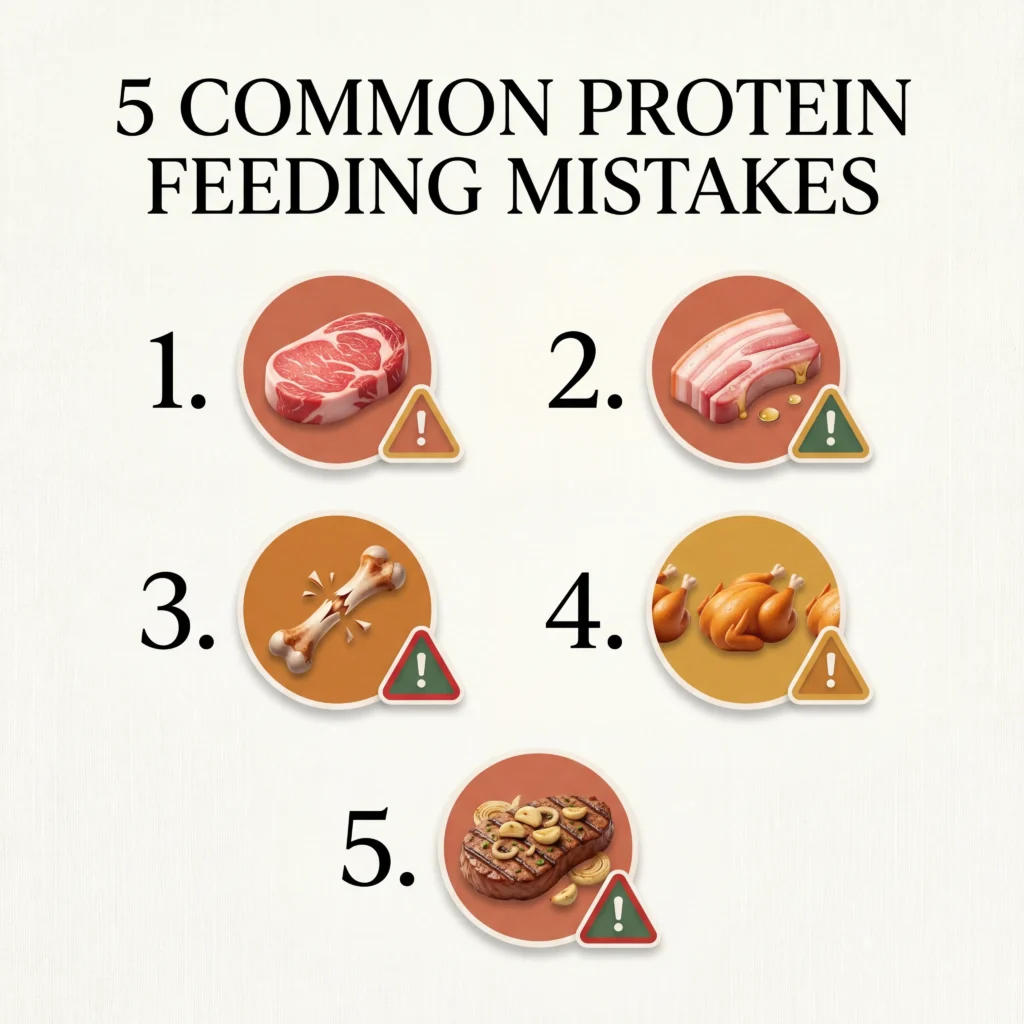
5 Common Protein Feeding Mistakes (And How to Avoid Them)
Mistake #1: Assuming “natural” means safe
Why it happens: Raw bones, whole fish, and organ meats feel like the ancestral diet dogs evolved eating. Natural must be better.
The fix: Wild canids also die young from parasites, malnutrition, and injuries. “Natural” describes origin, not safety. Cook proteins to appropriate temperatures, debone fish completely, and limit organ meats to 5-10% of the diet.
I made this mistake with the raw diet I mentioned. The forum framed it as returning to natural feeding. My dog’s liver enzymes suggested otherwise.
Mistake #2: Ignoring fat content because it’s “just meat”
Why it happens: Meat is protein, protein is good, therefore all meat is good. The logic skips a step.
The fix: Fat content varies dramatically between cuts. Chicken skin is mostly fat. Bacon is mostly fat. Even lean ground beef varies from 70% to 96% lean. Choose cuts with visible fat removed, and stick to lean options for dogs with sensitive stomachs or pancreatitis history.
Mistake #3: Giving cooked bones because they seem “softer”
Why it happens: Cooked bones seem less intimidating than raw ones. Some owners believe cooking makes them safer.
The fix: Cooking makes bones MORE dangerous, not less. The heat changes bone structure from flexible to brittle. Cooked bones fracture into sharp splinters. If you’re going to give bones at all, raw from large animals is the safer direction. But supervise always, and take them away when they get small.
Mistake #4: Feeding the same protein exclusively
Why it happens: You found one protein your dog loves and tolerates. Why change?
The fix: Exclusive feeding of any single protein increases the risk of developing allergies or sensitivities to that protein. Rotate between chicken, beef, fish, and other options. Variety also provides a broader amino acid profile.
Mistake #5: Trusting that seasoned scraps are “just a little bit”
Why it happens: The garlic butter on that steak seems like a tiny amount. One piece can’t hurt.
The fix: Seasonings concentrate in the cooking fat that coats the meat surface. Garlic and onion are toxic to dogs at lower doses than most people realize, and the effects are cumulative. If the meat was seasoned, it’s not suitable for your dog. Plain only.
Frequently Asked Questions
Q: What meat bones are safe for dogs?
A: Raw bones from large animals carry the lowest risk. Beef knuckle bones, beef marrow bones, and large raw lamb bones are dense enough to resist splintering. Cooked bones of any type are unsafe because heat makes them brittle and prone to fracturing into sharp fragments. Chicken, turkey, pork, and fish bones should be avoided regardless of preparation. Always supervise bone chewing and remove bones when they get small enough to swallow.
Q: Is it safe for a dog to eat fish bones?
A: No. Fish bones are small, thin, and splinter easily regardless of preparation method. They can lodge in your dog’s throat, perforate the esophagus or stomach lining, or cause intestinal blockages. Always debone fish completely before serving. If your dog has swallowed fish bones and shows distress, contact your vet immediately.
Q: Can dogs eat raw meat safely?
A: Raw meat carries documented pathogen risks including Salmonella, E. coli, Listeria, and parasites. The FDA and AVMA both recommend against raw diets for these reasons. Some dogs tolerate raw feeding well, but the margin for error is narrow and the risks extend to humans handling the food. Cooking eliminates pathogen risk without significantly reducing protein quality.
Q: How often can I feed my dog fish?
A: Fish can be fed 2-3 times per week as a protein rotation or supplement. Stick to low-mercury species like salmon, sardines, cod, and whitefish. Larger predatory fish like tuna and swordfish should be avoided due to mercury accumulation. Always cook fish thoroughly and remove all bones before serving.
Q: What should I do if my dog ate a cooked chicken bone?
A: Don’t induce vomiting, as this can cause additional damage if the bone has sharp edges. Monitor your dog closely for the next 24-72 hours. Warning signs requiring immediate vet attention include vomiting, difficulty defecating or bloody stool, lethargy, abdominal pain, loss of appetite, or excessive drooling. Many small bone fragments pass without incident, but internal perforation is a genuine risk.
Q: Are organ meats safe for dogs?
A: Organ meats like liver, kidney, and heart are nutrient-dense and safe in moderation. However, they should make up no more than 5-10% of your dog’s total protein intake. Liver is particularly high in vitamin A, and excessive consumption over time causes toxicity with symptoms including bone abnormalities and joint pain. Treat organs as occasional supplements.
Q: Can I feed my dog deli meat or hot dogs?
A: Not recommended for regular feeding. Processed meats contain high sodium levels, preservatives like nitrates, and often include garlic or onion powder. A single stolen piece isn’t an emergency, but these foods have no place in a planned diet. Plain cooked meat without seasonings is always the better choice for sharing protein with your dog.
Start With What Your Dog Tolerates
Three points to take away from this guide:
- Preparation matters more than protein source. Plain cooked lean meats are almost universally safe. Fatty, seasoned, or improperly handled proteins create the problems.
- Bones require respect. If you give them, give raw bones from large animals, supervise the entire session, and remove them before they become swallowing hazards. Cooked bones splinter. The evidence is clear on this one. Don’t second-guess it.
- When in doubt, call your vet. Early intervention changes outcomes. If your dog ate something questionable and you’re unsure whether to worry, a five-minute phone call beats hours of anxious watching.
Start building your knowledge with the specific guides in the Hub above. If your dog just ate something and you need answers now, the chicken bone emergency guide and complete bone safety breakdown address the most common urgent questions.
For protein selection guidance that goes beyond safety into optimal nutrition, the dog food selection guides cover how to evaluate commercial foods with meat as the primary ingredient.
— Oren Basurto
About the Author
Oren Basurto — Dog Food Safety Writer
Oren Basurto writes about meat, fish, bone, herb, and medication safety for dogs at FetchOrSkip. His path into canine food safety started when he put his large-breed dog on a raw diet based on forum advice and the dog developed digestive problems and elevated liver enzymes within a month. The recipe had no nutritional balancing, and the vet visit that followed taught him more about canine nutrition than anything he’d read online. He started pulling up veterinary toxicology references whenever he encountered a food safety claim, and the gap between what forums said and what the data showed was wider than he expected. Oren writes for dog owners who want to understand why a food is safe or dangerous, not just whether it is. He covers toxicity mechanisms, dosage thresholds, and preparation-dependent risks with the same precision he brought to his work in laboratory research. He has a biology background.
Disclaimer: The information in this guide is based on personal experience and research. Oren Basurto is not a licensed veterinarian. For professional dietary advice specific to your dog’s health conditions, please consult a qualified veterinarian. If your dog has ingested something potentially dangerous, contact your vet or the ASPCA Animal Poison Control Center (888-426-4435) immediately.