By Sable Ingraham | Dog Food Safety Writer | Published: March 12, 2026 | Updated: March 12, 2026 | 14 min read
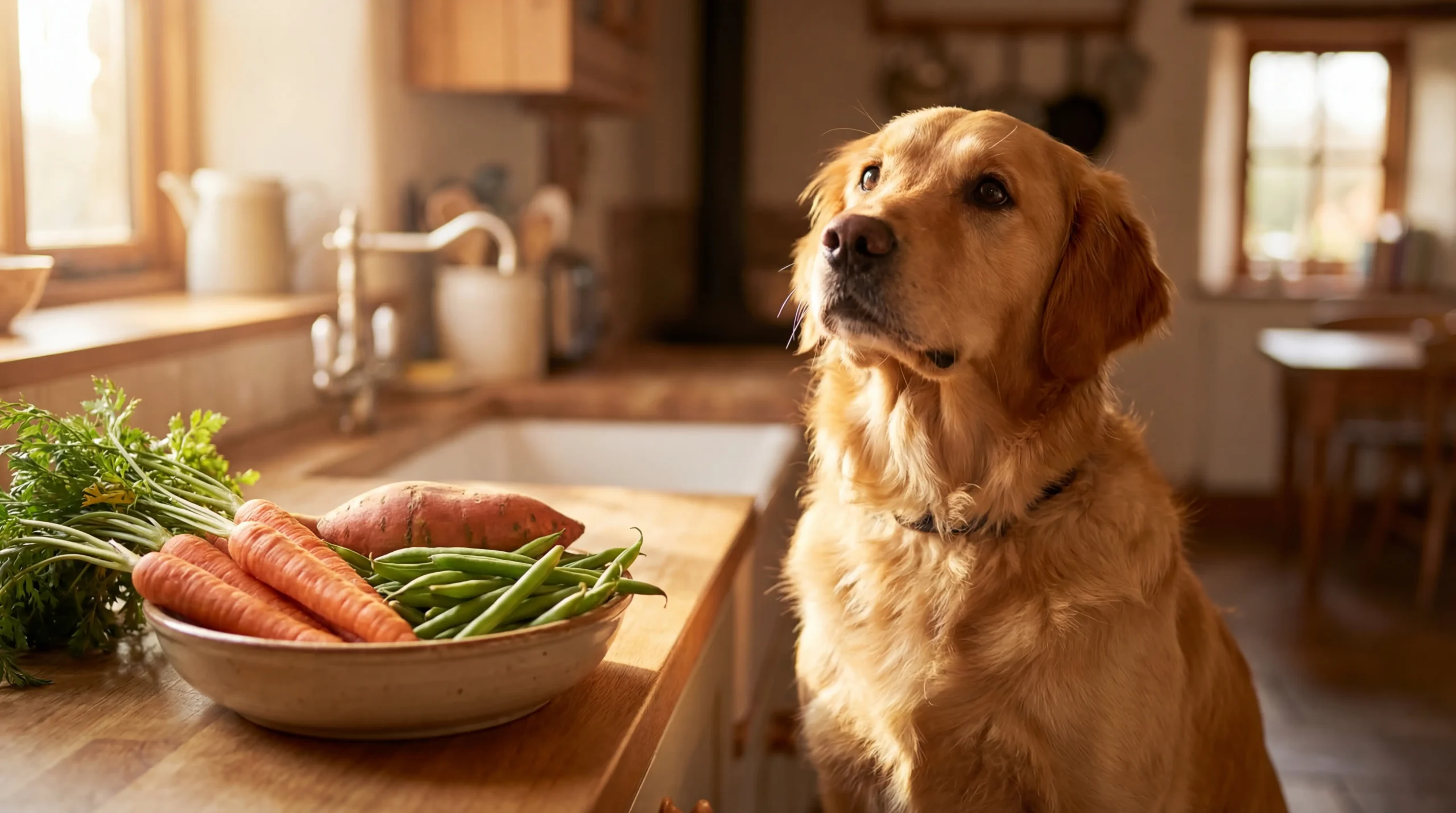
What vegetables are good for dogs? : Most vegetables are safe for dogs in moderation, and some are genuinely good for them. Carrots, green beans, cucumbers, and sweet potatoes top the list. But a few vegetables can make your dog sick or worse, so you need to know which ones to skip entirely. Always consult your veterinarian for advice specific to your dog’s health needs.
Table of Contents
Introduction
Your dog just grabbed something green off your cutting board. Now you’re standing in the kitchen wondering if you need to call the vet or if everything’s fine. I’ve been in that exact spot more times than I want to admit.
After my dog snagged a piece of broccoli that rolled off the counter, I spent twenty minutes searching online to figure out whether cruciferous vegetables were safe. The answers I found were all over the place. One site said broccoli was a superfood for dogs. Another warned about dangerous compounds. My vet cleared things up in about thirty seconds, but that panic-search moment stuck with me.
Here’s what I’ve figured out after years of feeding vegetables to two very different dogs (one with a sensitive stomach, one who’ll eat literally anything). Most vegetables are safe. A handful are genuinely good for your dog’s health. And a few are dangerous enough that you need to memorize the list.
This guide covers all of it. You’ll get a clear breakdown of which vegetables dogs can eat, which ones to avoid completely, how to prepare them, and how much is actually appropriate for your dog’s size. I’ve also included a quick reference table because sometimes you just need a fast answer while your dog stares at you with vegetable breath.
Before we get into specifics: I’m not a veterinarian. I’m a dog owner who’s done a lot of homework and made plenty of mistakes along the way. The information here reflects research from veterinary sources including the ASPCA and AKC, combined with my own experience. For any real emergency, skip the article and call your vet or the ASPCA Animal Poison Control Center at 888-426-4435 (verify current number at aspca.org). That’s always the right move.
Safe Vegetables for Dogs at a Glance
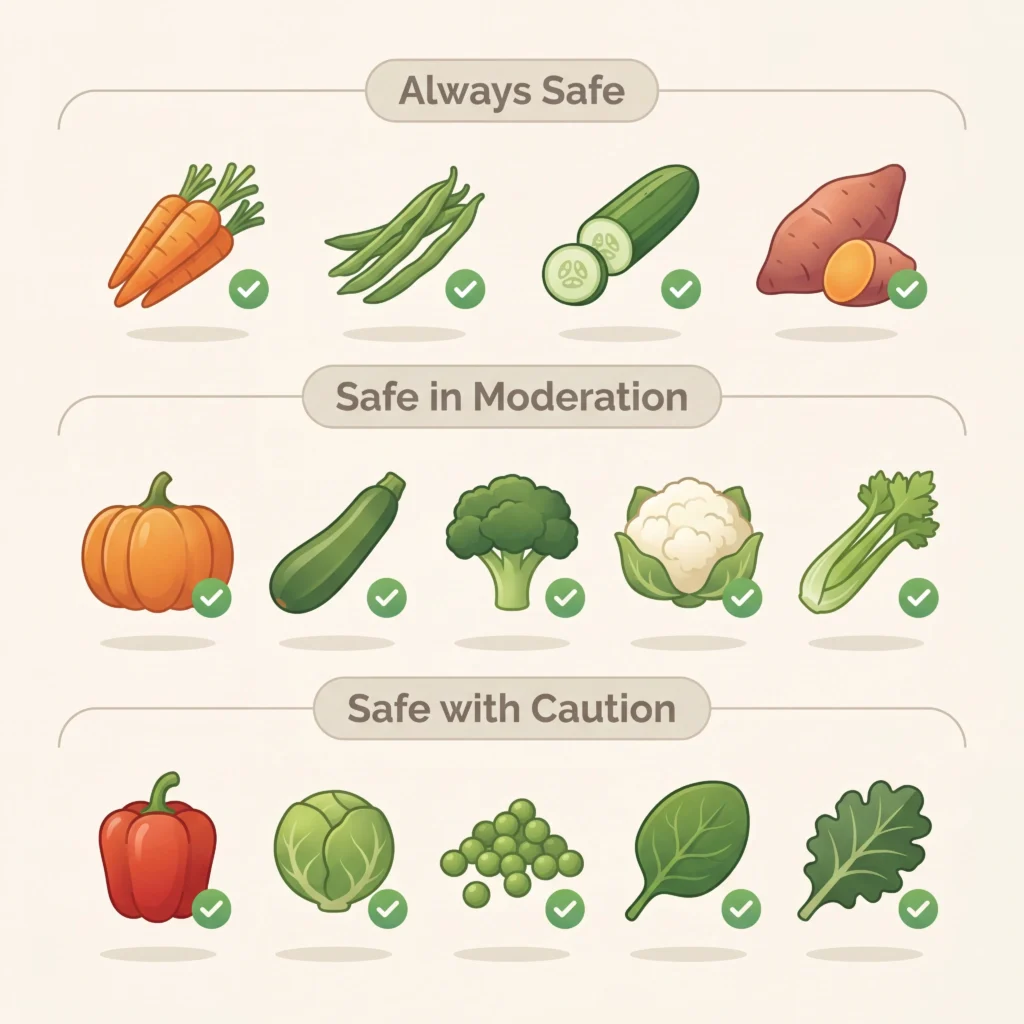
So here’s the deal. Dogs can safely eat a wide variety of vegetables, and most of them offer real nutritional benefits. The vegetables below have gotten the green light from veterinary sources, and I’ve fed all of them to my own dogs at some point.
Vegetables dogs can safely eat:
- Carrots – Low calorie, good for teeth, packed with beta-carotene. My dogs treat these like crunchy orange candy.
- Green beans – High fiber, very low calorie. Veterinarians often recommend these for dogs who need to manage their weight because they’re filling without adding much to the calorie count.
- Cucumbers – Mostly water, almost no calories. Great for hot days or dogs who want something to crunch on. I cover preparation details in my cucumber guide for dogs.
- Sweet potatoes – Excellent fiber source, supports digestive health. Need to be cooked first (more on that below). Check out my sweet potato preparation guide for cooking methods.
- Pumpkin – The digestive health star. The fiber in pumpkin absorbs excess water when your dog has loose stool, and adds bulk when things are moving too slowly. It works both ways, which sounds contradictory but that’s how fiber operates.
- Zucchini – Mild, easy to digest, very low risk. One of the safest vegetables you can share. My zucchini safety guide covers one weird warning you should know about.
- Broccoli – Safe in small amounts, high in fiber and vitamin C. Can cause gas if you overdo it (ask me how I know).
- Cauliflower – Similar to broccoli. Safe, nutritious, but gassy in larger quantities.
- Celery – Crunchy, hydrating, sometimes recommended for freshening dog breath. Cut it into small pieces to avoid choking, and remove the strings. See my celery preparation guide for the full breakdown.
- Bell peppers – Any color works. Red bell peppers have the most nutrients, but green and yellow are fine too. Just keep hot peppers far away from your dog.
- Brussels sprouts – Safe but notorious for causing serious gas. Start with half a sprout and see how your dog handles it before offering more.
- Peas – Good protein content for a vegetable. Fresh or frozen work better than canned (too much sodium in canned versions).
- Spinach – Safe in moderation. Contains oxalates, so dogs prone to kidney issues should skip it. I cover this more in my spinach guide.
- Kale – Another one with caveats. Small amounts are fine for healthy dogs, but kale contains goitrogens that can affect thyroid function in larger quantities.
What is a goitrogen? Goitrogens are naturally occurring compounds in some vegetables (especially cruciferous ones like kale and broccoli) that can interfere with thyroid function when consumed in large amounts. For most dogs eating occasional vegetable treats, this isn’t a concern. Dogs with existing thyroid conditions should avoid high-goitrogen vegetables or consult their vet first.
What are oxalates? Oxalates are compounds found in certain vegetables like spinach and rhubarb that can bind with calcium and potentially contribute to kidney stone formation in susceptible dogs. Healthy dogs can handle small amounts of oxalate-containing vegetables without issues, but dogs with a history of kidney problems or bladder stones should avoid them.
The vegetables above make up the “safe list” that appears on most veterinary resources. But safe doesn’t always mean ideal for your specific dog. My older dog handles leafy greens without any issues. My younger one gets loose stool from too much spinach. You’ll learn your own dog’s tolerances over time.
If you’re looking for fruit options that are safe for dogs as an alternative, fruits work well too, though they tend to be higher in sugar than vegetables.
Vegetables Dogs Should Not Eat
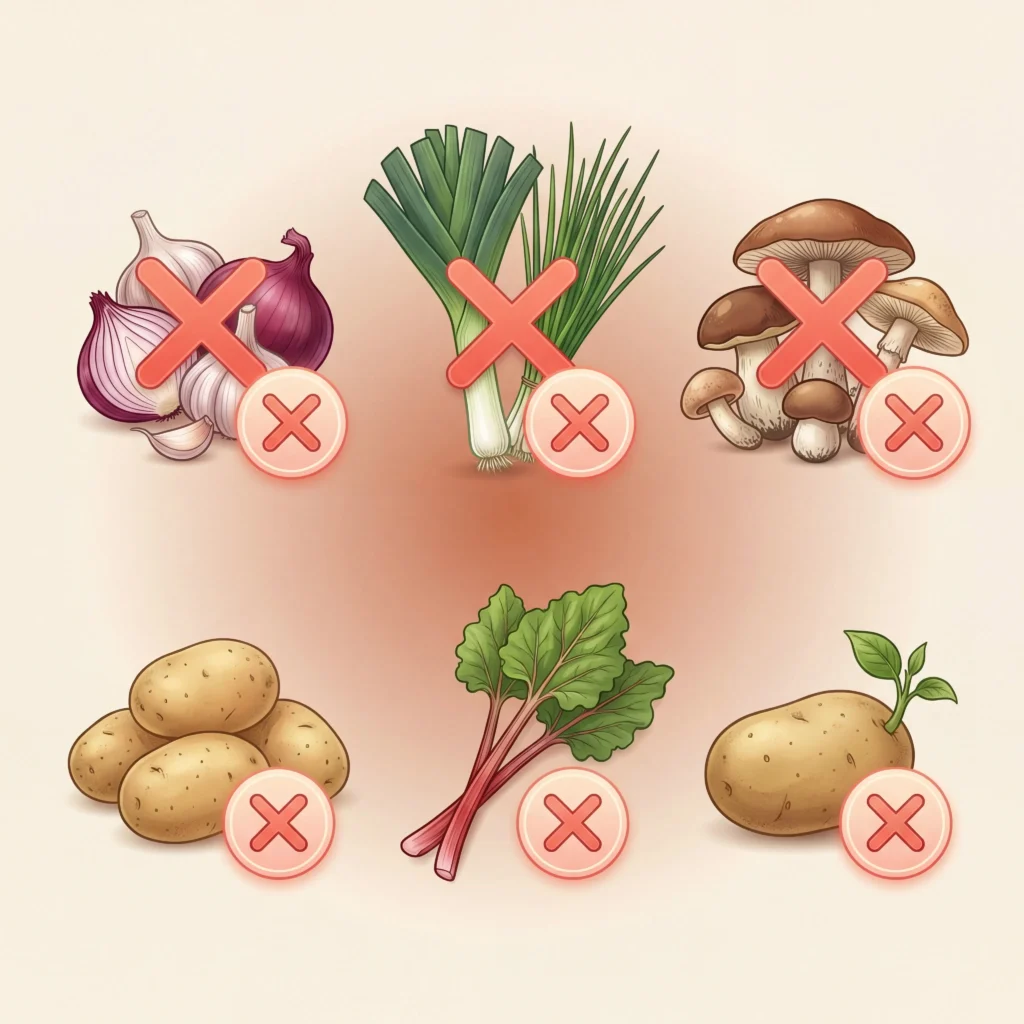
Don’t freak out, but some common vegetables are genuinely dangerous for dogs. These aren’t “maybe avoid” suggestions. These are foods that can cause serious health problems or death.
Vegetables that are toxic to dogs:
Onions – All parts of the onion plant damage red blood cells in dogs over time. This includes red onions, white onions, yellow onions, shallots, and green onions. Even small amounts can be harmful with repeated exposure, and the damage accumulates. Cooked onions are just as dangerous as raw ones.
If you share table scraps with your dog (and I won’t pretend I never have), check the ingredients first. Onion powder hides in soup broth, pasta sauce, baby food, and seasoning mixes. A single instance of eating a small amount likely won’t cause an emergency, but repeated exposure is where the real danger lies.
Garlic – Same family as onions, same problem with red blood cell damage. Garlic is actually more concentrated, meaning smaller amounts can cause more harm. Some sources claim small amounts of garlic are safe or even beneficial for dogs. My vet disagrees, and so do the major veterinary poison control resources. I keep garlic off my dogs’ menu entirely.
Leeks and chives – Part of the allium family with onions and garlic. Same toxic effects on red blood cells. Treat these the same way you’d treat onions.
Wild mushrooms – This is where it gets tricky. Store-bought mushrooms from the grocery store (white button, cremini, portobello) are generally safe for dogs when served plain. Wild mushrooms are a completely different situation.
Some wild mushroom species can cause liver failure, kidney damage, seizures, and death in dogs. The problem is that toxic mushrooms often look nearly identical to safe ones, even to experienced foragers. If you can’t identify a mushroom with absolute certainty, keep your dog away from it. Check your yard after rainy periods, as mushrooms can pop up overnight.
Oren covers mushroom identification and what to do if your dog eats an unknown mushroom in his complete mushroom safety guide. That article goes deeper into the emergency protocol than I will here.
Raw potatoes – Cooked potatoes are fine for most dogs. Raw potatoes contain solanine, a compound that can cause serious digestive upset, confusion, weakness, and other neurological problems in dogs. Green potatoes (the ones that have been exposed to light and developed a green tint) are especially dangerous because they contain higher concentrations of solanine. Stick to thoroughly cooked, plain potatoes if you want to share.
Rhubarb – The stalks contain high levels of oxalic acid, which can cause kidney problems in dogs. The leaves are even more toxic than the stalks. Keep rhubarb out of your dog’s reach entirely, including any plants growing in your garden.
What to do if your dog eats something toxic:
Call your veterinarian immediately. Don’t wait to see if symptoms develop. Have the ASPCA Animal Poison Control Center number saved in your phone: 888-426-4435 (verify this number is current at aspca.org, as phone numbers can change). They’ll ask what your dog ate, approximately how much, when it happened, and your dog’s weight. Have that information ready before you call.
Signs that require immediate veterinary attention include vomiting, diarrhea, lethargy, pale gums, rapid breathing, loss of coordination, or collapse. When in doubt, call your vet. It’s always better to check and find out everything’s fine than to wait and wish you hadn’t.
Raw vs Cooked Vegetables for Dogs
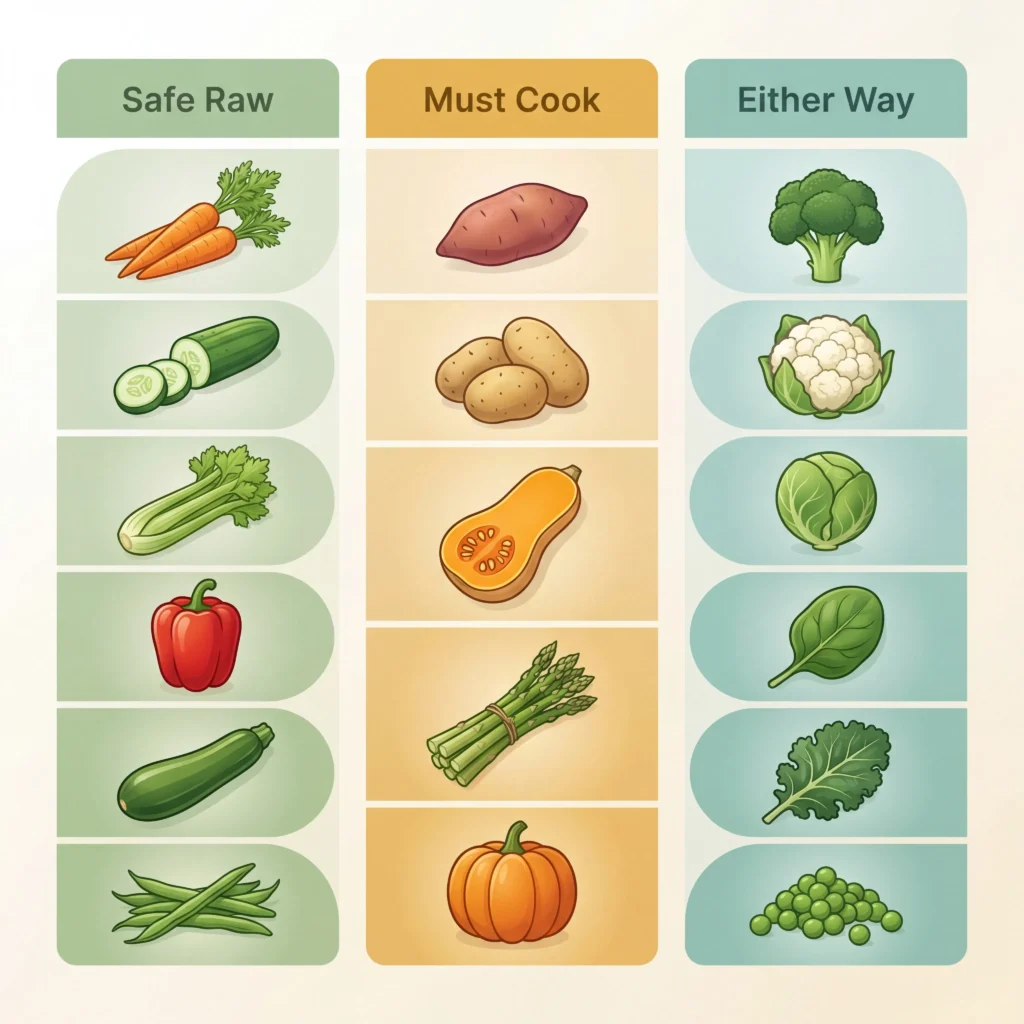
Here’s where it gets tricky. Some vegetables are better raw. Some need to be cooked. A few are dangerous raw but perfectly safe when cooked. The preparation method matters more than most vegetable guides acknowledge.
Vegetables that are safe to feed raw:
- Carrots (raw is actually great for dental health and most dogs love the crunch)
- Cucumbers
- Celery (cut small and remove strings to prevent choking)
- Bell peppers (remove seeds and stem)
- Zucchini
- Green beans
Vegetables that should be cooked before feeding:
- Sweet potatoes – Raw sweet potatoes contain compounds called trypsin inhibitors that interfere with protein digestion. Cooking eliminates this issue entirely. Baking or boiling works best for preparing sweet potatoes for dogs.
- Potatoes – Raw potatoes contain solanine (toxic). Cooking breaks down the solanine and makes potatoes safe. Always serve plain, without butter, salt, or seasonings.
- Butternut squash – Too hard and fibrous to digest when raw. Steaming or baking makes it much easier on your dog’s digestive system and allows them to actually absorb the nutrients.
- Asparagus – Not toxic when raw, but very tough and fibrous. Most dogs won’t eat it raw anyway, and even if they do, it’s likely to pass through undigested. If you want to share asparagus, cook it until soft.
- Pumpkin – Technically safe when raw, but cooked or canned pumpkin is much easier for dogs to digest and absorb. Always use plain canned pumpkin, never pumpkin pie filling (which contains sugar and spices that aren’t good for dogs).
Vegetables that work either way (raw or cooked):
- Broccoli – Safe raw or steamed. Steaming makes it easier to digest and may reduce gas.
- Cauliflower – Same as broccoli. Either works, but steaming is gentler on the stomach.
- Brussels sprouts – Raw is harder to digest and causes more gas. Steaming helps reduce both issues.
- Spinach – Raw or lightly cooked both work in small amounts. Don’t add any oils or seasonings.
- Kale – Raw or steamed. Keep portions small either way due to the goitrogen content.
- Peas – Fresh, frozen, or lightly cooked all work fine for dogs.
Why cooking method matters:
Steaming preserves the most nutrients while making vegetables easier to digest. It’s my go-to method when I’m preparing vegetables specifically for my dogs.
Boiling works but tends to leach some vitamins into the water, which you’ll probably pour down the drain. If you boil vegetables for your dog, consider using a small amount of water and keeping the cooking time short.
Roasting with oil and seasonings is fine for you, but the added fat and seasonings aren’t great for your dog. Plain roasted vegetables (no oil, no salt, no garlic) are acceptable, but steaming is simpler and safer.
My approach: I prep vegetables for my dogs while I’m already cooking for myself. If I’m steaming broccoli for dinner, I set aside a few plain florets before adding butter or seasonings to my portion. Takes zero extra effort and my dogs get something fresh.
How to Prepare Vegetables for Your Dog
Here’s the rule that actually matters: how you prep vegetables is almost as important as which vegetables you choose. A poorly prepared safe vegetable can still cause problems like choking or digestive upset.
Basic preparation rules:
Wash everything thoroughly. Even organic vegetables can have dirt, bacteria, or pesticide residue on the surface. Organic certification doesn’t mean the vegetables are clean when they arrive in your kitchen. A quick scrub under running water is enough for most vegetables. For leafy greens, consider soaking them briefly and then rinsing.
Cut into appropriate sizes for your specific dog. This is the mistake I see people make most often. A whole baby carrot might be fine for a large dog but a serious choking hazard for a small one. Cut vegetables into pieces small enough that your dog can chew and swallow safely. For small dogs, that means bite-sized pieces roughly the size of their kibble. For large dogs, you can go a bit bigger, but avoid anything large enough to be swallowed whole and cause an obstruction.
Remove seeds, stems, and tough parts. Bell pepper seeds aren’t toxic, but they can cause digestive upset in some dogs. The stems of cruciferous vegetables are tougher to digest than the florets. When in doubt, remove anything your dog might struggle with. It takes an extra thirty seconds and prevents potential problems.
Skip the seasonings completely. No salt, no garlic powder, no onion powder, no butter, no oil. Plain vegetables only. This is why I prep my dogs’ portions before adding any seasonings to my own food. Even small amounts of garlic or onion powder can be harmful over time.
What is blanching? Blanching means briefly boiling vegetables (typically 30-60 seconds) then immediately transferring them to ice water to stop the cooking process. This softens the texture slightly while preserving most of the nutrients and the color. It’s a good middle ground if raw vegetables are too hard for your dog and fully cooked seems like overkill. Blanching works well for green beans, broccoli, and carrots.
Preparation methods ranked by nutrient retention:
- Steaming – Best nutrient retention, good texture, easy to digest. My top recommendation.
- Raw (when appropriate for that vegetable) – Full nutrients, satisfying crunch, no extra effort required.
- Blanching – Quick, preserves most nutrients, slightly softer texture than raw.
- Boiling – Works but loses more nutrients to the cooking water.
- Pureeing – Good option for dogs with dental issues or for mixing vegetables into their regular food. You can puree raw or cooked vegetables.
- Freezing – Frozen vegetable pieces make great summer treats. Most vegetables should be washed and cut before freezing. Some (like green beans) benefit from blanching first.
For celery specifically, take the time to remove the fibrous strings before giving it to your dog. Those strings can cause choking or digestive issues, especially in smaller breeds. It’s an extra step, but it makes celery much safer.
How Much Vegetables Should Dogs Eat
The amount changes everything. A safe vegetable becomes a problem if you give too much. Most vegetable-related digestive issues I’ve seen (in my own dogs and in conversations with other dog owners) come from overdoing it, not from the vegetable itself being harmful.
The 10% rule:
Treats and extras (including vegetables) should make up no more than 10% of your dog’s daily calories. The other 90% should come from nutritionally complete and balanced dog food. This guideline comes up consistently in veterinary nutrition resources, and it’s solid advice for most healthy dogs.
What does 10% look like in practice?
For a 50-pound dog eating approximately 1,000 calories per day, 10% means roughly 100 calories from treats and vegetables combined. Most vegetables are very low calorie, so this gives you quite a bit of room:
- 1 medium carrot: approximately 25 calories
- 1 cup green beans: approximately 30 calories
- 1 cup cucumber slices: approximately 16 calories
- 1/2 cup cooked sweet potato: approximately 90 calories
So a 50-pound dog could have several carrots worth of vegetables per day without coming close to the 10% limit. The bigger concern with most vegetables isn’t calories but digestive tolerance. Too much fiber too fast leads to gas, loose stool, or upset stomach.
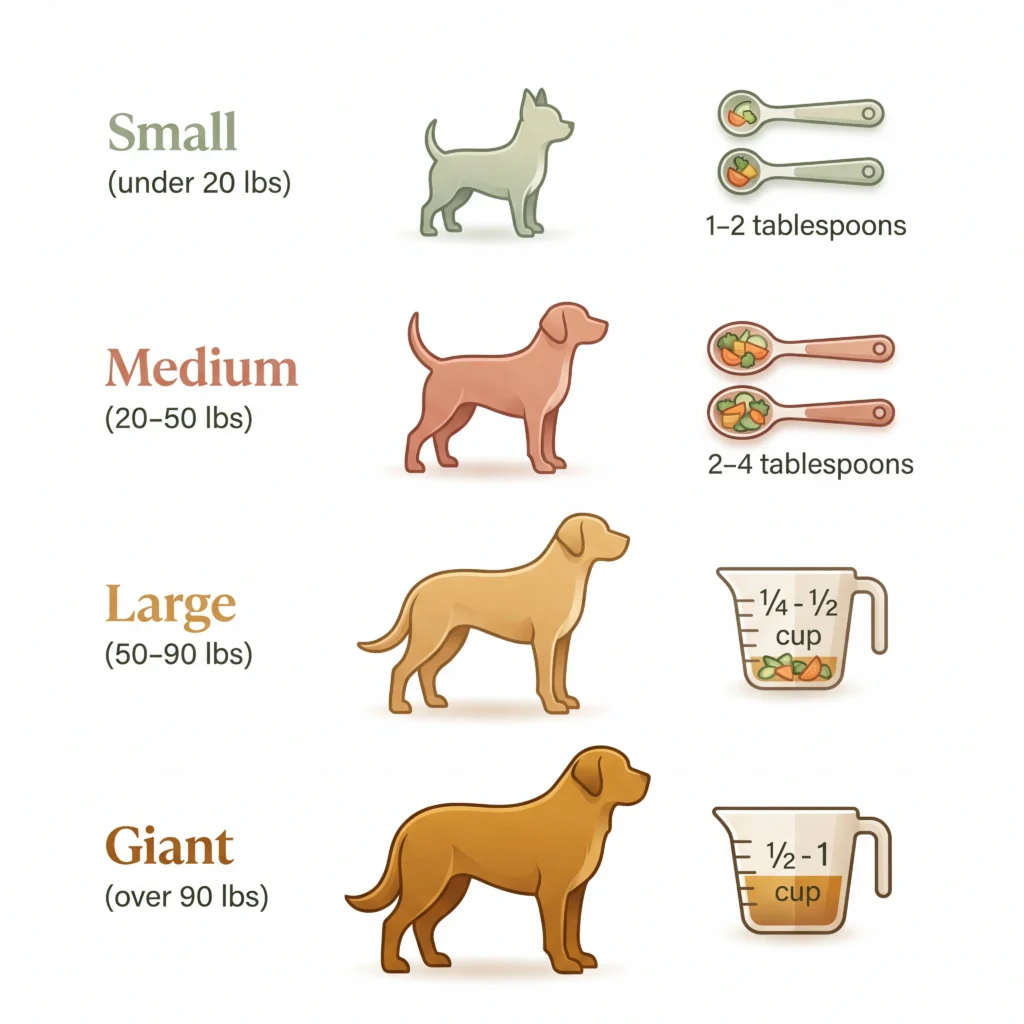
Portion guidelines by dog size (per day, can be split across meals):
| Dog Size | Weight Range | Vegetable Amount Per Day |
|---|---|---|
| Small | Under 20 lbs | 1-2 tablespoons |
| Medium | 20-50 lbs | 2-4 tablespoons |
| Large | 50-90 lbs | 1/4 to 1/2 cup |
| Giant | Over 90 lbs | 1/2 to 1 cup |
These are rough starting points, not exact prescriptions. Individual dogs vary significantly in their tolerance. Start with smaller amounts than these guidelines suggest and increase gradually if your dog tolerates vegetables well. Some dogs can handle more; others need less.
Vegetables that require extra portion caution:
- Cruciferous vegetables (broccoli, cauliflower, Brussels sprouts, kale) – Can cause significant gas and digestive upset in larger quantities. Keep these as occasional treats rather than daily staples, especially when you’re first introducing them.
- Spinach – The oxalic acid content means you want to limit portions, especially for dogs with any kidney history. A few leaves as an occasional treat is different from a daily spinach habit.
- Sweet potatoes and pumpkin – Higher in natural sugars and carbohydrates than most other vegetables. Fine as treats but not in unlimited quantities, particularly for dogs managing their weight or blood sugar.
If you’re exploring grains as a carbohydrate option for dogs, those fill a different nutritional role than vegetables and have their own portion considerations.
When to adjust portions or skip vegetables entirely:
Your dog should get fewer vegetables (or skip them temporarily) if they show digestive issues after eating them (gas, loose stool, vomiting), are already eating a commercial food with vegetables as main ingredients, have diabetes or weight concerns (watch carbohydrate content in starchy vegetables), or have kidney problems (limit oxalate-containing vegetables like spinach).
My younger dog can handle maybe two tablespoons of mixed vegetables before her stomach gets upset. My older dog can eat a quarter cup without any issues. You’ll figure out your own dog’s limits through careful observation. Start small, increase slowly, and pay attention to what your dog’s digestive system tells you.
Vegetable Safety Quick Reference Table
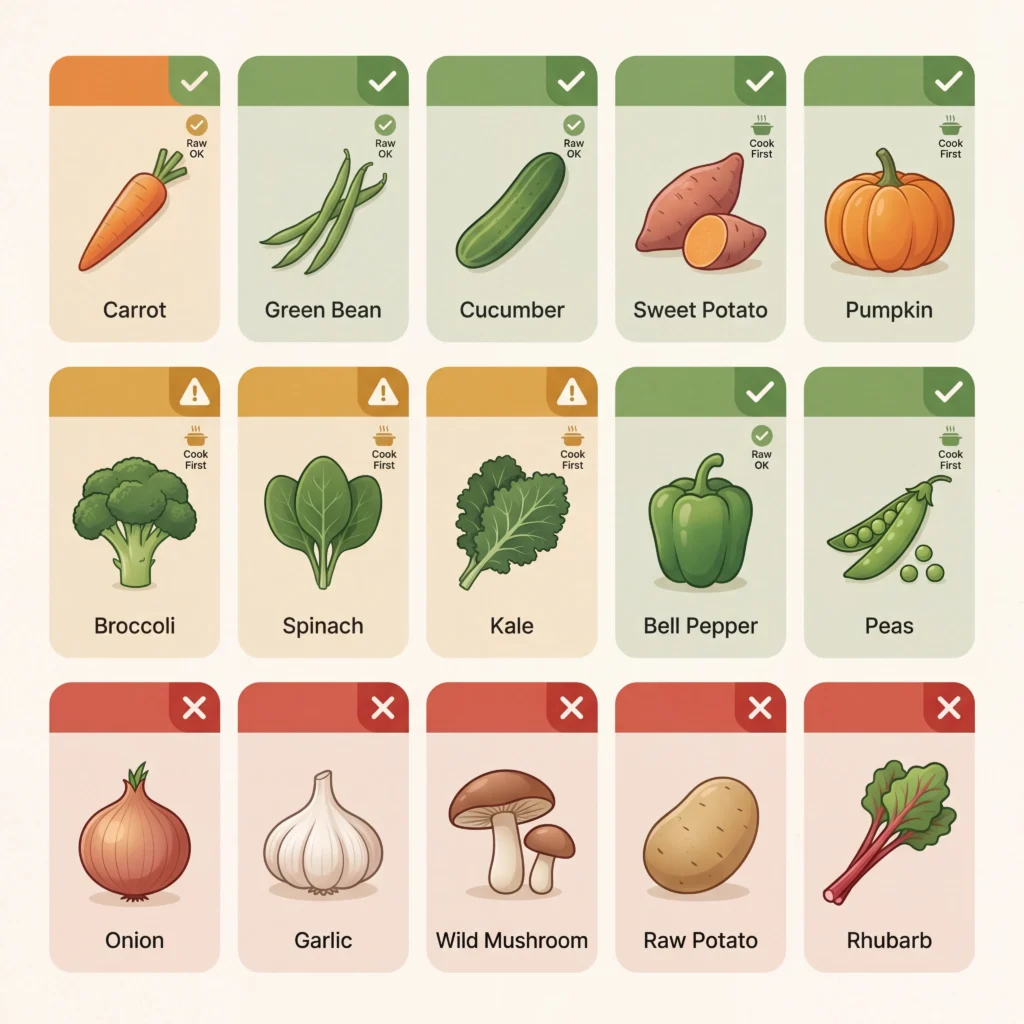
Sometimes you just need a fast answer. Here’s the table I wish I’d had years ago when I started researching this topic.
| Vegetable | Safe? | Raw OK? | Cooking Needed? | Watch For | Best For |
|---|---|---|---|---|---|
| Carrots | Yes | Yes | Optional | Choking (cut small for small dogs) | Dental health, low-calorie treat |
| Green beans | Yes | Yes | Optional | High sodium in canned varieties | Weight management, fiber |
| Cucumbers | Yes | Yes | No | Large pieces can be choking hazard | Hydration, low-calorie snack |
| Sweet potatoes | Yes | No | Yes (always cook) | Higher sugar content than other veggies | Fiber, digestive support |
| Pumpkin | Yes | Best cooked | Recommended | Never use pie filling (sugar/spices) | Digestive health, fiber |
| Zucchini | Yes | Yes | Optional | Bitter taste means spit it out | Easy to digest, low calorie |
| Broccoli | Yes | Yes | Optional | Gas in large amounts | Fiber, vitamin C |
| Cauliflower | Yes | Yes | Optional | Gas in large amounts | Low calorie, fiber |
| Celery | Yes | Yes | No | Remove strings, cut small | Low calorie, hydration |
| Bell peppers | Yes | Yes | Optional | Remove seeds, avoid hot peppers | Vitamins A and C |
| Brussels sprouts | Yes | Better cooked | Recommended | Causes significant gas | Antioxidants, fiber |
| Peas | Yes | Yes | Optional | Avoid canned (high sodium) | Protein, vitamins |
| Spinach | Moderation | Yes | Optional | Oxalates, not for kidney-prone dogs | Iron, vitamins (small amounts) |
| Kale | Moderation | Yes | Optional | Goitrogens can affect thyroid | Antioxidants (small amounts) |
| Eggplant | Moderation | Better cooked | Recommended | Nightshade family, watch for allergies | Low calorie option |
| Asparagus | Yes | Better cooked | Recommended | Tough texture when raw | Fiber, vitamins |
| Olives | Moderation | N/A | N/A | High sodium, remove pits | Occasional treat only |
| Onions | NO | – | – | Toxic – damages red blood cells | Never feed |
| Garlic | NO | – | – | Toxic – more concentrated than onion | Never feed |
| Wild mushrooms | NO | – | – | Potentially fatal – many toxic species | Never feed |
| Raw potatoes | NO | – | Must cook | Solanine poisoning risk | Only feed cooked |
| Rhubarb | NO | – | – | Oxalic acid causes kidney damage | Never feed |
Save this table somewhere accessible. Screenshot it, print it, or bookmark this page. Having a quick reference available beats panic-searching every time your dog eats something new.
Explore Dog-Safe Vegetables In-Depth
Each vegetable has its own quirks when it comes to feeding it to dogs. The guides below go deeper into specific preparation methods, appropriate portions for different dog sizes, and the situations where a particular vegetable might cause problems. If you’re planning to make any of these a regular part of your dog’s diet, the detailed guides are worth reading.
Most popular vegetables (highest search volume):
Can Dogs Eat Cucumbers – The full breakdown on this hydrating, low-calorie favorite. Covers seed removal, skin digestibility, and appropriate piece sizes to prevent choking.
Can Dogs Eat Mushrooms – The critical distinction between store-bought and wild mushrooms. This one could save your dog’s life. Includes emergency protocol if your dog eats an unknown mushroom.
Can Dogs Eat Spinach – The oxalate question explained in plain language. Which dogs should skip spinach entirely and what the alternatives are.
Can Dogs Eat Zucchini – One of the safest vegetables out there, with one weird warning about bitter zucchini that most guides don’t mention.
Vegetables with important caveats:
Can Dogs Have Olives – Type-by-type breakdown covering green, black, stuffed, and marinated varieties. Explains why sodium is the real concern with olives.
Sweet potato preparation guide – Why raw sweet potatoes are problematic and the best cooking methods to prepare them safely.
Can Dogs Eat Kale – The thyroid concern explained clearly. Which dogs should avoid kale and what safer leafy green alternatives exist.
Red bell peppers – Bell peppers versus hot peppers have completely different safety profiles. This guide explains the distinction.
Cruciferous and gas-causing vegetables:
Can Dogs Have Brussels Sprouts – Safe but gassy. Cooking tips that reduce (but don’t completely eliminate) the flatulence factor.
Can Dogs Eat Eggplant – The nightshade family concern addressed directly. What allergy symptoms to watch for if you try eggplant.
Specialty vegetables:
Is Asparagus Good for Dogs – Safe but impractical for most situations. Why easier vegetables might be better choices for regular feeding.
Can Dogs Have Butternut Squash – A good alternative to pumpkin. Covers seed safety and the best preparation methods.
Celery preparation guide – The string problem and a step-by-step cutting guide to make celery safer for dogs of all sizes.
Can Dogs Eat Sauerkraut – The probiotic benefits weighed against the sodium concerns. What to look for on the label if you want to try fermented vegetables.
What I’ve Learned About Feeding Vegetables to Dogs
Sable’s Take:
I’ve been feeding vegetables to my dogs for years, and I’ve made enough mistakes to fill a pretty embarrassing list. Here’s what actually stuck with me after all that trial and error.
The biggest lesson came from my older dog’s first week on what I thought was a “healthier” diet. I’d read somewhere that dogs should eat more whole foods, so I added vegetables to every meal. Carrots, broccoli, green beans, whatever I had on hand. Within three days, she had the worst diarrhea I’ve ever had to clean up. My vet explained what should have been obvious: I’d changed her entire gut situation overnight instead of introducing things gradually.
Now I add one new vegetable at a time and wait at least a few days before trying something else. Boring approach? Yes. But my carpet thanks me, and more importantly, my dogs don’t have to suffer through digestive distress while I experiment.
The other thing I figured out the hard way: my two dogs have completely different tolerances despite living in the same household and eating the same base diet. My older dog handles leafy greens without any issues. My younger one gets gassy and uncomfortable from a single Brussels sprout. There’s no universal answer for “how much is too much” because every dog is different. What works perfectly for one dog might cause problems for another.
What I’d tell someone just starting to add vegetables to their dog’s diet: pick two or three vegetables from the safe list and see how your dog does with them over a week or two. Carrots and green beans are the easiest starting point for most dogs. Skip the trendy superfoods until you know your dog’s baseline tolerance. And keep the portions way smaller than you think they need to be, at least at first.
The goal isn’t to turn your dog into a vegetarian. It’s to add some variety and nutrition to their diet without causing problems. Start slow, pay attention to how your dog responds, and adjust from there.
— Sable Ingraham
Common Vegetable Feeding Mistakes
Most problems with feeding vegetables to dogs come from a handful of predictable errors. I’ve made several of these myself. Here’s what to watch for and how to avoid the same mistakes.
Mistake #1: Giving too much too fast
Why it happens: You want your dog to get the health benefits you’ve read about, so you load up their bowl with vegetables right away.
The fix: Start with a tablespoon or less for a medium-sized dog. Wait 24-48 hours and watch for any digestive changes. If no upset stomach, loose stool, or excessive gas, you can slowly increase the amount over the following week or two. Gradual introduction gives your dog’s digestive system time to adjust.
I made this mistake with pumpkin when I first heard it was great for digestive health. Gave my dog nearly a quarter cup mixed into her dinner. Spent the next day dealing with exactly the opposite of digestive health. Lesson learned.
Mistake #2: Forgetting about choking hazards
Why it happens: The vegetable itself is safe, so you assume the size and shape don’t matter much.
The fix: Cut everything into pieces appropriate for your specific dog’s size and chewing habits. A whole baby carrot might be fine for a Lab who chews thoroughly, but a serious choking risk for a Chihuahua or a dog who tends to gulp food without chewing. When in doubt, cut it smaller. An extra minute of prep is worth avoiding an emergency vet visit.
Mistake #3: Assuming “safe for dogs” means “safe for my dog”
Why it happens: You read that a vegetable is on the safe list and skip the individual tolerance test.
The fix: Even vegetables on every “safe” list can cause digestive upset in dogs with sensitive stomachs or individual intolerances. My younger dog can’t handle spinach comfortably even though spinach appears on every safe vegetable list I’ve ever seen. Your dog is an individual with their own digestive quirks, not a data point in a study. Introduce new foods one at a time and pay attention to how your specific dog responds.
Mistake #4: Not checking ingredients in prepared foods
Why it happens: The main vegetable is safe, so you don’t think to read the full ingredient list.
The fix: Canned vegetables often contain added sodium that’s fine for humans but excessive for dogs. Vegetable dips and prepared salads frequently contain onion and garlic. Seasoned frozen vegetables may have butter, oils, or flavorings your dog shouldn’t eat. Plain, fresh, and unseasoned is always the safest approach. If you’re using anything packaged, read the label first.
Mistake #5: Confusing “not toxic” with “good for my dog”
Why it happens: The vegetable won’t poison your dog, so you assume it’s a worthwhile addition to their diet.
The fix: Some vegetables are technically safe but offer minimal nutritional benefit for dogs. Others are safe but cause enough gas to clear a room and make your dog uncomfortable. Just because your dog can eat something without getting sick doesn’t mean they should eat it regularly. Choose vegetables that actually provide value for dogs, prepare them appropriately, and keep portions reasonable.
Frequently Asked Questions
Q: What veggies can dogs eat daily?
A: Carrots, green beans, and cucumbers are the safest options for daily treats in my experience. They’re low in calories, easy to digest, and rarely cause problems even with regular feeding. I give my dogs a few carrot pieces most days without any issues. Avoid giving cruciferous vegetables (broccoli, cauliflower, Brussels sprouts) daily because the gas buildup gets uncomfortable for your dog and unpleasant for everyone else in the house.
Q: What vegetables should a dog not eat?
A: Never feed your dog onions, garlic, leeks, chives, wild mushrooms, raw potatoes, or rhubarb. These are genuinely dangerous, not just “not recommended.” Onions and garlic damage red blood cells with repeated exposure. Wild mushrooms can cause organ failure and death. Raw potatoes contain a toxic compound called solanine. If your dog eats any of these in significant amounts, call your veterinarian immediately rather than waiting to see if symptoms develop.
Q: Why can’t dogs have cooked carrots?
A: Dogs absolutely can have cooked carrots. This appears to be a myth that spread through misunderstanding somewhere online. Cooked carrots are perfectly safe for dogs. In fact, some dogs with dental issues or sensitive stomachs digest cooked carrots more easily than raw ones. The only reason to choose raw over cooked is that raw carrots provide a satisfying crunch and may offer some dental cleaning benefit from the chewing action. But safety-wise, both raw and cooked carrots are completely fine.
Q: What is the healthiest food to feed your dog?
A: A complete and balanced commercial dog food formulated for your dog’s life stage (puppy, adult, senior) should make up at least 90% of your dog’s diet. Dog food is specifically designed to provide all the nutrients dogs need in the right proportions. Vegetables are supplements and occasional treats, not replacements for proper balanced nutrition. The healthiest vegetable additions include pumpkin for digestive support, carrots for beta-carotene and dental benefits, and green beans for low-calorie fiber. But vegetables should complement your dog’s main diet, not replace it.
Q: Can dogs eat vegetables every day?
A: Yes, healthy dogs can eat appropriate vegetables daily as long as you stick to safe options and keep portions reasonable. The 10% rule applies: vegetables and other treats combined should make up no more than 10% of your dog’s daily calorie intake. For most dogs, a few tablespoons of vegetables daily is perfectly healthy and may provide some nutritional benefits. Start with small amounts, watch how your individual dog responds, and adjust accordingly.
Q: Are frozen vegetables safe for dogs?
A: Frozen vegetables are safe for dogs and can make enjoyable treats, especially during hot weather. Frozen green beans, pea pods, and carrot slices are popular options that many dogs enjoy. Make sure the frozen vegetables don’t contain added seasonings, sauces, butter, or sodium (check the ingredient list). Plain frozen vegetables are what you want. You can serve them frozen as a cooling treat or thaw them first if your dog prefers softer textures.
Q: How do I know if my dog is allergic to a vegetable?
A: Watch for itching (especially around the ears and paws), hives or skin irritation, swelling around the face or muzzle, vomiting, diarrhea, or any unusual behavior in the hours after eating a new food. True food allergies are less common in dogs than environmental allergies, but they do occur. If you notice any of these symptoms after introducing a new vegetable, stop feeding it and talk to your vet before trying it again. Eggplant allergies are more commonly reported than allergies to most other vegetables, possibly due to its nightshade family membership.
Q: What vegetables should I watch out for during holidays?
A: Holiday meals often contain hidden dangers for dogs. Stuffing typically contains onion. Gravy frequently includes garlic. Mashed potatoes may have butter, cream, and seasonings. Green bean casserole contains cream of mushroom soup and fried onions. The safest approach during holidays is to set aside plain, unseasoned portions of dog-safe vegetables before adding any seasonings, sauces, or toppings for human consumption. Or simply stick to your dog’s regular food and treats during holiday gatherings to avoid accidental exposure to harmful ingredients.
Start With the Basics
You don’t need to memorize every vegetable on every list. Here’s what actually matters for keeping your dog safe and healthy.
Stick to the clear winners: carrots, green beans, cucumbers, pumpkin, and cooked sweet potatoes. These are safe for the vast majority of dogs, easy to prepare, and provide genuine nutritional value.
Avoid the definite dangers: onions, garlic, wild mushrooms, raw potatoes, and rhubarb. These aren’t “sometimes okay in small amounts.” They’re genuinely harmful and should never be fed to dogs.
Introduce new vegetables one at a time. Wait several days between trying new foods so you can identify what agrees with your dog and what doesn’t. Keep portions much smaller than you think necessary, especially at first.
Most guides get this part wrong, but vegetables should be a small part of your dog’s overall diet, not a replacement for nutritionally complete dog food. Think of them as healthy treats and meal toppers, not main courses.
If you’re just getting started with feeding vegetables to your dog, pick up some baby carrots and see how your dog responds. They’re inexpensive, widely available, safe for almost all dogs, and most dogs genuinely enjoy them. From there, you can branch out to other options based on what your individual dog tolerates and enjoys.
Keep the dangerous vegetables off your counter where your dog can reach them, and you won’t have to panic-search this topic again.
— Sable Ingraham
About the Author
Sable Ingraham — Dog Food Safety Writer
Sable Ingraham writes about dog food safety for FetchOrSkip. Her path into this topic started the way most dog owners’ worst evenings do: her dog ate something off the kitchen floor and she couldn’t find a clear answer about whether it was dangerous. After a panicked call to her vet and a deep rabbit hole of contradictory information online, she started keeping track of which foods were actually safe for dogs, which ones weren’t, and where the popular online lists got things wrong.
Over the years, she’s tracked food reactions in both her dogs, contacted poison control more than she’d like to admit, and built working knowledge of dog food safety through direct experience and regular consultations with her veterinarian. Sable writes for the dog owner standing in their kitchen at 10 PM trying to figure out if they need to worry. Her goal is to be the clear, honest answer she couldn’t find that first night.
The information in her articles reflects research from veterinary sources combined with personal experience. It is not veterinary medical advice. Always consult a qualified veterinarian for decisions specific to your dog’s health.
She’s based in the Midwest and lives with her partner and two mixed-breed dogs.