
By Liora Kittredge | Dog Nutrition & Food Guide Writer | Published: March 13, 2026 | Reviewed for accuracy: March 2026 | 18 min read
Quick Answer: The right dog food depends on your dog’s age, size, health status, and individual tolerance. Start by checking the AAFCO nutritional adequacy statement on the label, then compare the first five ingredients across at least three formulas. A food that meets AAFCO feeding trial standards, lists a named protein source first, and matches your dog’s life stage is a solid baseline. Your dog’s coat, energy level, and stool quality over four to six weeks will tell you whether the food actually works.
Table of Contents
A Note Before We Start
The information in this guide reflects personal experience and research into canine nutrition. It is not veterinary advice. Your vet should be the one making dietary recommendations for dogs with health conditions, and any significant diet changes warrant a conversation with your veterinary team first. Prices, formulations, and regulatory standards can change; verify current information before making purchasing decisions.
Introduction
A reliable dog food selection guide should cut through marketing and focus on what actually matters: the ingredient panel, the guaranteed analysis, and real-world results. The phrase “premium dog food” appears on bags that cost twelve dollars and bags that cost seventy-five dollars. After spending three months comparing formulas when my older dog was diagnosed with a food allergy, I learned that the marketing on the front of a bag has almost no relationship to what’s actually inside it.
One brand I trusted for years listed corn gluten meal as its second ingredient; a less expensive brand I’d dismissed had whole chicken and brown rice in the top three positions. The label tells you more than the advertising ever will.
This guide breaks down how to evaluate dog food based on what matters: the ingredient panel, the guaranteed analysis, and the AAFCO statement that confirms whether a food has been tested or just formulated on paper. You’ll learn the real differences between kibble, wet food, freeze-dried, and raw options. You’ll find out which ingredients signal quality and which ones are red flags. And you’ll get a framework for matching a food to your dog’s specific needs, whether that’s a large-breed puppy requiring controlled calcium levels or a senior dog who needs fewer calories and more joint support.
I’ve tracked how three dogs with different dietary needs respond to different formulas over several years. My tracking columns include protein percentage, the first three ingredients, cost per ounce, and a stool consistency score on a 1-5 scale. This guide reflects what I’ve learned from that process, from conversations with my vet, and from reading far more ingredient labels than any reasonable person should. If your dog is healthy and thriving on their current food, you probably don’t need to change anything. But if you’re standing in a pet store aisle overwhelmed by options, or if your vet just recommended a diet switch, this is where to start.
Types of Dog Food Explained
Dog food comes in four main formats, and each has trade-offs that matter depending on your situation. The format you choose affects cost, convenience, shelf life, and sometimes palatability, but it doesn’t automatically determine nutritional quality. A well-formulated kibble can be nutritionally complete; a poorly formulated raw diet can leave your dog deficient in key nutrients. Format is one variable. Formulation is another.
Dry Kibble
Kibble dominates the market for practical reasons: it’s shelf-stable, relatively affordable, and easy to portion. The extrusion process that shapes kibble into pellets involves high heat, which can reduce certain heat-sensitive nutrients, but reputable manufacturers adjust their formulations to compensate. Kibble’s low moisture content (typically around 10%) means dogs eating only dry food need consistent access to fresh water. The texture can help with dental health to some degree, though it’s not a substitute for actual teeth cleaning.
The catch is that kibble quality varies enormously. A bag labeled “chicken formula” might contain primarily chicken, or it might contain a small percentage of chicken flavor with corn and soy making up the bulk of the calories. The guaranteed analysis and ingredient panel tell you which you’re getting.
Wet or Canned Food
Canned food contains 70-80% moisture, which can benefit dogs who don’t drink enough water or who have kidney concerns. Many dogs find wet food more palatable than kibble, making it useful for picky eaters or dogs recovering from illness. The higher moisture content means you’re paying for water weight, so cost per serving tends to run higher than kibble for equivalent nutritional value.
Wet food can’t sit out all day without spoiling, so it works better for scheduled feeding than free-feeding. Once opened, cans need refrigeration and should be used within a few days. For households mixing wet and dry, this is usually manageable; for single-dog households feeding wet-only, portion sizes and storage become factors.
Freeze-Dried and Dehydrated Food
Freeze-dried raw dog food removes moisture through lyophilization, preserving nutrients without cooking. The result is a shelf-stable product that rehydrates with water before serving. Dehydrated food uses low heat to remove moisture and typically requires longer rehydration times.
Both formats position themselves as raw-diet alternatives without the bacterial risks of handling fresh raw meat. The nutrient retention in freeze-dried products is generally better than heat-processed options, but the price point is significantly higher. I ran the numbers for my three dogs: feeding freeze-dried exclusively would cost roughly four times what I spend on premium kibble. For many owners, freeze-dried works better as an occasional topper or rotational option than as a primary diet.
Fresh and Raw Food
Raw diets and fresh-cooked subscription services have grown in popularity, but they require more attention to food safety and nutritional balance. If you’re considering raw feeding, Oren covers the meat and bone safety considerations in his guide for those evaluating protein-heavy feeding approaches. The key concern with homemade raw diets is nutritional completeness; recipes found online rarely provide adequate calcium-to-phosphorus ratios or appropriate vitamin supplementation without professional formulation.
Commercial raw and fresh options from established brands address the formulation issue but introduce cost and logistics concerns. Fresh food requires freezer or refrigerator space, and subscription timing becomes a household management task.
Comparison: Which Format Suits Your Dog?
| Format | Cost Range (Monthly, Medium Dog)* | Convenience | Shelf Life | Best For |
|---|---|---|---|---|
| Dry Kibble | $30-80 | High | 12-18 months | Most households, budget-conscious owners |
| Wet/Canned | $60-150 | Medium | 2-3 years unopened, 3-5 days opened | Picky eaters, dogs needing hydration |
| Freeze-Dried | $150-300+ | Medium | 12-24 months | Owners wanting raw benefits without handling raw meat |
| Fresh/Raw | $200-400+ | Low | Days to weeks | Owners with time, budget, and storage capacity |
*Estimated monthly costs for a medium-sized dog (30-50 lbs) as of early 2026. Actual prices vary significantly by brand, geographic location, retailer, and current promotions. These ranges represent general market observations, not guarantees. Check current pricing before purchasing.
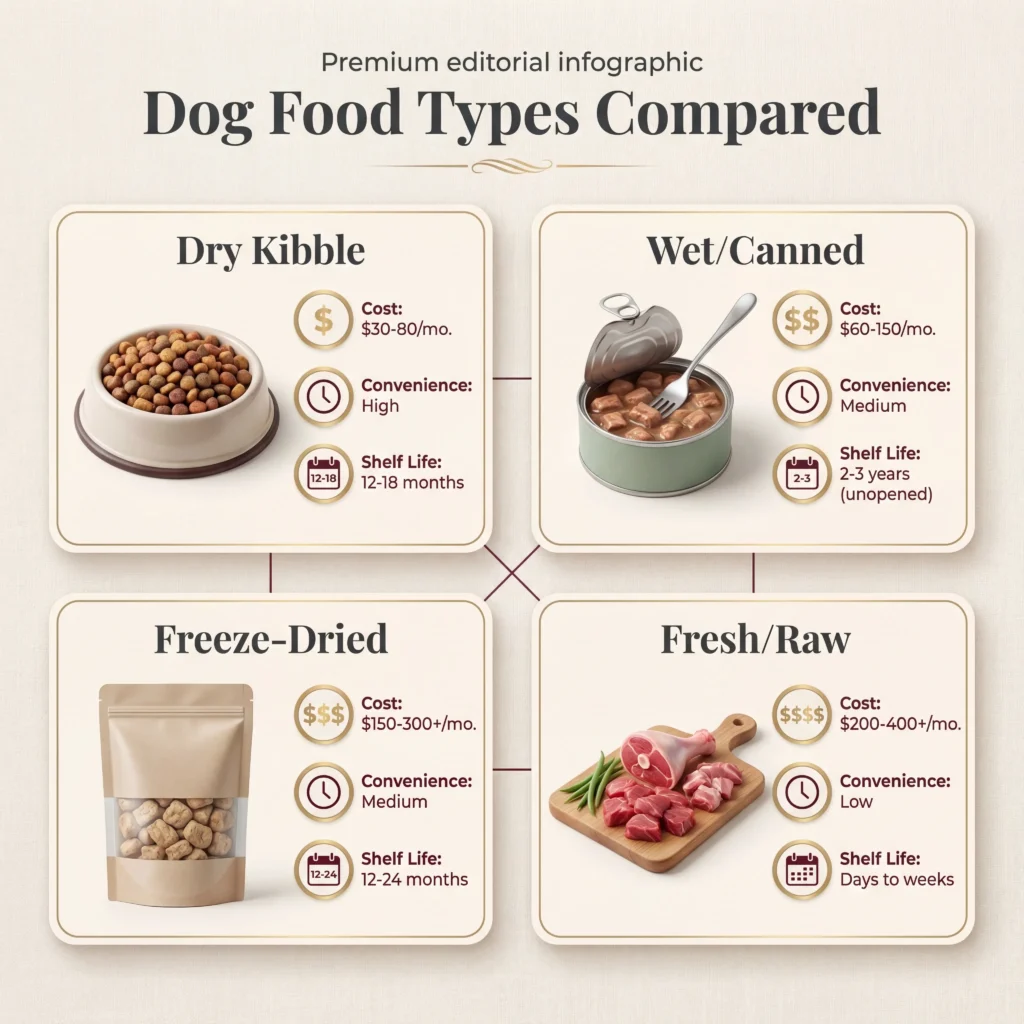
The format that works best depends on your budget, your dog’s preferences, and your household logistics. A kibble-based diet with occasional wet food toppers is a reasonable middle ground for most situations.
How to Read a Dog Food Label
The front of a dog food bag is marketing. The back is data. Learning to read the back takes about five minutes and changes how you evaluate every food you consider.
The Ingredient List
Ingredients appear in order of weight before processing. This matters because meat contains significant water weight. “Chicken” listed first means raw chicken was the heaviest ingredient going into the formula, but after cooking, the actual chicken content may be lower than it appears. “Chicken meal,” despite sounding less appealing, is a concentrated protein source with moisture already removed. A food listing chicken meal second may contain more actual chicken protein than one listing whole chicken first.
Watch for ingredient splitting. Some manufacturers list corn as “ground corn,” “corn gluten meal,” and “corn bran” separately, which pushes each corn component further down the list. Added together, corn might be the dominant ingredient, but the label makes it look like a minor component.
What is AAFCO?
The Association of American Feed Control Officials (AAFCO) is a US organization that sets nutritional standards for pet food. AAFCO doesn’t approve or certify individual products, but it establishes the nutrient profiles that commercial dog foods must meet to be labeled “complete and balanced.” When you see an AAFCO statement on a label, it means the manufacturer claims the food meets these established nutritional standards.
The 25% Rule and Other Naming Conventions
The naming conventions on dog food follow specific AAFCO guidelines that tell you more than you might expect. A product called “Chicken Dog Food” must contain at least 95% chicken (excluding water for processing). “Chicken Dinner,” “Chicken Entrée,” or “Chicken Platter” only requires that chicken comprise at least 25% of the product (at least 10% excluding added water). “With Chicken” means just 3% chicken content. “Chicken Flavor” requires only enough chicken to be detectable, which can be less than 3%.
The Guaranteed Analysis
This is where the guaranteed analysis helps. The guaranteed analysis shows minimum crude protein, minimum crude fat, maximum crude fiber, and maximum moisture. These are floors and ceilings, not exact values, but they give you comparison points.
For dry food, you can compare percentages directly. Wet food requires conversion to dry matter basis because the high moisture content skews the percentages. The calculation: divide the nutrient percentage by (100 minus moisture percentage). A wet food showing 10% protein with 78% moisture actually contains about 45% protein on a dry matter basis, often higher than kibble.
According to AAFCO’s Dog Food Nutrient Profiles, minimums are set at 18% protein for adult maintenance and 22.5% for growth and reproduction (puppies and nursing dogs). Better commercial foods typically exceed these minimums substantially, often landing between 25-35% protein.
The Nutritional Adequacy Statement
This small text block is the most important thing on the label. Two phrasings exist:
- “[Product] is formulated to meet the nutritional levels established by the AAFCO Dog Food Nutrient Profiles for [life stage].”
- “Animal feeding tests using AAFCO procedures substantiate that [Product] provides complete and balanced nutrition for [life stage].”
The second statement means the food was actually tested on dogs through a feeding trial. The first means it was designed on paper to meet nutrient profiles but wasn’t necessarily tested. Feeding trial verification is a higher standard; formulation-only products can still be nutritionally sound, but the testing provides an additional layer of confirmation.
Five Steps to Evaluate Any Dog Food
- Check the AAFCO nutritional adequacy statement and note whether it’s formulated or feeding trial verified
- Identify the first three ingredients and confirm a named protein source appears (not “meat” or “animal by-products”)
- Look for the life stage designation and confirm it matches your dog’s needs
- Compare the guaranteed analysis protein percentage against your current food
- Check the manufacturer’s contact information and recall history through the FDA pet food recall database
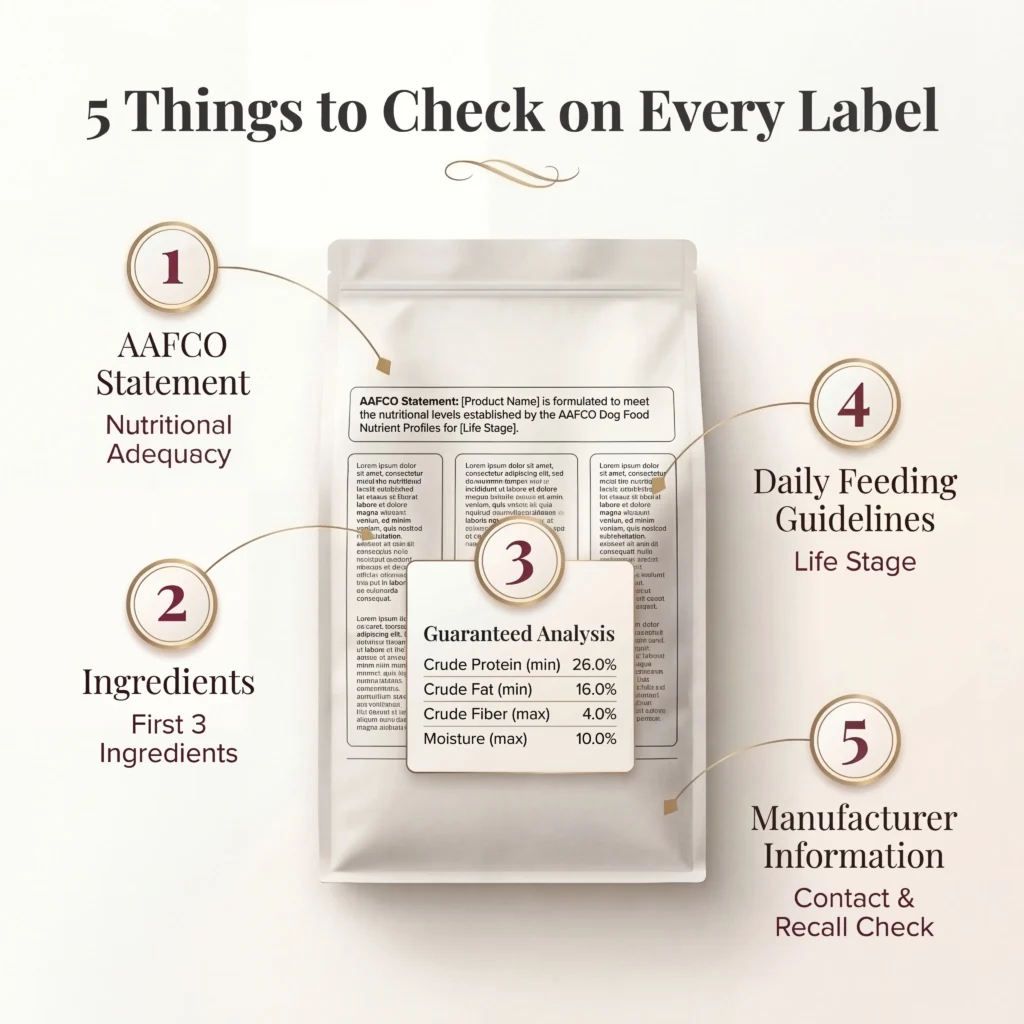
This process takes less than two minutes per bag once you know what you’re looking for.
Ingredients to Look For and Ingredients to Avoid
The ingredient list reveals the food’s foundation. Some ingredients signal quality; others raise questions about formulation priorities.
Quality Protein Sources
Named meat or fish as the first ingredient is a baseline standard: chicken, beef, salmon, lamb, turkey. “Chicken meal” or “salmon meal” are concentrated protein sources and perfectly acceptable as primary or secondary ingredients. The key word is “named.” Generic terms like “meat meal,” “animal by-products,” or “meat and bone meal” don’t specify the source, which makes quality control harder to verify.
Lamb and venison are often marketed as “novel proteins” for dogs with allergies. They’re only novel if your dog hasn’t eaten them before. A dog who’s been eating lamb-based food for years isn’t getting a novel protein from another lamb formula.
Beneficial Carbohydrates and Fiber
Dogs don’t require carbohydrates the way humans do, but digestible carb sources provide energy and fiber that supports gut health. Whole grains like brown rice, oatmeal, and barley are well-tolerated by most dogs and provide more nutritional value than refined grains. Sweet potatoes and peas appear frequently in grain-free formulas as carbohydrate alternatives.
Worth comparing side by side: the carbohydrate source in a food and its position on the ingredient list. A food where sweet potato appears as the second ingredient after chicken may be heavier on carbs than one where chicken and chicken meal both appear before any starch source.
Red Flag Ingredients
Some ingredients aren’t dangerous but signal cost-cutting that affects overall quality.
Corn, wheat, and soy as primary ingredients (first three positions) suggest the formula prioritizes cheap calories over protein quality. These ingredients aren’t toxic, but dogs don’t derive as much nutritional benefit from them compared to meat or quality carbohydrates.
Artificial colors serve no nutritional purpose. Dogs don’t care what color their food is. Dyes exist entirely for owner appeal, and some (like Red 40) have faced scrutiny in human food contexts.
BHA, BHT, and ethoxyquin are synthetic preservatives. While approved for use, many owners prefer foods preserved with natural alternatives like mixed tocopherols (vitamin E) or rosemary extract. The preservative choice doesn’t make or break a food, but it reflects the manufacturer’s formulation philosophy.
Unnamed fat sources (“animal fat” rather than “chicken fat”) create the same traceability concerns as unnamed protein sources.
The Grain-Free Question
Grain-free isn’t a quality indicator. The replacement ingredient matters as much as what was removed. Many grain-free foods substitute legumes (peas, lentils, chickpeas) as primary carbohydrate sources. The FDA has been investigating a potential link between legume-heavy diets and dilated cardiomyopathy (DCM) in certain dog breeds. The investigation is ongoing and causation hasn’t been established, but the correlation has raised enough concern to warrant attention.
Breeds that may have elevated DCM risk include Golden Retrievers, Doberman Pinschers, Boxers, Great Danes, Irish Wolfhounds, and Cocker Spaniels. If your dog is one of these breeds, discuss grain-free feeding with your vet before making a decision.
Dogs with confirmed grain allergies benefit from grain-free options. Dogs without grain sensitivities don’t necessarily benefit from avoiding grains, and they may be better served by a grain-inclusive formula with quality protein as the foundation. For more context on how grains fit into canine nutrition, our guide on grains and legumes for dogs covers the research in more detail.
Choosing Food by Dog Size and Age
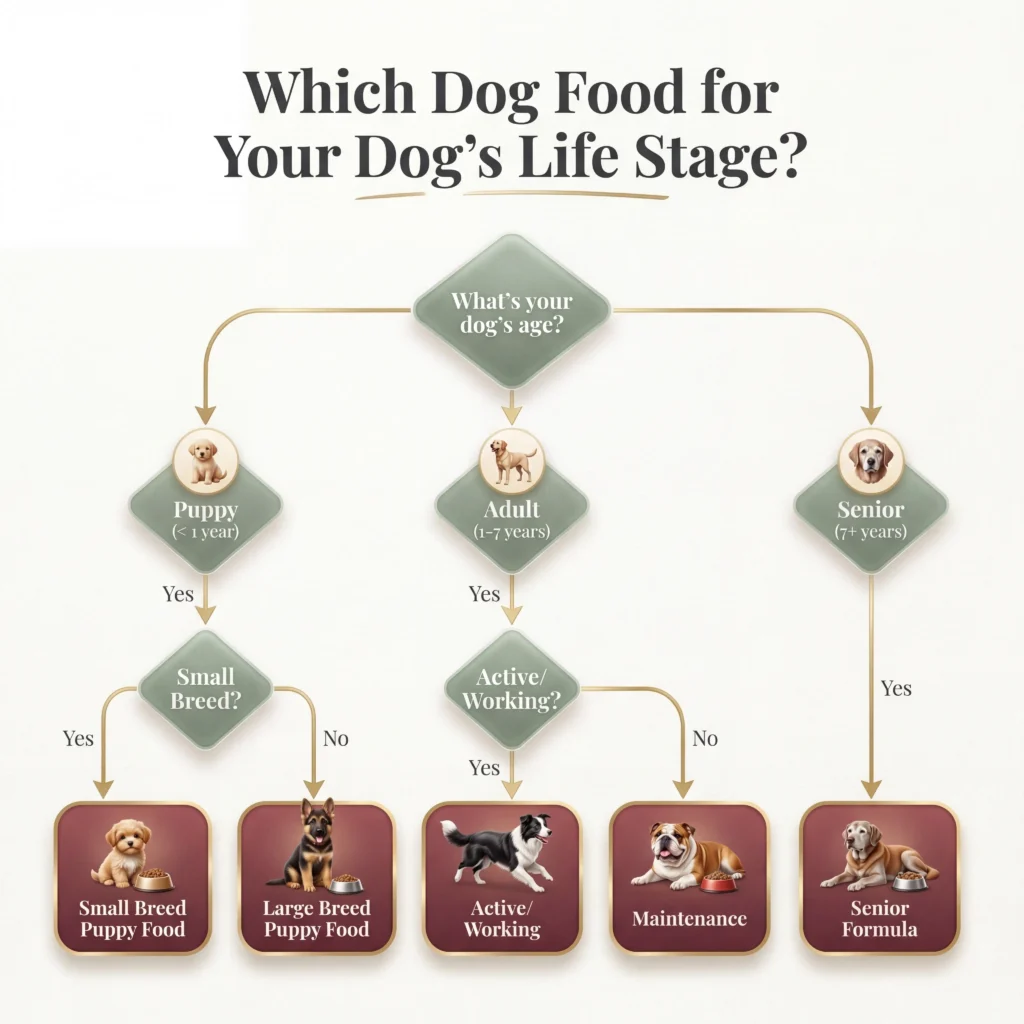
A Chihuahua puppy and a Great Dane senior have dramatically different nutritional requirements. Life stage and size aren’t just marketing categories; they reflect real differences in metabolism, growth patterns, and health risks.
Puppy Food Requirements
Puppies need higher protein (minimum 22.5% per AAFCO standards, though 25-30% is common in quality puppy foods), higher fat for energy, and carefully balanced calcium and phosphorus for bone development. Feeding adult food to puppies can lead to nutritional deficiencies during critical growth windows.
Large breed puppies require specific formulations with controlled calcium levels (typically 1.0-1.5% rather than the higher levels acceptable for small breeds). Excessive calcium during rapid growth phases can contribute to developmental orthopedic disease. I tracked this across several formulas when a friend adopted a German Shepherd puppy: calcium levels ranged from 1.0% to 1.8% across brands all labeled “large breed puppy.” That range matters for skeletal development.
The reason small breeds can handle different calcium levels comes down to growth plate timing. Small breeds mature faster because their growth plates close sooner, typically by 9-12 months. Large and giant breeds have longer growth periods with growth plates remaining open until 18-24 months, making them more susceptible to calcium-related developmental issues during that extended window.
Transition timing from puppy to adult food depends on breed size:
- Small breeds (under 20 lbs adult weight): 9-12 months
- Medium breeds (20-50 lbs): 12-14 months
- Large breeds (50-90 lbs): 12-18 months
- Giant breeds (90+ lbs): 18-24 months
Adult Dog Maintenance
Most healthy adult dogs do well on any AAFCO-approved maintenance formula that uses quality ingredients. The protein minimum drops to 18%, though active dogs and working dogs benefit from higher protein levels (25-30% or more).
“All life stages” formulas meet the more demanding puppy requirements and are technically appropriate for adults, but they may provide more calories and nutrients than a sedentary adult needs. For dogs prone to weight gain, an adult maintenance formula with moderate calorie density is often a better fit.
Senior Dog Considerations
AAFCO doesn’t define a separate “senior” nutritional profile, so senior dog foods vary widely in formulation. Some reduce protein to address kidney concerns; current veterinary nutrition research suggests moderate protein restriction isn’t necessary for healthy senior dogs and may actually contribute to muscle loss. Senior dogs with confirmed kidney disease need different considerations than healthy seniors.
What most older dogs benefit from: moderate calorie reduction (metabolism slows with age), continued quality protein to maintain muscle mass, joint-supporting supplements like glucosamine and chondroitin, and increased digestibility so nutrients are actually absorbed.
Small Breed vs. Large Breed
Beyond puppyhood, size-specific formulas address a few practical concerns. Small breed kibble is sized for smaller mouths. Small breed formulas often have higher calorie density because tiny dogs have faster metabolisms relative to their body weight.
Large breed adult formulas may include joint support ingredients and controlled calorie density to prevent obesity, which stresses joints. The differences are less critical for healthy adults than for growing puppies, but they’re not purely marketing.
Special Diets and When Your Dog Needs One
Some dogs require dietary modifications for health reasons. The gap between “special diet” and “premium marketing” can be hard to distinguish without understanding what each category actually addresses.
Food Allergies and Limited Ingredient Diets
True food allergies in dogs are less common than many owners assume, but they do exist. According to veterinary dermatology research, the most common allergens are proteins: beef accounts for roughly 34% of confirmed food allergy cases, followed by dairy (17%), chicken (15%), wheat (13%), and egg. Symptoms typically include itching (especially ears and paws), chronic ear infections, and gastrointestinal issues.
Diagnosing a food allergy requires an elimination diet lasting 8-12 weeks. The process involves feeding a novel protein or hydrolyzed protein diet exclusively for eight weeks, then systematically reintroducing ingredients one at a time, typically one new ingredient per week, to identify the trigger. This process works best under veterinary supervision.
Chicken-free dog food addresses one of the more common protein sensitivities. Limited ingredient diets simplify the ingredient list to reduce potential triggers, though “limited ingredient” isn’t a regulated term and formulations vary.
Weight Control Formulas
Weight control dog food reduces calorie density through lower fat content and increased fiber to maintain satiety. The math matters here: feeding guidelines on the bag are estimates, and they often overestimate portions. Many veterinarians observe that standard feeding guidelines can lead to overfeeding by 20-30% for less active dogs.
Successful weight management combines reduced calorie intake with consistent portion measurement (use a kitchen scale, not a scoop) and appropriate exercise. The food is one variable; owner behavior is another.
Prescription and Veterinary Diets
Prescription diets address specific medical conditions: kidney disease, diabetes, urinary crystals, severe allergies, gastrointestinal disorders. These formulations are therapeutic tools, not premium products for healthy dogs. Prescription diets typically cost $60-120 per bag and require veterinary authorization to purchase.
Low protein dog food is appropriate for dogs with advanced kidney disease where protein metabolism creates problematic waste products. It’s not appropriate for healthy dogs, where adequate protein supports muscle maintenance and overall health.
If your vet recommends a prescription diet, the recommendation is based on your dog’s specific diagnosis. These foods serve a purpose that over-the-counter options can’t replicate through ingredient selection alone.
Digestive Issues
Food for dogs with diarrhea typically means a temporary bland diet (boiled chicken and white rice) followed by gradual transition back to regular food. Chronic digestive issues warrant veterinary evaluation rather than indefinite bland feeding.
For ongoing digestive sensitivity, limited ingredient diets or foods with single protein sources can help identify triggers. Probiotics and digestible fiber sources support gut health, but persistent problems need professional assessment to rule out underlying conditions.
Red Flags That Signal a Bad Dog Food
Not all dog foods are created equal, and some warning signs indicate a formula isn’t worth your money or your dog’s health.
Recall History and How to Check It
A single recall isn’t necessarily disqualifying; contamination can happen even in well-managed facilities. But a pattern of recalls, especially for the same issue (salmonella, aflatoxin, elevated vitamin D), suggests systemic quality control problems.
Check the FDA pet food recall database before committing to a brand. The database is searchable by company name and product type. A brand with multiple recalls in recent years warrants skepticism regardless of marketing claims.
Marketing Tricks vs. Reality
“Human-grade ingredients” sounds premium but isn’t a regulated term in pet food unless the product specifically states it was manufactured in a human food facility under human food regulations. Without that specification, the phrase is marketing.
“Natural” has a loose AAFCO definition that allows some synthetic ingredients. “Holistic” has no regulatory meaning whatsoever. “Grain-free” isn’t inherently healthier and may introduce other concerns.
Price doesn’t guarantee quality. My spreadsheet caught what the label didn’t on several occasions: expensive boutique brands with questionable formulations and budget brands with solid ingredient panels. The label tells you more than the price tag.
Signs Your Current Food Isn’t Working
Your dog’s condition reveals whether a food is appropriate more reliably than any label analysis:
- Dull, dry coat or excessive shedding beyond normal seasonal changes
- Low energy levels or lethargy not explained by age or activity level
- Persistent loose stools or constipation
- Frequent ear infections or skin irritation
- Gradual weight gain or loss despite consistent feeding
- Poor appetite or visible disinterest in meals
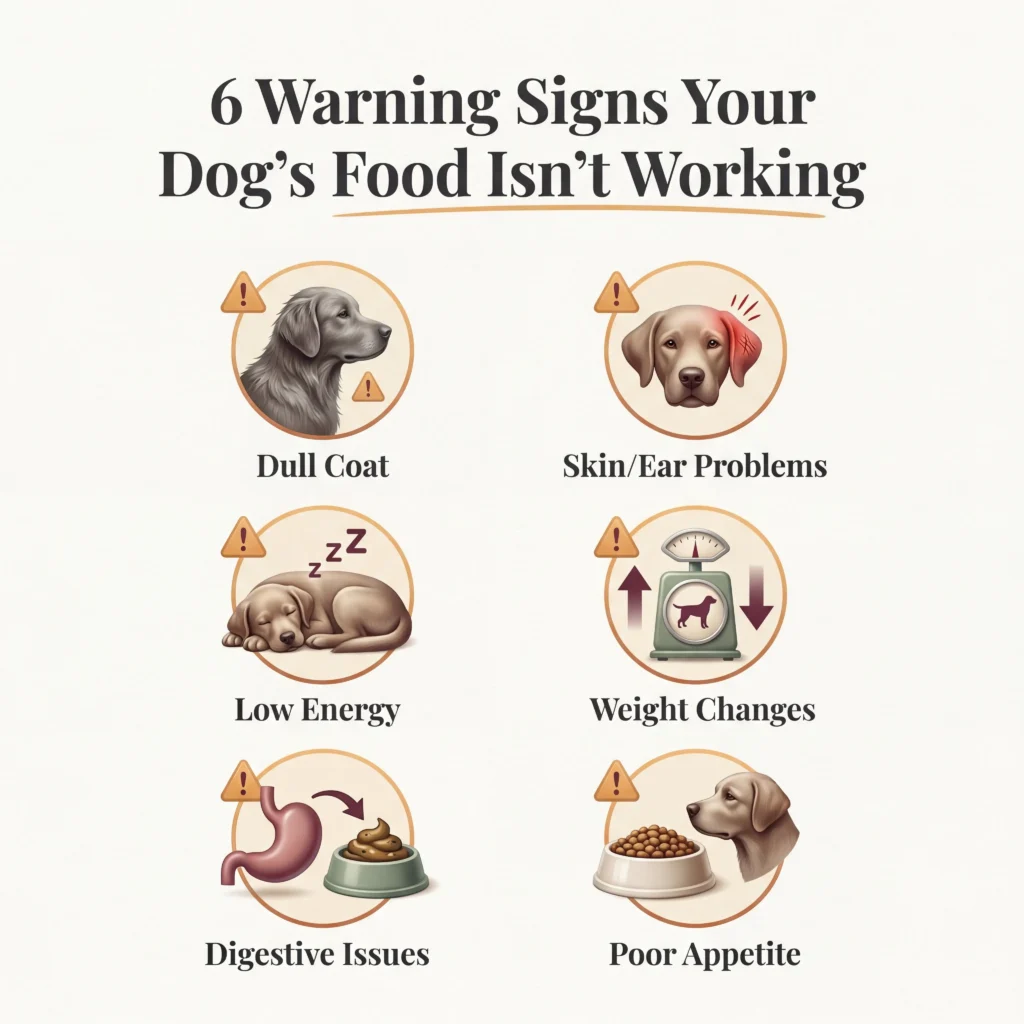
These symptoms don’t always indicate a food problem; some signal underlying health issues requiring veterinary attention. But if your dog is otherwise healthy and showing these signs, the food is a reasonable place to start investigating.
A healthy dog on appropriate food has a shiny coat, consistent firm stools, stable weight, good energy, and enthusiastic interest in meals. Your dog’s response to the food matters more than the brand’s claims about it.
Explore Dog Food Topics In-Depth
The label comparison doesn’t end with the pillar topics. I’ve put together focused guides on specific food categories and concerns that come up when you’re trying to match a formula to your dog’s actual needs.
Food Types and Formats
- Dog Food Toppers — Which toppers add real nutrition versus just calories and flavor
- Freeze Dried Raw Dog Food — The cost-benefit math on premium raw-alternative formats
Protein-Specific Guides
- Chicken Free Dog Food — Options when chicken is off the table
- Lamb Dog Food — When lamb makes sense and when it’s just marketing
- Venison Dog Food — Novel protein reality check
Size and Life Stage
- Large Breed Dog Food — Calcium ratios and joint support for big dogs
Special Dietary Needs
- Weight Control Dog Food — The calorie math that actually works
- Low Protein Dog Food — When restriction helps and when it doesn’t
- Food for Dogs with Diarrhea — Bland diet protocols and recovery feeding
Brand Evaluation
- Dog Food Brands to Avoid — Red flags and recall patterns that signal problems
What I’ve Learned — Liora’s Take
Three dogs, three different dietary situations, and more formula comparisons than I care to count.
My biggest lesson came from a mistake: I switched all three dogs to grain-free because the marketing convinced me grains were inflammatory. Within two weeks, my younger rescue had loose stools that didn’t resolve until we transitioned back. The grain-free formula was heavier on legumes than I’d realized, and her system couldn’t handle it.
That experience taught me to question the marketing and look at actual ingredients. My spreadsheet now tracks protein sources, carbohydrate bases, and how each dog responds over time. What I’ve found is that the expensive brand isn’t always better, the cheap brand isn’t always worse, and your dog’s individual response matters more than any label claim.
If I could give one piece of advice: compare at least three formulas side by side before you buy. Look at the guaranteed analysis, check the first five ingredients, and verify the AAFCO statement. The fifteen minutes you spend reading labels saves you money on foods that don’t deliver and helps you spot the ones that do.
— Liora Kittredge, Dog Nutrition & Food Guide Writer
Common Dog Food Mistakes (And How to Avoid Them)
Mistake #1: Trusting the front of the bag
Why it happens: Packaging design is specifically engineered to create trust and convey quality. “Premium,” “natural,” and “wholesome” appear on bags regardless of what’s inside.
The fix: Flip the bag over. Check the ingredient list and AAFCO statement before you read anything on the front. I fell for this with a “farm-fresh chicken” formula that listed chicken meal as the fourth ingredient behind two starches and a by-product.
Mistake #2: Changing foods too quickly
Why it happens: You find a better food and want your dog to benefit immediately. Or the old food is out of stock and you grab an alternative.
The fix: Transition over 7-10 days, gradually mixing increasing proportions of new food with decreasing amounts of old food. Sudden switches cause digestive upset even with excellent foods. Keep a backup bag of current food so you’re never forced into an abrupt change.
Mistake #3: Overfeeding based on bag guidelines
Why it happens: Feeding guidelines are printed right there, and following instructions seems responsible.
The fix: Bag guidelines are estimates based on average dogs, and many veterinarians observe they tend to overestimate needs for less active pets. Use the guideline as a starting point, then adjust based on your dog’s body condition. A visible waist from above and ribs you can feel but not see indicate appropriate weight. I weigh portions for my dogs rather than scooping; the difference in accuracy is substantial.
Mistake #4: Assuming expensive means better
Why it happens: Quality often correlates with price in other product categories. Premium positioning creates quality associations.
The fix: Compare ingredient panels across price points. Some mid-range foods outperform expensive boutique brands on actual formulation. Cost per serving tells you more than price per bag, especially when comparing different format types.
Mistake #5: Ignoring your dog’s feedback
Why it happens: The label looks good, the reviews are positive, and the food “should” work based on its formulation.
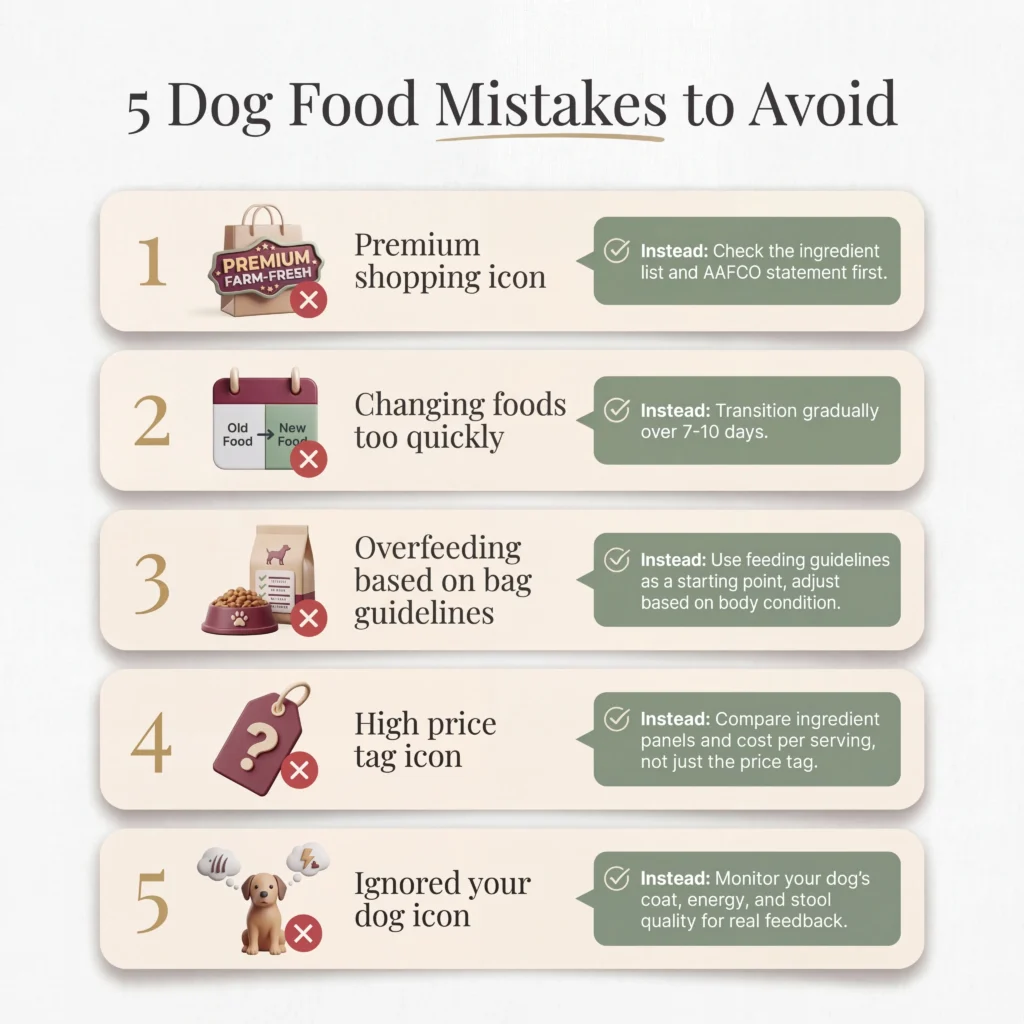
The fix: Your dog’s coat, energy, stool quality, and appetite are the real performance metrics. A food that checks every label box but leaves your dog with dull fur and inconsistent stools isn’t working, regardless of what the guaranteed analysis says.
Frequently Asked Questions
How do I figure out what dog food is best for my dog?
Start with three criteria: an AAFCO nutritional adequacy statement for your dog’s life stage, a named protein source in the first two ingredients, and a formulation appropriate for your dog’s size (large breed specific for dogs over 50 lbs, small breed specific for dogs under 20 lbs). From there, trial matters more than analysis. Feed the food for four to six weeks and assess coat quality, stool consistency, energy level, and weight maintenance. The data you collect from your own dog beats any label comparison.
What should the first ingredient in dog food be?
A named protein source: chicken, beef, salmon, lamb, turkey, or their meal equivalents. “Chicken meal” is acceptable and actually represents concentrated protein. Avoid foods where the first ingredient is a carbohydrate (corn, wheat, rice) or a generic protein source (“meat meal,” “animal by-products”). The first ingredient represents the largest component by weight before processing.
Is grain-free dog food better?
Not inherently. Grain-free formulas substitute other carbohydrate sources, typically legumes like peas and lentils. For dogs with confirmed grain allergies, grain-free is necessary. For dogs without grain sensitivities, the substitution may not provide any benefit and potentially introduces concerns. The FDA continues investigating a possible link between legume-heavy diets and heart disease in certain breeds, particularly Golden Retrievers, Dobermans, and Boxers. Discuss with your vet before choosing grain-free, especially for breeds with DCM predisposition.
How do I know if my dog’s food is working?
Physical indicators tell the story: a shiny coat without excessive shedding, firm and consistent stools, stable weight, good energy levels appropriate to age, and visible enthusiasm at mealtimes. These signs typically stabilize within four to six weeks on a new food. If your dog shows persistent dull coat, loose stools, lethargy, or weight changes despite consistent feeding, the food may not be appropriate regardless of its label quality.
When should I switch my dog’s food?
Switch for specific reasons, not trends. Valid reasons include life stage transitions (puppy to adult, adult to senior), veterinary diagnosis requiring dietary modification, persistent symptoms suggesting the current food isn’t working, or manufacturer recall of your current brand. Switching because a new food is trendy or heavily marketed isn’t a good reason. If your dog is thriving, stability usually serves them better than variety. Some owners do practice rotation feeding, switching proteins every few months with the theory that variety reduces allergy development risk, but this approach isn’t necessary for most dogs.
What does “complete and balanced” actually mean?
“Complete” means the food contains all required nutrients. “Balanced” means those nutrients exist in correct ratios to each other. Both terms connect to AAFCO standards, so a food claiming to be complete and balanced should have an AAFCO nutritional adequacy statement somewhere on the package. Foods without this statement may be treats, supplements, or toppers intended for intermittent feeding rather than sole nutrition.
Bringing It All Together
The dog food aisle offers hundreds of options, but the evaluation process is straightforward once you know what to look for. Check the AAFCO statement, read the first five ingredients, compare the guaranteed analysis, and verify the manufacturer’s recall history. These four steps take less than five minutes and filter out the majority of questionable options.
Your dog’s individual response completes the picture. A food that meets every analytical criterion but leaves your dog with digestive issues or dull coat isn’t the right food for that dog. The label tells you what’s possible; your dog tells you what actually works.
Next steps:
- Check your current food against the criteria in this guide
- If considering a switch, compare at least three formulas using the label-reading framework
- Start with what your vet recommends for your dog’s specific situation — the label comparison comes after
If you’re looking at specific food categories, the toppers guide covers adding variety without disrupting nutrition, and the brands to avoid guide details the recall patterns and red flags that signal deeper problems.
Read the ingredient panel before you read the reviews. Your dog is eating the ingredients, not the marketing.
— Liora Kittredge
About the Author
Liora Kittredge — Dog Nutrition & Food Guide Writer
Liora writes about dog food ingredients, grain safety, and food selection for FetchOrSkip. Her interest in canine nutrition started when her older dog developed a food allergy and the elimination diet that followed taught her that the ingredient label mattered more than the brand. She spent months comparing commercial dog food formulations, tracking how her three dogs responded to different foods, and building a spreadsheet that compared ingredients, costs per serving, and real-world results.
When a grain-free switch she tried backfired on her younger rescue, she learned firsthand that trend-based feeding decisions can create new problems. Liora writes for dog owners who want to understand what’s in their dog’s food before they buy it. Her guides compare formulas by the data that matters and cut through the marketing language that makes ingredient panels hard to read. She has a background in nutrition sciences and is based in the Pacific Northwest.