

When your dog is hurting, the search for safe pain relief for dogs almost always starts at the medicine cabinet, and that is exactly where it can go wrong. A dog can’t tell you where or how much it hurts. It shows you instead, through a limp, a flinch, a night spent shifting on the bed. The hardest part for most owners is the gap between noticing the pain and getting to a clinic, because the instinct is to reach for whatever is on the shelf. That instinct is the single most dangerous thing you can act on: the bottle of ibuprofen that helps your own sore knee can put a dog in the emergency room within hours.
Most guides just list drugs. This one is built differently: it sorts every option into three clear buckets, what you must never give, what only a veterinarian can prescribe safely, and what you can do at home tonight, so you know which bucket you’re in before you act. It also covers how to tell your dog is in pain in the first place, the warning signs of a bad drug reaction, and when a limp is actually an emergency. Every medical claim is tied to a named authority, and every number is specific rather than vague.

How to tell your dog is in pain
Dogs evolved to hide pain. A dog in real discomfort often acts almost normal at the vet and only shows it at home. Learning the quiet signals is the most useful skill an owner can have, because it tells you when “wait and watch” should become “call the clinic.”
Watch for these changes, and note how many appear together:
- Movement: limping, walking slower, stiffness after rest, refusing stairs, or hesitating to jump onto the couch or into the car.
- Posture: a hunched back, a tucked tail, or trouble getting comfortable, shifting position again and again before lying down.
- Behavior: a normally social dog hiding or becoming clingy, or a gentle dog growling when touched in one spot.
- Self-focus: licking or chewing one area, often a joint or paw, sometimes until the fur thins.
- Body signals: panting at rest, drooling, trembling, a faster heartbeat, or a tense, board-like belly.
- Daily habits: eating less, sleeping more or less than usual, restlessness through the night, or accidents from a dog that won’t squat or climb the stairs to the door.
Veterinary teams use validated scoring tools, such as the Glasgow Composite Measure Pain Scale and the Colorado State University Canine Acute Pain Scale, to grade pain consistently. You don’t need the formal forms at home. You just need to track the signs above over a day or two so you can describe them clearly. Cornell University’s Riney Canine Health Center offers a useful owner-level overview of recognizing pain in dogs if you want a deeper reference.
The one rule: never give human painkillers
This is the part that sends dogs to the emergency room. Common human pain relievers are not “a smaller version” of dog medicine. They are toxic to dogs, and the damage can begin within hours of a single dose.
- Ibuprofen (Advil, Motrin): causes stomach ulcers, bleeding, and kidney failure in dogs. Even one or two pills can poison a small dog.
- Naproxen (Aleve): extremely potent and long-acting in dogs, with a very narrow margin before it causes ulcers and kidney injury.
- Acetaminophen (Tylenol): not an NSAID, but it damages a dog’s liver and red blood cells, which carry oxygen. Signs include brown gums and labored breathing.
- Aspirin: sometimes used short-term under direct veterinary supervision, but never as a routine home remedy. It thins the blood and irritates the stomach lining, and it interferes with the safer prescription drugs your vet may want to use next.
The reason is biological. Dogs metabolize these drugs differently and far more slowly than people do, so a “normal” human dose stacks up to a toxic one. The ASPCA’s Animal Poison Control Center fields these cases every day. If your dog already swallowed a human pain pill, treat it as an emergency and call your vet or a poison hotline immediately, because early treatment changes the outcome.
There is a second, quieter danger in self-medicating: giving aspirin at home can force your vet to delay the safer, more effective drug they would otherwise prescribe, because mixing pain relievers raises the risk of a bleeding ulcer. For the same reason, this site keeps a separate guide on dosing the one human drug vets sometimes do approve for dogs, antihistamines, in our vet-backed Benadryl dosage guide, and even that is only safe within specific limits.
Pain medications a vet can prescribe safely
Here is the good news owners often miss: there is a whole shelf of pain control made specifically for dogs, and it works well. These are prescription drugs because they need the right dose for your dog’s weight and health, plus monitoring. Your veterinarian chooses from several categories, often combining them, an approach the 2022 AAHA and WSAVA pain guidelines call multimodal pain management.
Canine NSAIDs (the first-line workhorses)
Non-steroidal anti-inflammatory drugs reduce the inflammation that drives most joint and post-surgery pain. The U.S. Food and Drug Administration has approved exactly six NSAIDs for dogs, and these are the safe versions, formulated and dose-tested for canine bodies.
| Drug (brand) | Common use | Notes |
|---|---|---|
| Carprofen (Rimadyl, Novox) | Arthritis, post-surgery | Often dosed every 12 hours; widely used long-term for its favorable profile. |
| Meloxicam (Metacam) | Musculoskeletal pain, post-op | Once-daily liquid, tablet, or injection. |
| Grapiprant (Galliprant) | Osteoarthritis pain | Targets the EP4 receptor and spares the prostaglandins that protect the stomach and kidneys; for dogs 9 months and older. |
| Firocoxib (Previcox) | Arthritis, post-surgery | Once-daily chewable. |
| Deracoxib (Deramaxx) | Arthritis, dental/orthopedic surgery | Once-daily chewable. |
| Robenacoxib (Onsior) | Short-term pain | Labeled for no more than 3 days in dogs. |
One absolute rule the FDA spells out: an NSAID must never be combined with another NSAID or with a steroid such as prednisone, because the combination can cause stomach ulcers and perforation. If your dog is switching from one NSAID to another, the vet will build in a wash-out gap, usually about 5 to 7 days, to clear the first drug. The FDA’s guidance on pain control and NSAIDs in dogs is the authority your vet follows here, and the American Kennel Club’s overview of NSAIDs for dogs is a readable companion.
Librela, the newer monoclonal antibody
For chronic arthritis pain, the landscape changed in 2023. The FDA approved Librela (bedinvetmab) on May 5, 2023, the first monoclonal antibody cleared in the United States to control osteoarthritis pain in dogs. It is not a daily pill. It is a once-monthly injection given at the clinic that targets a specific pain-signaling protein. For older dogs that struggle to take pills or can’t tolerate NSAIDs, it has become a common option. Like any drug it has trade-offs, so your vet will weigh it against your dog’s history.
Drugs for nerve pain and severe pain
NSAIDs treat inflammation, but some pain needs a different tool. Vets reach for these as add-ons:
- Gabapentin: calms nerve-related and chronic pain; often paired with an NSAID.
- Amantadine: helps pain that has stopped responding to an NSAID alone.
- Opioids (buprenorphine, fentanyl, methadone): reserved for severe, short-term, or post-surgical pain, given and monitored by the clinic.
- Adequan (polysulfated glycosaminoglycan): an injectable that supports joint cartilage rather than masking pain.
Why so many options? Because osteoarthritis is common, affecting roughly one in five dogs, and the best plan usually layers a primary drug with supports rather than leaning on a single high dose. That layering is exactly what keeps doses, and side-effect risk, lower.
What you can safely do at home tonight
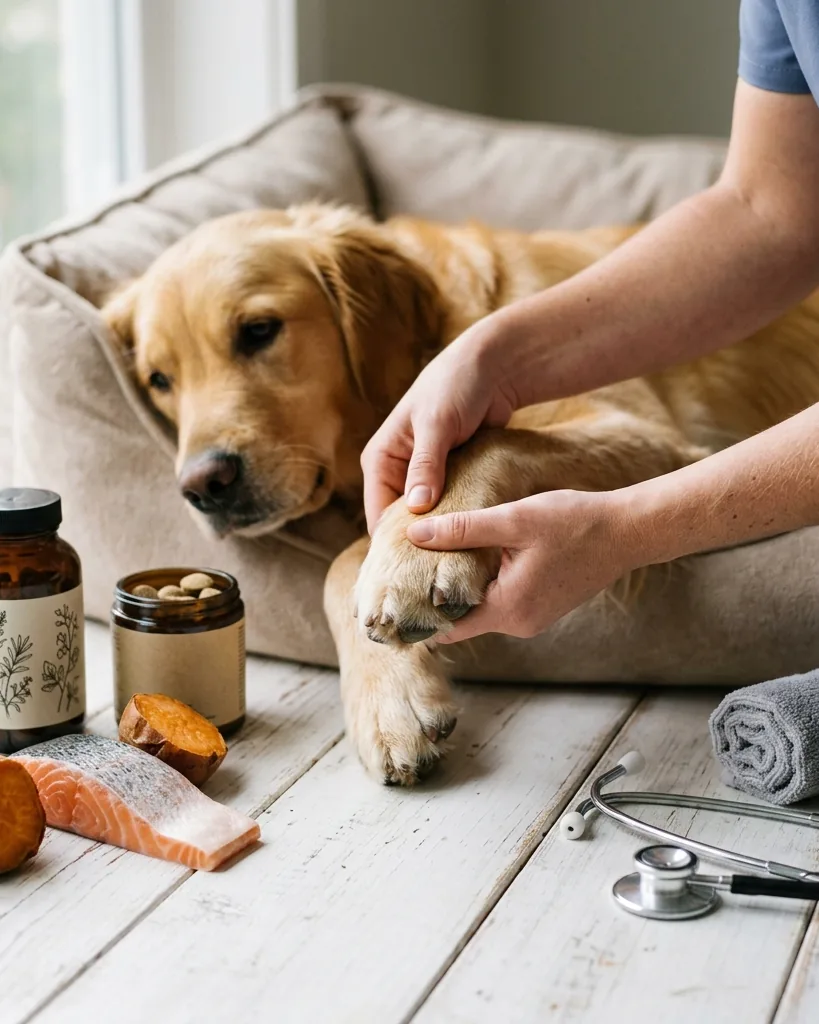
While you wait for the appointment, you are not helpless. None of the steps below require a prescription, and several have real evidence behind them. Think of these as comfort and support, not a cure.
- Rest and restrict. Keep your dog quiet. No stairs, no jumping, no long walks. For a pulled muscle or a sore joint, two or three days of genuine rest does more than most owners expect.
- Make the floor safe. Lay runners or yoga mats over slick floors so a stiff dog isn’t sliding. Raise the food and water bowls so a sore neck or back doesn’t have to bend.
- Soft, supportive bedding. An orthopedic or memory-foam bed in a warm, draft-free spot takes pressure off aching joints.
- Warmth or cold, matched to the problem. A warm (not hot) pack soothes stiff arthritic joints; a cold pack wrapped in a towel, for 10 minutes, calms a fresh sprain or swelling. Never apply either directly to bare skin.
- Weight control. This is the most underrated pain treatment there is. Every extra pound loads an arthritic joint. Trimming a dog back to a lean weight can cut pain as much as some medications.
- Omega-3 fatty acids. Fish oil from salmon or sardines reduces joint inflammation over weeks. Ask your vet for the right dose, and go easy in overweight dogs, since oil is calorie-dense.
- Joint supplements. Glucosamine, chondroitin, and green-lipped mussel may slow joint wear and ease symptoms. They work gradually, not overnight, and you should clear any supplement with your vet, especially if your dog is already on medication.
For longer-term arthritis, vets also use physical rehabilitation, underwater treadmill work, therapeutic laser, and acupuncture. These are the kinds of supports that let the drug dose stay as low as possible.
It helps to have a realistic timeline in your head. A simple soft-tissue strain often settles with two to three days of strict rest and a safe, padded resting spot. A flare of arthritis usually needs a vet visit and a prescription, and you should see your dog moving more freely within the first week once the right medication starts. The slow-acting supports, weight loss, fish oil, and joint supplements, work on a scale of weeks to months, which is why they belong in a long-term plan rather than an emergency one. If two or three days of rest and home comfort haven’t changed anything, that is your signal to stop waiting and get a diagnosis. Pain that doesn’t improve, or that keeps coming back, almost always has a cause worth finding early, whether it’s a joint, a disc, a tooth, or something internal that a home remedy can never reach.
Side effects: when to stop and call the vet
Prescription NSAIDs are safe for most dogs when used as directed, but they are still real drugs that act on the stomach, kidneys, and liver. Because of that, vets often run baseline bloodwork before starting an NSAID and recheck it periodically, especially in older dogs or long-term use.
Once your dog is on the medication, you become the daily monitor. Stop the drug and call your veterinarian if you see any of these:
- Vomiting, or diarrhea, especially black or tarry stool, a sign of stomach bleeding.
- A drop in appetite or refusing food.
- Unusual tiredness, weakness, or wobbliness.
- Drinking or urinating much more than normal.
- Yellowing of the gums, eyes, or skin, a sign of liver trouble.
- Redness, scabs, or sores on the skin.
An easy way to remember the big ones is the FDA’s “BEST” check: Behavior changes, Eating less, Skin redness, and Tarry stool. Any one of them is a reason to pause the medication and get advice, not to push through. Every FDA-approved canine NSAID is dispensed with a Client Information Sheet that lists these signs, so keep it.
Emergency or appointment? How to decide
Most aches can wait for a same-week appointment. Some can’t. Treat it as an emergency, call now or head to the nearest 24-hour clinic, if your dog shows any of the following:
- Sudden inability to stand, walk, or use a leg, or dragging the back legs.
- Crying out, screaming, or aggression triggered by the lightest touch.
- A hard, swollen, or painful belly, or unproductive retching, which can signal bloat, a true emergency.
- Pain after being hit by a car, a fall, or any major trauma, even if your dog seems to walk it off.
- Pale or blue gums, collapse, or labored breathing.
- Any sign your dog swallowed a human medication or other toxin.
When you’re unsure, a phone call to your vet or an emergency line costs nothing and settles it fast. Describe the signs you tracked from the checklist above; that is exactly the information that helps them tell you whether to come in now or in the morning.
Frequently asked questions
Can I give my dog aspirin for pain?
Only if your veterinarian specifically tells you to, with a dose and duration. Aspirin is not a safe routine home remedy for dogs. It irritates the stomach, thins the blood, and can block your vet from using a safer prescription NSAID next because of bleeding-ulcer risk. Don’t start it on your own.
How long does dog pain medication take to work?
Prescription NSAIDs usually ease pain within a day or two, and you’ll often see better movement within the first week. Supplements like fish oil and glucosamine work slowly, over several weeks, so they support a plan rather than handle a flare-up. Librela is given monthly and many owners notice improvement within the first weeks.
Is CBD a safe painkiller for dogs?
CBD products are widely sold, but they are not FDA-approved for pain in dogs, quality and dosing vary a lot between products, and CBD can interact with other medications. If you want to try it, talk to your vet first so it doesn’t clash with a prescribed drug.
Can I give my dog my own gabapentin or leftover pet medication?
No. Even when the drug name matches, the strength and the right dose for your dog depend on its weight and health, and some human formulations contain additives (like xylitol in certain liquids) that are toxic to dogs. Only use medication prescribed for your specific dog, at the dose your vet set.
My dog seems fine now, do I still need the vet?
Probably yes, if you saw two or more pain signs for more than a day. Dogs are built to hide pain, so “seems fine” often means “is coping.” A quick exam finds the cause, whether it’s a joint, a tooth, or something internal, before it gets worse.
The bottom line
Pain relief for dogs comes down to three moves. Never give human painkillers, because ibuprofen, naproxen, aspirin, and acetaminophen can poison a dog within hours. Let your veterinarian prescribe the medicine, because the six FDA-approved canine NSAIDs, newer options like Librela, and nerve-pain add-ons are both effective and dose-tested for dogs. And support your dog at home with rest, a safe floor, warmth or cold, weight control, and vet-approved supplements while you get a real diagnosis. Reaching for the right help, instead of the medicine cabinet, is the single best thing you can do for a dog in pain. For more on what is and isn’t safe around the house, see our hub on dog medications and special diets and our guide to household toxins like antifreeze.
Sources: U.S. FDA Center for Veterinary Medicine, Pain Control and NSAIDs in Dogs and Get the Facts about Pain Relievers for Pets; American Kennel Club, NSAIDs for Dogs; ASPCA Animal Poison Control Center; Cornell University Riney Canine Health Center, Recognizing Pain in Dogs.