


Lamb has earned a reputation as a premium, allergy-friendly protein in dog food. The label says one thing; the data says another. After comparing lamb-based formulas across dozens of brands and tracking how my three dogs responded to different proteins over several years, I’ve found that the marketing around lamb often oversimplifies what’s actually a nuanced choice.
Here’s what the ingredient panels and my feeding logs revealed: lamb is a solid protein option for specific dogs in specific situations, but it’s not the universal upgrade that premium branding suggests. Lamb dog food works best for dogs with confirmed sensitivities to chicken or beef, picky eaters who respond to richer flavors, and owners practicing protein rotation. For everyone else, it might be an expensive solution to a problem that doesn’t exist.
This guide breaks down the nutritional profile of lamb compared to chicken and beef, explains who actually benefits from switching, and walks you through the label details that separate quality lamb formulas from marketing fluff. If you’re building a complete picture of commercial dog food options, the Dog Food Selection Guide covers the broader landscape of food types and how to evaluate them.
Why lamb became a popular dog food protein
Lamb entered the commercial dog food market as an alternative to the dominant proteins of the 1980s and 1990s: chicken and beef. Pet food manufacturers positioned it as a “novel protein” because most dogs hadn’t been exposed to it, which made it useful for elimination diets when a dog showed signs of food sensitivities.
The novel protein angle drove lamb’s initial popularity. Veterinarians recommended it for dogs with suspected allergies because the immune system hadn’t built a reaction to an unfamiliar protein source. That recommendation stuck, and lamb became associated with sensitive stomachs and allergy relief in the minds of dog owners.
The catch is that “novel” depends entirely on your dog’s dietary history. A dog who has eaten lamb-based treats or food for years has already been exposed. For that dog, lamb isn’t novel at all. The protein only works as an allergen alternative if your dog genuinely hasn’t encountered it before. I made this mistake early on with my older dog’s elimination diet (thinking lamb would automatically help) before realizing she’d been getting lamb-based training treats for months.
Today, lamb appears in formulas ranging from budget kibble to ultra-premium air-dried food. The price premium often has more to do with sourcing claims like “grass-fed” or “pasture-raised” than with the protein’s inherent nutritional value. Worth comparing side by side: a $30 bag of lamb kibble and a $90 bag often have similar guaranteed analysis numbers, with the price difference coming down to ingredient sourcing and brand positioning.
Nutritional profile of lamb in dog food
Lamb delivers a nutrient profile that differs meaningfully from chicken and beef in a few specific ways. Understanding these differences helps you decide whether lamb suits your dog’s actual needs or whether you’re paying a premium for minimal benefit.
Lamb is higher in fat than chicken. A typical lamb-based dry dog food lists crude fat minimums around 14-18%, compared to 10-14% for chicken formulas. That extra fat translates to higher caloric density, which matters if you’re managing your dog’s weight. My younger rescue gained about two pounds in the first month after I switched her to a lamb formula before I adjusted her portions downward.
The protein content is comparable across lamb, chicken, and beef formulas. Most commercial dog foods land between 22-30% crude protein regardless of the primary meat source. This is where the guaranteed analysis helps: the protein percentage tells you more about the formula’s overall composition than which animal it came from.
Where lamb genuinely stands out is in its micronutrient profile. Lamb is naturally higher in zinc (supporting immune function and coat health), iron (oxygen transport), and B12 (nerve function and energy metabolism) compared to chicken. It also contains more omega-3 fatty acids than chicken, though less than fish-based formulas like salmon. These differences are real but modest. A dog eating a complete and balanced chicken formula isn’t missing these nutrients; they’re just getting them from other ingredients in the mix.
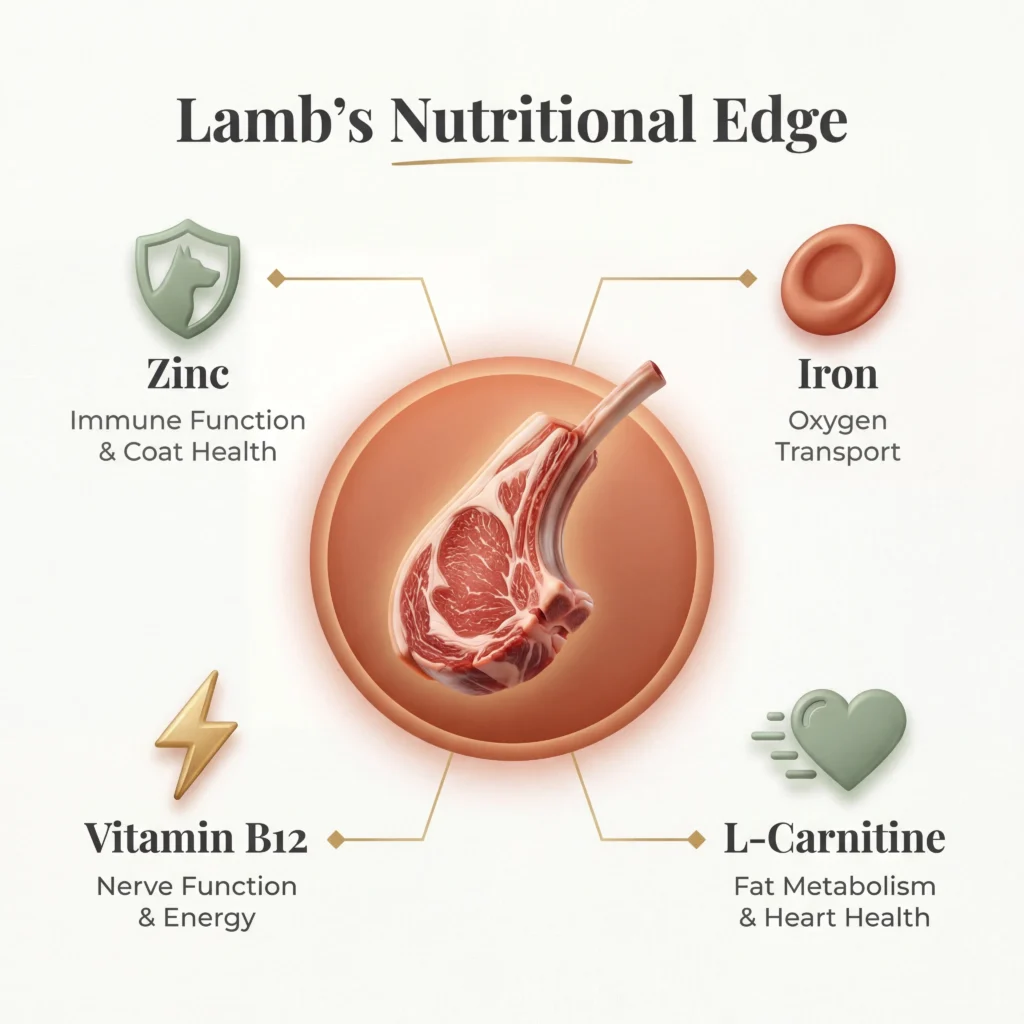
One nutritional consideration that rarely appears on labels: lamb contains L-carnitine, an amino acid that supports fat metabolism and heart function. Some premium formulas highlight this, but most lamb dog foods contain it naturally without calling it out.
Lamb vs chicken vs beef in dog food
This is where the decision gets practical. I tracked my three dogs’ responses across lamb, chicken, and beef-based formulas over about eighteen months, logging coat condition, stool quality, and palatability. The comparison table below reflects both that tracking and the nutritional data from the formulas I tested.
Protein comparison: lamb vs chicken vs beef
| Factor | Lamb | Chicken | Beef |
|---|---|---|---|
| Typical crude protein | 24-28% | 25-30% | 24-28% |
| Typical crude fat | 14-18% | 10-14% | 12-16% |
| Caloric density | Higher | Lower | Medium |
| Common allergen? | Less common | Most common | Common |
| Zinc content | Higher | Lower | Medium |
| Omega-3 content | Medium | Lower | Lower |
| Average price ($/lb kibble) | $2.50-4.00 | $1.50-2.50 | $2.00-3.00 |
| Palatability (picky eaters) | High | Medium | High |
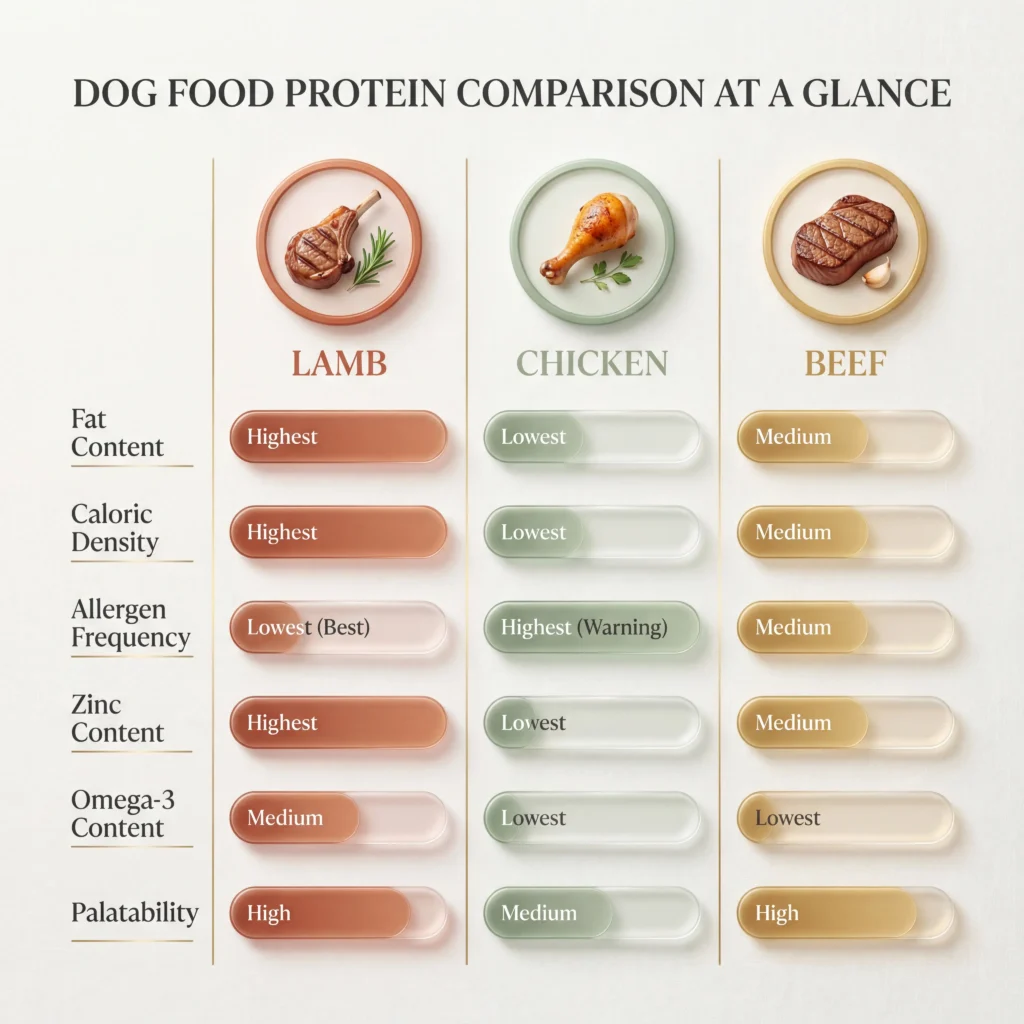
Chicken is the most common protein allergen in dogs, followed by beef. Lamb ranks lower on the allergen frequency list simply because fewer dogs have been exposed to it historically. This doesn’t mean lamb is inherently less allergenic. The American Kennel Club clarifies that no protein is intrinsically hypoallergenic; the difference is exposure history.
For dogs with confirmed chicken sensitivities, lamb offers a practical alternative. Sable covers the broader picture of chicken-free dog food options if you’re navigating that specific challenge. The key is confirming the sensitivity through an elimination diet rather than assuming chicken is the problem because it’s common.
If you’re wondering about fish as an alternative, salmon-based formulas typically offer higher omega-3 content than lamb but come at a similar or higher price point. Salmon works well for coat health; lamb works better for dogs who need a richer, meatier flavor profile or who don’t tolerate fish well.
My two senior dogs do well on chicken-based food and show no improvement on lamb. My younger rescue, who came to me with intermittent digestive issues, settled down on a lamb and rice formula after chicken and beef both caused loose stools. That’s one data point, not a universal recommendation. Your dog’s response to the food matters more than the brand’s claims about it.
Who should consider lamb dog food
Lamb dog food makes sense for specific dogs in specific circumstances. Buying it because the bag looks premium or because you’ve heard lamb is “better” usually means paying more without a clear benefit.
Dogs with confirmed protein sensitivities. If your vet has recommended an elimination diet and you’ve identified chicken or beef as triggers, lamb is a logical next protein to try. The elimination process matters here. Switching to lamb without first confirming the problem protein leaves you guessing.
Picky eaters who reject other proteins. Lamb has a richer, gamier flavor than chicken. Some dogs find it more palatable. Both my senior dogs will eat chicken kibble happily, but my rescue shows noticeably more enthusiasm for lamb-based food. If your dog consistently leaves chicken or beef kibble in the bowl, lamb might improve their appetite.
Owners practicing protein rotation. Rotating proteins every few months exposes your dog to different nutrient profiles and may reduce the risk of developing sensitivities over time (the evidence here is mixed, but the theory is reasonable). Lamb fits into a rotation alongside chicken, beef, fish, and other proteins.
Dogs needing higher-fat diets. Active dogs, underweight dogs, or dogs in cold climates may benefit from lamb’s higher fat content. The extra calories support energy needs without increasing portion sizes dramatically.
Lamb dog food probably isn’t necessary if your dog is thriving on chicken or beef with no digestive issues, skin problems, or allergic symptoms. Switching to lamb “just in case” or because it sounds healthier often wastes money that could go toward other aspects of your dog’s care.
What to look for on the label
The ingredient panel on lamb dog food tells you far more than the front-of-bag marketing. Three terms in particular cause confusion: lamb, lamb meal, and lamb by-product. They’re not interchangeable, and the distinction affects what you’re actually feeding.
Lamb (listed as “lamb” or “deboned lamb”) refers to clean flesh from the animal, including muscle meat. It’s weighed before cooking, which means it includes significant moisture. After processing into kibble, the actual lamb content by weight is much lower than the raw ingredient suggests. A food listing “lamb” as the first ingredient might have less lamb protein than one listing “lamb meal” second.
Lamb meal is lamb that’s been rendered and dried before being added to the formula. The moisture is already removed, so the protein concentration is higher. Lamb meal typically contains 65-70% protein compared to raw lamb’s roughly 20% (before moisture loss). This is where the guaranteed analysis helps: lamb meal often delivers more actual protein per pound of finished kibble because it’s measured after water removal rather than before.
Lamb by-product or “lamb by-product meal” includes organs, bone, and other parts beyond muscle meat. The digestibility and nutrient quality vary widely depending on which parts are included. Some by-products (liver, heart) are nutrient-dense. Others are less valuable. The label doesn’t specify which parts, so by-product listings require more trust in the manufacturer.
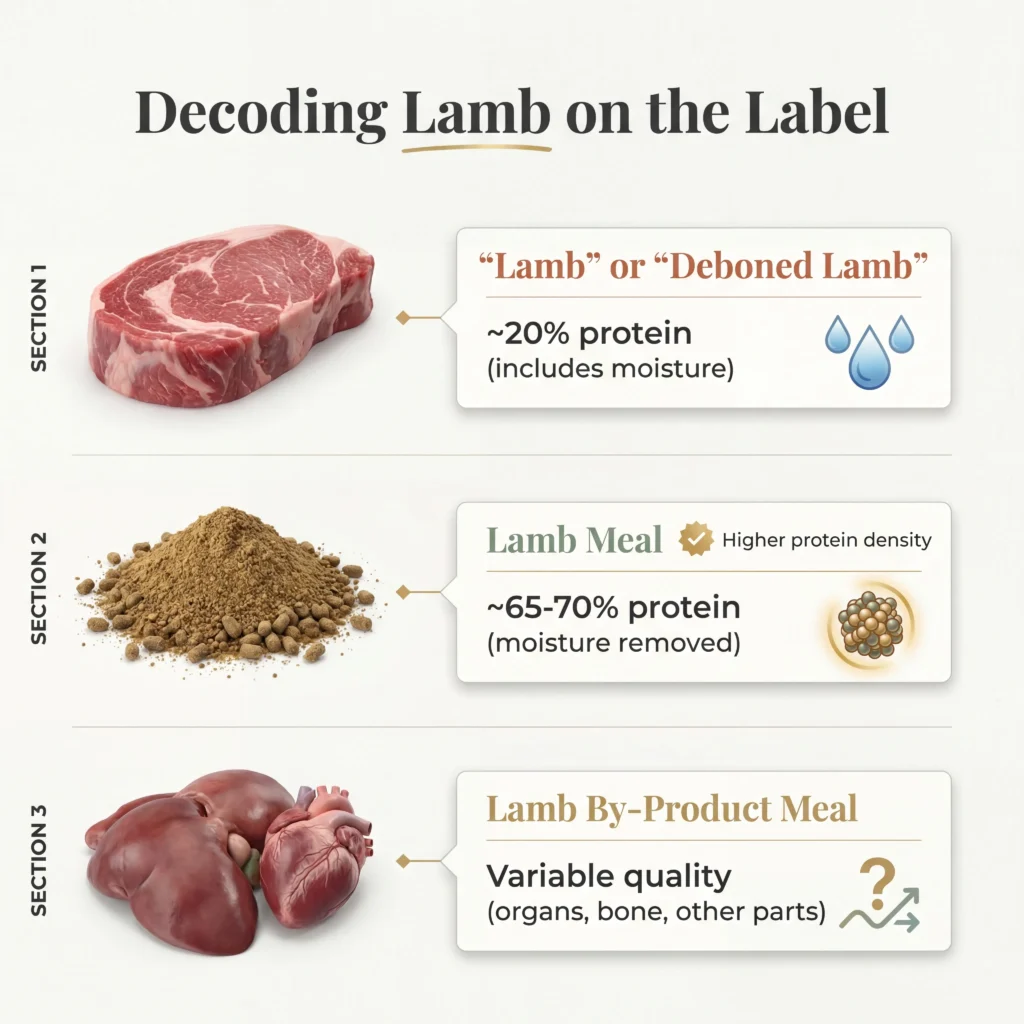
I compared five lamb formulas for my dogs and found that two listing “lamb” first actually had lower protein percentages than one listing “lamb meal” second. The naming rules under AAFCO allow for this because ingredients are listed by pre-processing weight, not by protein contribution. Reading the guaranteed analysis alongside the ingredient list gives you a clearer picture.
Other label details worth checking: the AAFCO statement (does it say “feeding trial” or just “formulated to meet”?), the calorie content per cup, and whether the formula includes added taurine (some lamb formulas supplement it; others don’t).
For dogs exploring other novel protein options, venison dog food offers another alternative with its own label considerations.
When lamb might not be the right choice
Lamb isn’t always the answer, and acknowledging that builds more trust than pretending it’s a universal upgrade. Several situations make lamb a poor fit or an unnecessary expense.
If your dog is overweight or prone to weight gain. Lamb’s higher fat content means higher calories per cup. Unless you’re carefully adjusting portions, switching to lamb can contribute to weight gain. One of my seniors started gaining weight on a lamb formula until I reduced her portions by about 15%.
If cost is a significant factor. Lamb dog food typically costs 40-60% more than comparable chicken formulas. That premium adds up over months and years. If your dog does well on chicken, the extra expense doesn’t buy better nutrition; it buys a different protein source.
If your dog has already been exposed to lamb. For elimination diet purposes, lamb only works as a novel protein if your dog hasn’t eaten it before. Check your treat ingredients. Many jerky treats and dental chews contain lamb or lamb meal.
If you’re expecting lamb to solve undiagnosed problems. Switching proteins without confirming the underlying issue often leads to expensive trial and error. Digestive problems, skin issues, and coat problems can stem from many causes beyond protein choice. A vet visit to identify the actual problem usually saves money compared to cycling through premium formulas hoping one works.
The broader context of how to evaluate and compare different food types is covered in the Dog Food Selection Guide, which walks through the decision framework beyond just protein selection.
FAQ
Is lamb better than chicken for dogs?
Neither protein is inherently better. Lamb and chicken are both complete protein sources that meet AAFCO standards when formulated correctly. Lamb works better for dogs with chicken sensitivities or those who prefer richer flavors. Chicken works better for dogs needing lower-fat diets or owners watching food costs. In my experience, the “better” protein is whichever one your specific dog digests well and enjoys eating consistently.
What is lamb meal in dog food?
Lamb meal is lamb that’s been cooked and dried before being added to the formula. The rendering process removes moisture, concentrating the protein content to roughly 65-70% compared to about 20% in raw lamb. Despite sounding less appealing than “real lamb,” lamb meal often delivers more protein per pound of finished kibble because it’s measured after water removal rather than before.
Is lamb good for dogs with sensitive stomachs?
It can be, but not automatically. Lamb works well for dogs whose stomach issues stem from a sensitivity to chicken or beef. If the underlying problem is something else (grain intolerance, fat content, specific additives), switching to lamb won’t help. My rescue’s digestive issues improved on lamb after chicken and beef caused problems, but that outcome isn’t universal. An elimination diet supervised by your vet identifies the actual trigger more reliably than guessing.
Do dogs like the taste of lamb dog food?
Most dogs find lamb highly palatable. The flavor is richer and gamier than chicken, which appeals to picky eaters and dogs who’ve grown bored with their current food. All three of my dogs eat lamb-based food enthusiastically, though two of them eat chicken just as happily. If your dog consistently rejects other proteins, lamb is worth trying for the flavor change alone.
Is lamb dog food worth the extra cost?
That depends on whether your dog actually needs it. For dogs with confirmed sensitivities to other proteins, the cost premium buys digestive comfort and better health. For dogs thriving on chicken or beef, the extra expense doesn’t translate to better nutrition. I’d recommend trying lamb only after identifying a specific reason to switch, rather than paying more based on marketing that positions lamb as inherently superior.
Is lamb or chicken healthier for a dog?
Both proteins provide complete nutrition when part of a balanced formula. Lamb offers slightly more zinc, iron, and omega-3s; chicken is leaner with fewer calories per serving. The “healthier” choice depends on your dog’s individual needs. An overweight senior benefits more from chicken’s lower fat content. A picky underweight dog might thrive on lamb’s richer profile. Health comes from matching the food to your dog, not from one protein being universally superior.
Is salmon or lamb better for dogs?
Salmon delivers significantly more omega-3 fatty acids, which benefit coat health, joint function, and inflammation. Lamb provides a richer flavor profile and works better for dogs who don’t tolerate fish or dislike the taste. Price points are similar for quality formulas of either protein. If your priority is skin and coat improvement, salmon has the edge. If your dog needs a novel protein and rejects fish, lamb is the practical choice.
Making the right choice for your dog
Lamb dog food fills a genuine niche: it’s a quality protein option for dogs who need an alternative to chicken or beef, who benefit from higher-fat formulas, or who simply prefer the taste. The key is matching the protein choice to your dog’s actual needs rather than to marketing claims about premium ingredients.
Three things to remember when evaluating lamb formulas:
- Check whether your dog has actually been exposed to lamb before (treats count)
- Compare the guaranteed analysis across formulas, not just the ingredient order
- Factor in the cost difference and decide if it’s justified by your dog’s specific situation
Your dog’s response to the food matters more than the brand’s claims about it. Track what you’re feeding, note how your dog responds, and adjust based on real results rather than assumptions about which protein is “best.”
For more on comparing protein sources and reading commercial dog food labels, the Dog Food Selection Guide covers the complete framework. And if lamb doesn’t work out, venison and other novel proteins offer additional options to explore.
— Liora Kittredge
