

The marketing on the bag and the ingredient panel tell two different stories when it comes to venison dog food. Premium pricing, phrases like “novel protein,” and images of wild deer suggest you’re buying something exceptional for your dog. But does venison actually deliver benefits that lamb or duck can’t match at a lower price point?
Venison dog food can be a solid choice for dogs with confirmed protein allergies who haven’t responded to other novel proteins, though it’s not the automatic upgrade that marketing departments want you to believe. The protein is lean (typically under 3% fat), rich in iron and B vitamins, and genuinely unfamiliar to most dogs’ immune systems. For a dog that’s reacted to chicken, beef, and even lamb, venison offers a legitimate option worth testing.
I compared five venison formulas against their lamb and duck counterparts last year when my older dog’s allergies flared up again. The price difference was significant: venison ran 30-40% higher per serving on average. The nutritional profiles, though, were closer than the price gap suggested. That experience changed how I evaluate “premium” protein claims on any dog food label.
This guide breaks down when venison makes sense, when it doesn’t, and what the ingredient panel reveals that the front of the bag never mentions. For the complete framework on evaluating any commercial dog food, the Dog Food Selection Guide covers the fundamentals.
Why venison is marketed as a premium protein
Venison commands premium pricing for three reasons: sourcing costs, “novel protein” positioning, and the perception that wild game equals natural health benefits. Two of these have real substance. One is mostly marketing.
The sourcing costs are legitimate. Deer farming operations in New Zealand and North America produce less volume than chicken or beef operations, and the supply chain for venison meal involves more steps than standard poultry processing. These costs get passed to your receipt. A 25-pound bag of venison-based kibble typically costs $70-90 at the time of writing, compared to $45-60 for equivalent lamb formulas.
The “novel protein” label deserves more scrutiny. A novel protein simply means a protein your specific dog hasn’t eaten before. If your dog has never had venison, it qualifies. If your dog ate venison treats for years, it’s no longer novel for that dog, regardless of what the bag claims. The term has no regulatory definition from AAFCO, so brands apply it freely to any protein that sounds unusual.
Here’s where it gets interesting: many commercial venison formulas include other proteins in the ingredient list. I’ve seen “venison dog food” with chicken fat as the third ingredient and pork meal in the top ten. For a dog with multiple allergies running an elimination diet, those additions defeat the purpose entirely. The guaranteed analysis won’t flag this; you need to read every line of the ingredient panel.
The wild game health perception is where marketing outpaces evidence. Farm-raised venison (which accounts for most commercial dog food sourcing) has a different nutritional profile than wild-caught deer. The fat content, omega ratios, and mineral density vary based on what the deer ate and how they lived. “Venison” on a label tells you the protein type but nothing about sourcing conditions.
Nutritional profile of venison for dogs
Venison provides roughly 20-25% protein per serving with a fat content typically under 3%, making it one of the leaner red meat options available in commercial dog food. The protein quality is high: complete amino acid profile, good digestibility scores in feeding trials, and bioavailability comparable to beef without the common allergen concerns.
The mineral content is where venison genuinely outperforms several alternatives. Iron levels run higher than chicken or pork (useful for dogs with anemia concerns), and the zinc and selenium content supports immune function. B12 concentrations are substantial, which matters for senior dogs or dogs on restricted diets where B-vitamin intake might be compromised.
Worth comparing side by side: venison contains more iron than lamb (roughly 3.4mg per 100g versus 2.0mg for lamb), but lamb provides more fat and calories. For an active dog that needs caloric density, lamb might actually be the better fit despite venison’s “premium” status. The right choice depends on your dog’s specific needs, not on which protein costs more.
The omega fatty acid profile in venison leans toward omega-6, with lower omega-3 content than fish-based proteins. Some venison formulas add fish oil to compensate, which shows up in the ingredient list if you check. If your dog needs omega-3 support for skin or joint health, a venison formula without added fish oil won’t provide it through the protein alone.
One nutritional consideration that rarely appears in marketing: venison is calorie-sparse compared to fattier proteins. For dogs who struggle to maintain weight, or for high-energy breeds with significant caloric demands, venison-based food may require larger serving sizes to meet daily needs. That affects the true cost per day, not just the cost per bag.
Pro Tip from Liora: When comparing venison formulas, calculate the cost per gram of protein rather than price per bag. A $90 bag with 28% protein often delivers better value than an $80 bag with 22% protein once you run the numbers.
Venison vs lamb vs duck in dog food
The comparison most marketing materials avoid is the one that matters: how does venison actually stack up against other novel proteins your dog could eat for less money?
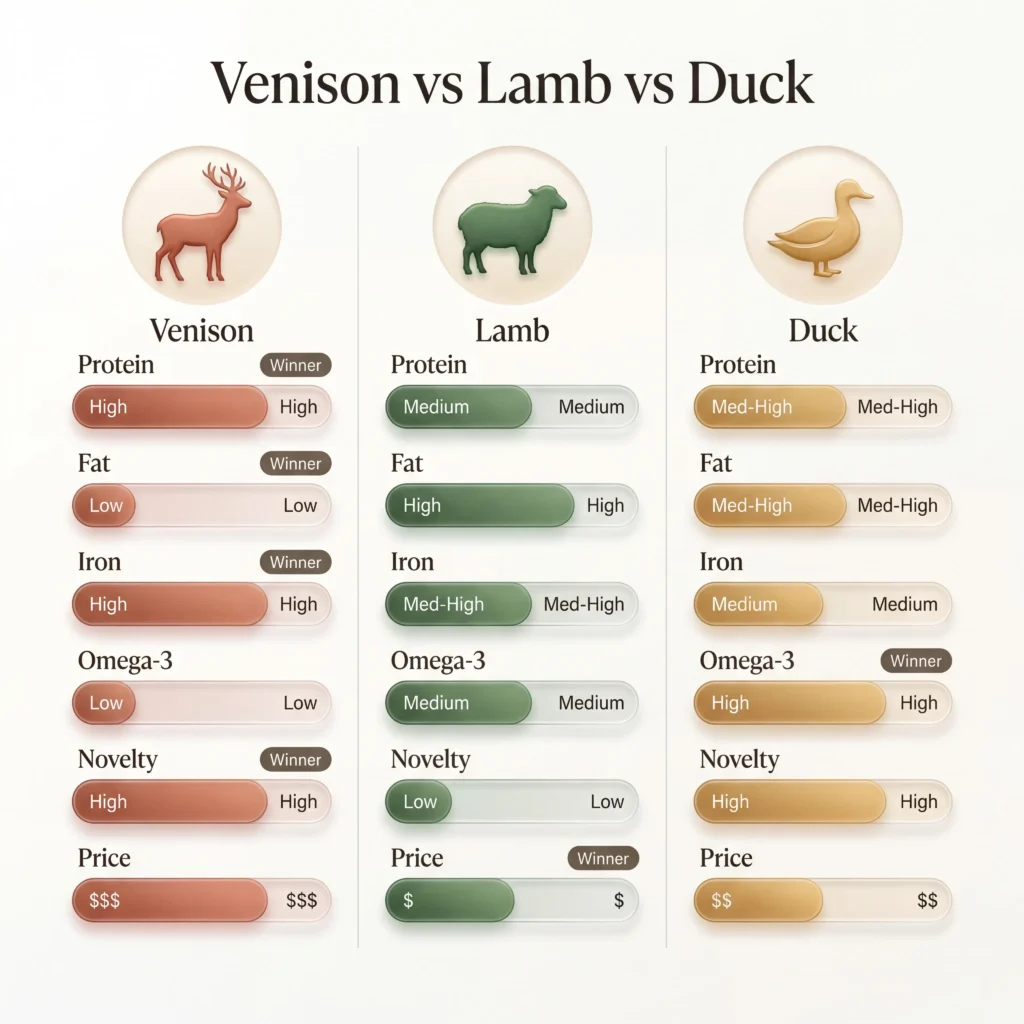
| Factor | Venison | Lamb | Duck |
|---|---|---|---|
| Protein (per 100g) | 22-26% | 20-25% | 19-23% |
| Fat content | Under 3% | 8-15% | 10-14% |
| Iron (mg/100g) | 3.4 | 2.0 | 2.7 |
| Omega-3 content | Low | Low-moderate | Moderate |
| Allergen status | Novel for most dogs | Less novel (common in limited-ingredient foods) | Novel for most dogs |
| Typical price (25lb bag) | $70-90 | $50-70 | $60-80 |
For allergy management, the critical question isn’t which protein is nutritionally superior; it’s which protein your dog hasn’t developed a sensitivity to. Lamb used to be the default “hypoallergenic” option, but it’s appeared in so many limited-ingredient formulas over the past decade that many allergy-prone dogs have already been exposed. Duck and venison remain genuinely novel for most dogs because they’re less common in mainstream products.
The catch is that venison and beef share some protein structures. Dogs with confirmed beef allergies may cross-react to venison, though research on this is limited. My vet flagged this possibility when we were considering venison for my older dog, and it’s something I hadn’t seen mentioned on any brand’s marketing page. If your dog reacts to beef, introduce venison gradually and watch for the same symptoms.
Duck provides a middle-ground option: more fat than venison (which helps picky eaters and underweight dogs), genuine novelty status, and a price point between lamb and venison. For dogs without confirmed allergies who just need variety or rotation, duck often makes more practical sense than paying the venison premium.
Sable covers protein alternatives more broadly in her chicken-free dog food guide if you’re evaluating options beyond the usual suspects.
When venison dog food makes sense
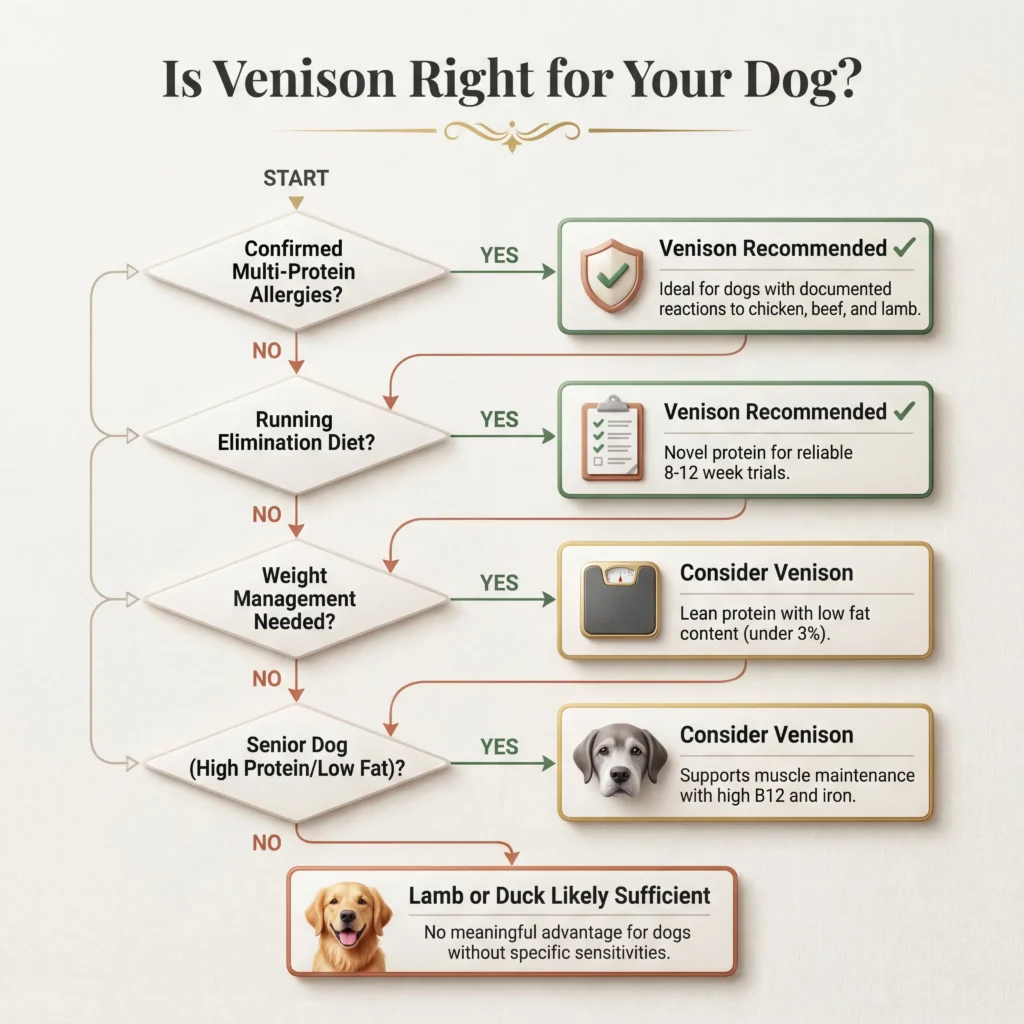
Venison earns its price tag in specific situations. Outside those situations, you’re paying a premium for marketing, not results.
Confirmed multi-protein allergies: If your dog has documented reactions to chicken, beef, and lamb, and you’ve run a proper elimination diet that ruled those out, venison becomes a reasonable next step. The key word is “confirmed.” Switching to venison because you suspect allergies without testing other options first burns through an expensive alternative that you might need later.
Elimination diet candidates: Venison works well as an elimination diet protein precisely because most dogs have never eaten it. For a clean 8-12 week trial where you need to isolate variables, starting with a genuinely novel protein makes the process more reliable. But use a single-protein venison formula, not one with multiple protein sources listed.
Weight management: The low fat content makes venison useful for obese dogs on calorie-restricted diets who still need adequate protein intake. I tracked this across my younger rescue when she needed to drop a few pounds; the venison formula let us reduce calories without cutting her protein below maintenance levels. Lamb would have added fat we didn’t need.
Senior dogs on protein-conscious diets: Older dogs sometimes need higher protein without the fat load that comes with many protein sources. Venison’s lean profile and high B12 content support muscle maintenance in seniors without overloading their systems with unnecessary calories.
When it doesn’t make sense: If your dog tolerates lamb, duck, or fish without issues, venison offers no meaningful advantage over those alternatives. You’re paying extra for a protein that your dog’s digestive system doesn’t actually require. The “premium” label doesn’t make it better for a dog without specific sensitivities.
For dogs exploring protein rotation as a general health strategy rather than allergy management, the lamb dog food guide covers a more cost-effective starting point.
Label tricks to watch for
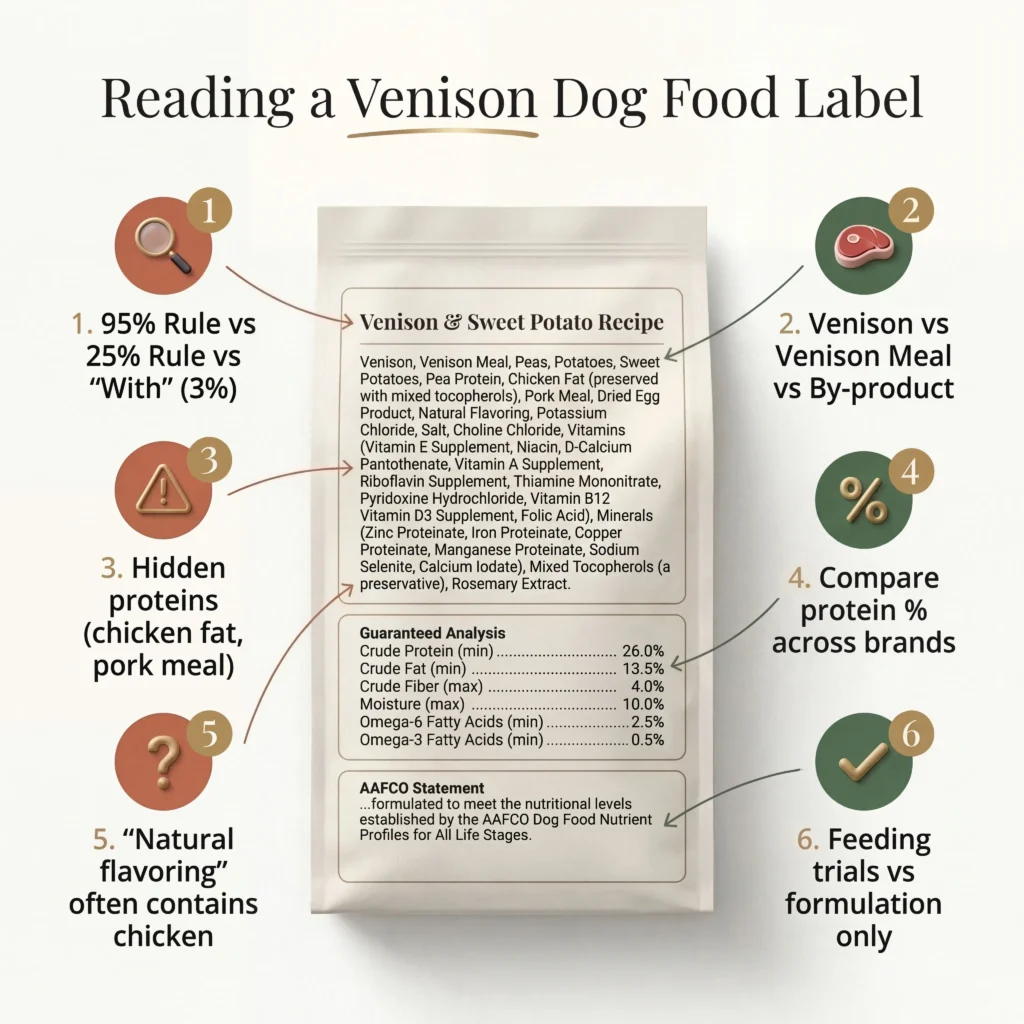
The ingredient panel on venison dog food reveals more than most owners realize, and it often contradicts the front-of-bag messaging. Here’s what to actually check.
“Venison” vs “venison meal” vs “venison by-product”: These are three different ingredients with different nutritional values. Fresh venison contains water weight and converts to less protein per gram after cooking. Venison meal is rendered and concentrated, providing more protein pound-for-pound in the final kibble. Venison by-product includes organ meats and other parts, which can be nutritious but aren’t the muscle meat most owners picture when they read “venison.”
This is where the guaranteed analysis helps. A formula listing “venison” as the first ingredient but showing only 22% crude protein might have less actual venison than a formula with “venison meal” second showing 28% protein. The ingredient order reflects pre-cooking weight; the guaranteed analysis reflects what your dog actually eats.
Hidden secondary proteins: Scan the full ingredient list for chicken fat, pork meal, fish meal, or egg product. These additions aren’t necessarily bad, but they disqualify the formula for elimination diets or true single-protein feeding. I’ve found chicken derivatives in the ingredient panels of three different “venison formula” products that prominently featured deer imagery on the front.
“With venison” vs “venison formula”: AAFCO naming rules matter here. A product labeled “venison dog food” or “venison formula” must contain venison as a primary protein source. A product labeled “dog food with venison” only needs to include 3% venison. The phrasing is deliberate, and the difference in actual venison content can be substantial.
Sourcing claims: “New Zealand venison” or “wild-caught” appear on some premium products. These can indicate higher-quality sourcing, but they’re not regulated terms with standardized definitions. New Zealand has strong agricultural practices, but “wild-caught” on a commercial dog food label is unusual since most commercial operations can’t scale wild harvest reliably. Verify sourcing claims through the manufacturer if it matters to your selection.
My spreadsheet caught what the label didn’t when I compared five venison formulas: two of the most expensive options had lower actual protein percentages than a mid-priced competitor. The premium pricing reflected marketing positioning, not ingredient quality.
Pro Tip from Liora: When checking for hidden proteins, scan for “natural flavoring” near the bottom of the ingredient list. This often contains chicken or pork derivatives that aren’t named explicitly, which can sabotage an elimination diet without you realizing it.
FAQ
Is venison dog food good for dogs with allergies?
Venison works well for allergy management when it’s genuinely novel to your dog’s system and the formula contains no secondary proteins your dog reacts to. The protein itself isn’t inherently hypoallergenic; it’s simply unfamiliar to most dogs’ immune systems because it doesn’t appear in mainstream foods. Check the full ingredient list before assuming a “venison formula” is single-protein. If your dog has a beef allergy, introduce venison carefully since the proteins share some structural similarities that can trigger cross-reactions in sensitive dogs.
How does venison compare to lamb for sensitive stomachs?
Lamb tends to be easier on sensitive stomachs for dogs without specific protein allergies because it’s fattier and more palatable for picky eaters. Venison’s leanness can actually cause digestive adjustment issues in some dogs during the transition period. In my experience tracking three dogs on different proteins, lamb produced more consistent stool quality during food changes than venison did. The richer fat content in lamb seems to ease the transition for dogs with finicky digestion.
Why is venison dog food so expensive?
Three factors drive the price: limited supply (deer farming produces far less volume than chicken or beef operations), higher processing costs (venison meal requires specialized rendering), and premium positioning that brands use to justify margins. Some of the price reflects real costs; some reflects what the market will bear for a “premium” label. Whether the cost delivers proportional value depends entirely on whether your dog needs what venison specifically provides.
Can dogs eat venison dog food every day?
Dogs can eat venison-based food as their regular diet without nutritional issues, provided the formula meets AAFCO standards for complete and balanced nutrition. The lean protein won’t cause problems with daily feeding. Watch the cost: at $70-90 per 25-pound bag versus $50-70 for lamb, the daily price difference adds up over a year. For dogs without specific allergy needs, alternating venison with other proteins (rotation feeding) stretches the budget while still providing variety.
What should I look for on a venison dog food label?
Start with the ingredient order: venison or venison meal should appear in the first three ingredients. Check for secondary proteins (chicken fat, pork meal, fish meal) that might trigger reactions in allergy-prone dogs. Compare the guaranteed analysis across brands; a higher protein percentage often indicates more actual meat content. Look for an AAFCO statement confirming the formula meets nutritional standards through feeding trials rather than just formulation. Finally, note the calorie density; venison’s leanness means some formulas require larger serving sizes to meet your dog’s energy needs.
The bottom line on venison
Venison dog food serves a specific purpose: providing a genuinely novel protein for dogs who’ve exhausted more common alternatives or who need lean protein for weight management. I’ve run the numbers on enough formulas to say this with confidence. Outside those scenarios, the premium pricing buys you marketing positioning rather than nutritional superiority (and I say that as someone who’s spent the extra money more than once before learning better).
The data points worth remembering:
- Venison runs 30-40% higher cost than lamb for comparable formulas
- “Novel protein” only matters if your specific dog hasn’t eaten it before
- Many venison formulas contain secondary proteins that defeat single-protein feeding
- Dogs with beef allergies may cross-react to venison
- The guaranteed analysis reveals more than the ingredient order
Your dog’s response to the food matters more than the brand’s claims about it. If you’re considering venison for allergy management, run a proper elimination trial with a single-protein formula and track the results systematically. If you’re considering it because it sounds premium, compare the actual nutritional breakdown against lamb or duck first.
For the full framework on evaluating commercial dog food beyond specific proteins, the Dog Food Selection Guide covers ingredient analysis, label reading, and the comparison approach that makes these decisions clearer.
— Liora Kittredge
