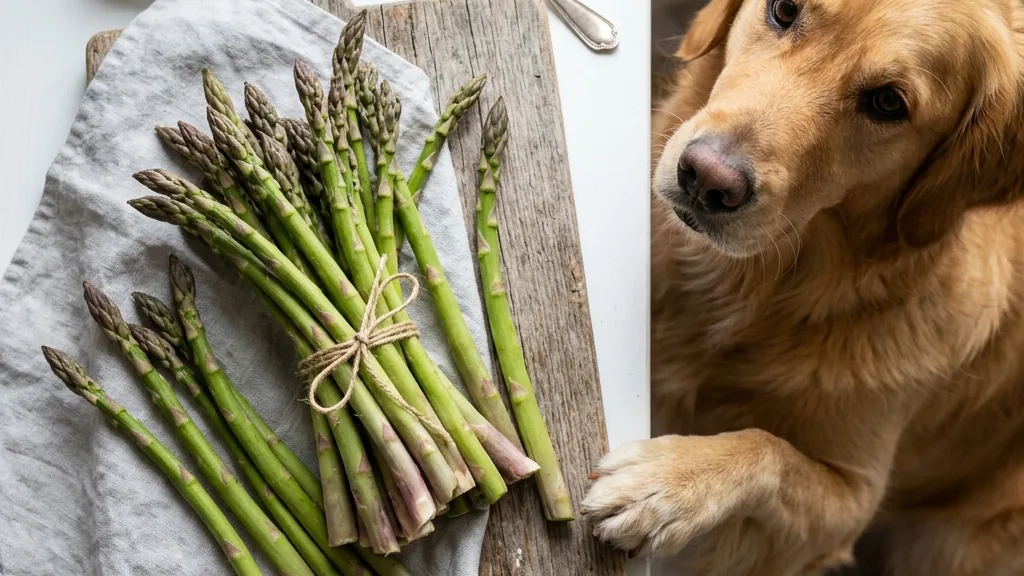
So, can dogs eat asparagus? The short answer is yes, dogs can eat asparagus safely as long as it’s cooked plain and cut into small pieces, but it sits firmly in the “safe, not ideal” category. The green spear on your plate won’t poison your dog. What sends dogs to the vet is how it’s served, raw and tough, fried in butter, or in a pile big enough to upset a stomach that was never built for much plant matter.
Most articles just say “yes, in moderation” and move on. This one is built differently. It tells you exactly which bucket asparagus belongs in, how to prepare it so it’s actually safe, the one part of the plant that is genuinely toxic, and how much is too much for your dog’s size. Every claim is tied to a named authority, and every number is specific.
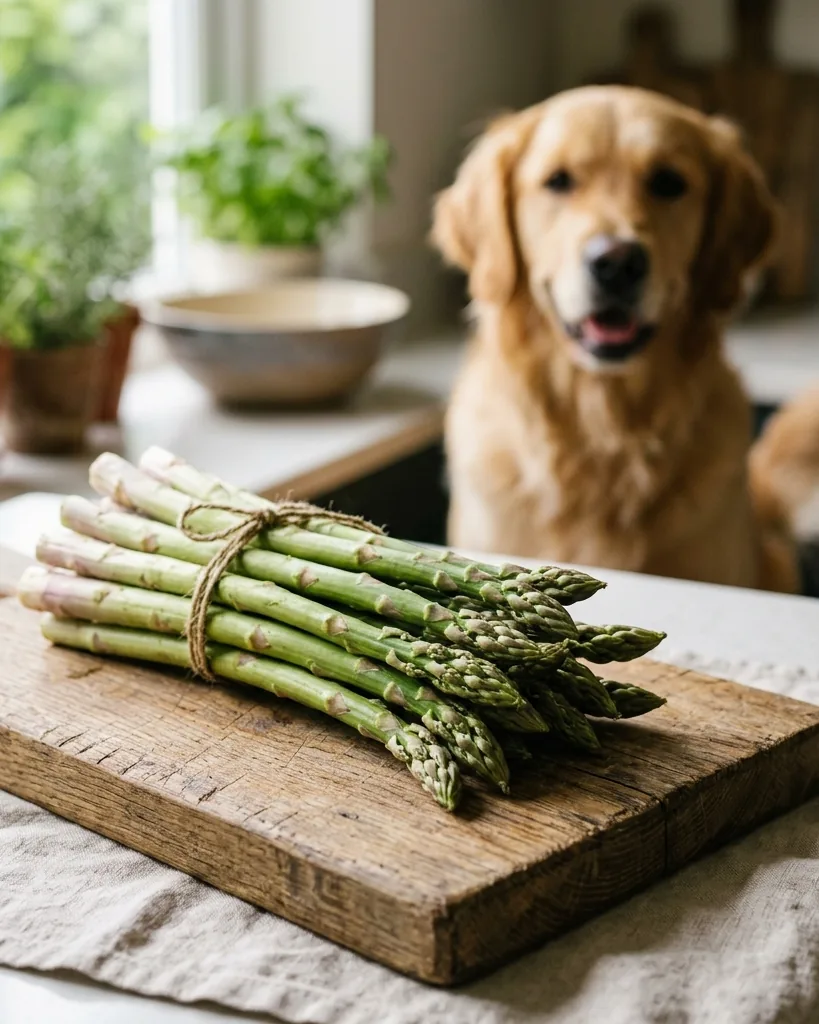
Is asparagus safe for dogs?
Edible asparagus, the kind you buy in a bunch at the grocery store, is not toxic to dogs. It contains no compound that poisons them, and it carries some genuinely useful nutrients: vitamins A, C, and K, folate, fiber, and antioxidants. On paper, that sounds like a healthy snack.
The catch is that dogs don’t need it. A complete commercial dog food already supplies those vitamins in the right balance, so asparagus adds very little your dog isn’t already getting. It works best as the occasional crunchy treat, not as a daily supplement. The American Kennel Club’s guidance on whether dogs can eat asparagus lands in the same place: fine to share, but not a nutritional must-have.
There’s also a simple biological reason to keep portions small. Dogs are built to handle meat far more easily than fibrous vegetables. The spear is dense, stringy, and high in fiber, and a dog’s digestive tract isn’t designed to break that down efficiently. A little is fine. A lot tends to come back out as gas, loose stool, or worse.
What’s actually in asparagus (and what it does)
It helps to know what you’re really handing your dog. By weight, the green spear is mostly water, around 93%, which is part of why a few pieces are so low in calories: a single cooked spear has only about 3 to 4 calories, and 100 grams of the vegetable carries roughly 20 calories and about 2 grams of fiber. That low-calorie, high-water profile is exactly why it fits inside a treat allowance without much guilt.
Nutritionally, the green stalks bring a handful of useful vitamins and minerals:
- Vitamin K, which supports normal blood clotting and bone health.
- Vitamins A and C, antioxidants that support the immune system, skin, and eyes.
- Folate (vitamin B9), involved in healthy cell growth.
- Potassium and fiber, which support muscle, nerve, and digestive function.
Here’s the honest caveat, though: a complete, balanced dog food is already formulated to deliver all of these in the right amounts for your dog’s size and life stage. So while the nutrient list looks impressive, your dog isn’t missing anything if asparagus never touches its bowl. Think of those vitamins as a small bonus on an occasional treat, not a reason to feed it. That framing, useful but unnecessary, is the same one veterinary nutritionists apply to most “people-food” vegetables.
Raw vs. cooked: why raw is the problem
If you remember one rule from this guide, make it this one: never feed your dog raw asparagus. Raw spears cause two separate problems at once.
First, they’re a choking and blockage hazard. Raw asparagus is tough and fibrous, and a dog that gulps rather than chews can choke on a stem or swallow a piece long enough to lodge in the digestive tract. For a small dog, even a short raw stem is a real risk.
Second, raw asparagus is hard to digest. The same toughness that makes it a choking hazard also makes it sit heavily in the gut, which is what triggers the gas, bloating, and diarrhea owners often report after their dog raids a garden bed.
Cooking solves both problems. Steaming or boiling softens the spears so they’re easier to chew, swallow, and break down. The goal is plain and soft, cooked enough that a piece gives way easily but not so much that it turns to mush. Cooking does cost a little of the vitamin content, but for a treat that’s a fair trade for safety.
The real risks to watch for
Plain cooked asparagus is low-risk, but a few specific mistakes turn a harmless treat into a vet visit. Keep these in mind:
- Choking and blockage from raw or large pieces, especially the tough lower ends of the stem. Always cut asparagus into bite-size pieces.
- Digestive upset from too much fiber: gas, bloating, vomiting, diarrhea, or constipation. This is almost always a portion problem, not a poisoning.
- Pancreatitis from fatty cooking. Asparagus fried or sauteed in butter or oil adds the kind of fat that can inflame a dog’s pancreas, a painful and sometimes serious condition.
- Toxic seasonings. Onion and garlic, common in cooked asparagus dishes, are toxic to dogs. Salt, butter, and oil all cause their own problems. Anything beyond plain asparagus is off the menu.
The pattern is clear: asparagus itself rarely causes trouble. The trouble comes from raw texture, oversized portions, and the things we cook it with. For more on safely sharing fibrous green vegetables, see our guide to whether dogs can eat green beans, which follow the same plain-and-small rule.
The asparagus fern warning
Here is the one part of the asparagus story that genuinely is toxic, and it catches owners off guard. The ornamental “asparagus fern” is not the same plant as the asparagus you eat. The edible spear is Asparagus officinalis. The asparagus fern is a different, decorative houseplant and garden plant, and it is toxic to dogs.
If a dog chews the fern or its red berries, it can suffer vomiting, diarrhea, and abdominal pain, and skin contact with the plant can cause irritation. The ASPCA lists the asparagus fern as toxic to dogs. So while the vegetable is safe, the lookalike ornamental is not, keep it out of reach, and out of the garden bed your dog has access to.
How to serve asparagus safely
Preparing asparagus for a dog takes about five minutes and a single rule: keep it plain. Here’s the safe method, start to finish:
- Wash it to remove dirt and any pesticide residue.
- Trim the tough ends. The woody bottom of the stem is the hardest part to digest and the easiest to choke on.
- Cook it plain. Steam or boil the spears in water only, no butter, oil, salt, onion, or garlic. Cook until soft enough to cut easily.
- Cut into small pieces. Bite-size pieces sized for your dog, smaller for small dogs, reduce both the choking risk and the chance of a blockage.
- Let it cool before serving, and offer just a piece or two the first time to see how your dog handles it.
Skip canned asparagus, which is usually loaded with sodium, and skip anything from your own seasoned plate. Plain, soft, and small is the whole formula. The Purina team’s overview of feeding asparagus to dogs follows the same plain-cooking approach.
For sizing, a practical rule of thumb is to cut pieces no larger than about half an inch for a small dog and roughly one inch for a large one, small enough that a piece slips down easily even if your dog barely chews. Steaming takes only about 3 to 5 minutes, just until a fork slides in with light pressure; boiling takes a similar 4 to 5 minutes. You want it tender, not collapsing.
Storage, leftovers, and make-ahead tips
If you cook a batch, you can keep plain steamed asparagus in a sealed container in the fridge for up to 3 days and pull out a piece or two as a treat. Don’t store it mixed with butter, oil, or seasonings, the moment it’s dressed for human eating, it’s no longer dog-safe.
You can also freeze plain cooked pieces for up to about 2 months and thaw a few at a time, though the texture softens further once thawed. Raw asparagus keeps best stood upright in a glass with about an inch of water in the fridge, the same way you’d store cut flowers, but remember that storage tip is for your kitchen, not your dog, since raw spears still need cooking before they’re shared. A good routine for multi-dog homes is to set aside a small portion of plain spears before you season the rest of the dish for yourself, so there’s always a safe version on hand.
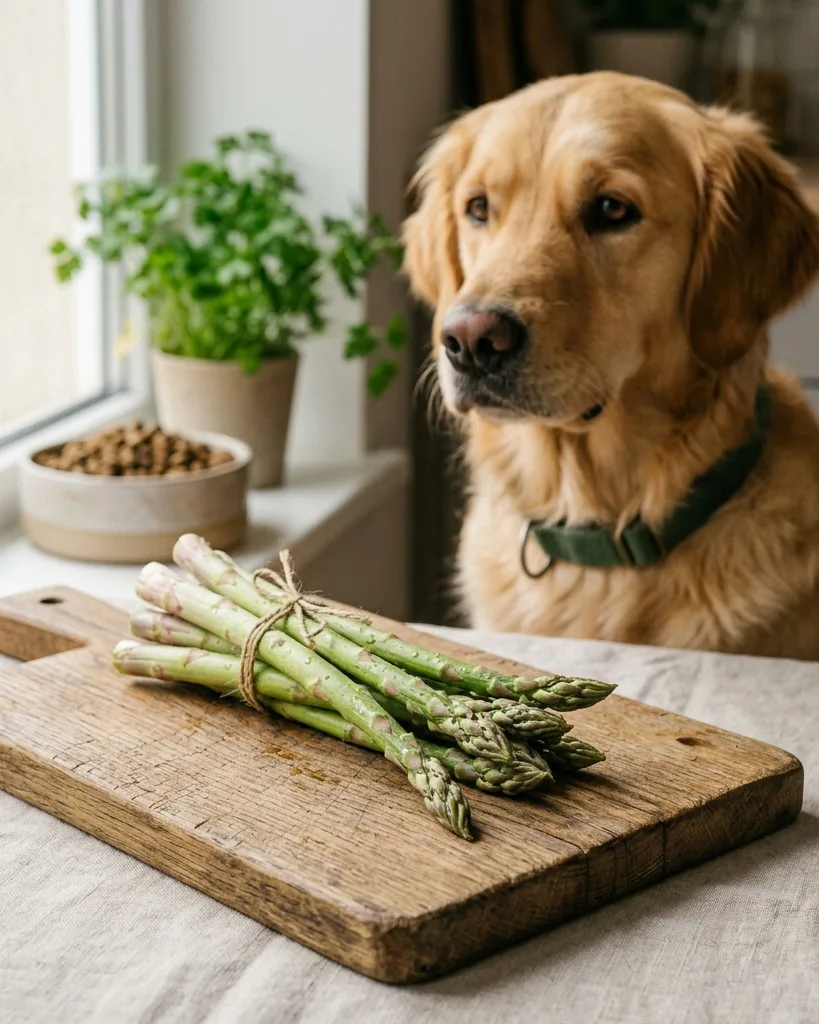
How much asparagus can a dog have?
The safest way to size any treat is the 10% rule: treats and extras should make up no more than 10% of your dog’s daily calories, with the other 90% coming from complete, balanced dog food. Asparagus counts as a treat, so it lives inside that 10%.
In practical terms, portion to your dog’s size:
- Small dogs: one or two small, cooked pieces.
- Medium dogs: a couple of pieces, up to roughly one cooked spear.
- Large dogs: a few cooked spears at most.
Whatever the size, start with less than you think. Introduce asparagus on its own, not mixed with other new foods, so that if your dog gets gassy or has a loose stool, you know exactly what caused it. If your dog tolerates a small amount well, you can offer it occasionally. If it causes digestive upset every time, simply leave it off the menu, asparagus is never a food your dog needs.
There is one situation where the spear earns its keep: weight management. Because a cooked piece runs only about 3 to 4 calories and is mostly water, it makes a satisfying, crunchy, low-calorie treat for a dog watching its waistline, far lighter than a biscuit or a piece of cheese. If your vet has your dog on a reduced-calorie plan, swapping a richer treat for a couple of small plain pieces can scratch the snack itch without blowing the daily calorie budget. Used that way, as a deliberate low-calorie swap rather than a random table scrap, a few pieces actually fit a healthy routine. Just keep the rest of the rules intact: plain, cooked, cut small, and well within that 10% treat ceiling.
Puppies and special cases
Puppies need extra caution. Their digestive systems are still developing, and they’re more prone to both choking and stomach upset than adult dogs. Wait until a puppy is at least about 12 weeks old and fully weaned before offering asparagus, and then give only tiny, well-cooked, finely chopped pieces, once, to see how it sits.
Some adult dogs should skip asparagus too. Dogs with a history of pancreatitis, sensitive stomachs, or known digestive conditions are more likely to react badly to the fiber, and any dog on a special diet should only get new foods with a vet’s okay. When in doubt, ask your veterinarian before adding asparagus, the same advice that applies to other crunchy vegetables like broccoli for dogs.
How asparagus compares to other dog-safe vegetables
Asparagus is fine, but it’s not the easiest vegetable to share. If your goal is a healthy green treat, a couple of alternatives are gentler on a dog’s stomach and simpler to prep. Here’s how the popular options stack up:
| Vegetable | Raw OK? | Main watch-out | Ease for dogs |
|---|---|---|---|
| Asparagus | No, cook it | Tough stems, gas from fiber, toxic ornamental fern | Moderate |
| Green beans | Yes, plain | Salt in canned versions | Easy |
| Carrots | Yes, in pieces | Choking on whole carrots | Easy |
| Broccoli | Small amounts | Isothiocyanates can irritate the gut in large amounts | Moderate |
The takeaway: if your dog loves crunchy green snacks, plain green beans or carrot pieces are usually a lower-effort, lower-risk choice than asparagus. That doesn’t rule the spear out, it just means it’s one option among several, not a standout.
Signs the treat didn’t agree with your dog
Most dogs handle a small, plain, cooked portion without any issue. When there is a reaction, it’s almost always mild and digestive, and it shows up within a few hours to a day. Watch for:
- Excess gas or a noticeably gurgly stomach.
- Soft stool or short-lived diarrhea.
- One or two episodes of vomiting.
- Reduced appetite or a bit of lethargy.
For a healthy adult dog, a single mild bout like this usually passes on its own with a little rest and fresh water. What you don’t want to brush off is anything that points to a blockage or a bigger problem: repeated vomiting, diarrhea lasting more than a day, a hard or painful belly, retching without bringing anything up, or obvious distress. Those are reasons to call your veterinarian rather than wait. And if a reaction happens every time you offer the vegetable, take the hint and stop, there’s no nutritional reason your dog has to eat it.
Frequently asked questions
Can dogs eat raw asparagus?
No. Raw asparagus is tough, hard to digest, and a real choking and blockage hazard, especially for small dogs. Always cook it plain, steamed or boiled, and cut it into small pieces before sharing.
Why does my dog’s pee smell after eating asparagus?
That’s normal and harmless. Asparagus contains compounds that can give urine a stronger smell, the same effect it has in people. It’s not a sign of a problem.
Can dogs eat the asparagus tips and ends?
The tips are the softest part and are fine once cooked and cut small. Trim and discard the tough, woody lower ends, they’re the hardest to digest and the easiest to choke on.
Is canned or seasoned asparagus okay for dogs?
No. Canned asparagus is usually high in sodium, and seasoned or buttered asparagus often contains onion, garlic, salt, or fat that can harm your dog. Stick to plain, home-cooked spears with nothing added.
How much asparagus is too much for a dog?
Anything beyond a small treat. Keep asparagus within the 10% rule, no more than 10% of daily calories, and size the portion to your dog: a piece or two for small dogs, a few spears at most for large ones. Too much triggers gas and loose stool.
The bottom line
Can dogs eat asparagus? Yes, plain cooked asparagus, cut into small pieces, is a safe occasional treat for most healthy dogs. The rules that keep it safe are simple: never raw, never fried or buttered, never seasoned, and never the toxic ornamental asparagus fern. Keep portions small and sized to your dog, introduce it on its own, and watch how your dog handles it. Treated as a once-in-a-while snack rather than a daily habit, asparagus is a harmless way to share something green from your plate, just remember your dog doesn’t actually need it.
Sources: American Kennel Club, Can Dogs Eat Asparagus?; ASPCA, Asparagus Fern (toxic to dogs); Purina, Can Dogs Eat Asparagus? A Guide to Safety.