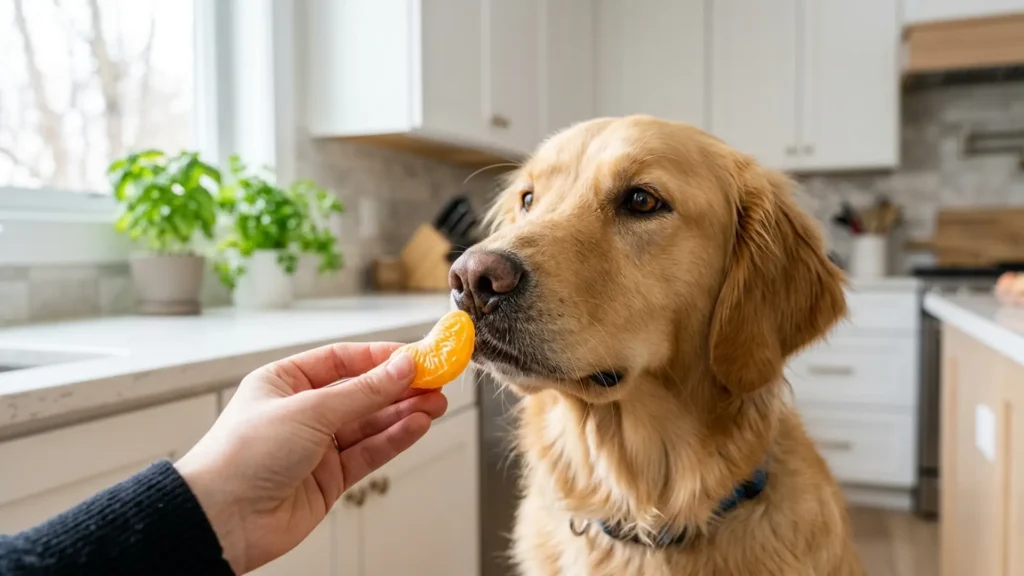
Can dogs eat oranges? Yes, in small amounts the peeled flesh of an orange is safe for most healthy dogs, and oranges are not toxic to dogs the way grapes or onions are. That is the short answer, and I will not bury it. The longer answer is where the useful part lives, because “safe” and “a good idea” are not the same sentence. I have talked to enough owners who watched their dog inhale half an orange off the kitchen floor to know that the real questions are how much, which parts, and which dogs should skip it entirely.
I am Marin Benderson, and on Fetch or Skip I read the research, check it against what veterinary toxicology sources actually say, and then tell you plainly whether a food earns a fetch or a skip. Oranges land in the “fetch, with limits” column. Here is everything that matters before you hand one over.
So Are Oranges Safe for Dogs, or Not?
The flesh of a peeled, seedless orange is safe for a healthy adult dog in moderation. Oranges contain no compound that is poisonous to dogs in the way that the methylxanthines in chocolate or the disulfides in onions are. The American Kennel Club confirms that oranges are non-toxic and can be offered as an occasional treat. So if your dog stole a segment off your plate, you are not facing an emergency.
That said, I want to be precise about what “safe” covers. It covers the orange flesh, the juicy pulp, in small quantities, for a dog with no underlying health problem. It does not give a green light to the peel, the white pith, the seeds, orange juice loaded with extra sugar, or daily handfuls. And there are several types of dog, which I will name below, for whom even the safe flesh is a skip. The headline is reassuring; the fine print is where owners get tripped up.
The Benefits Are Smaller Than the Internet Claims
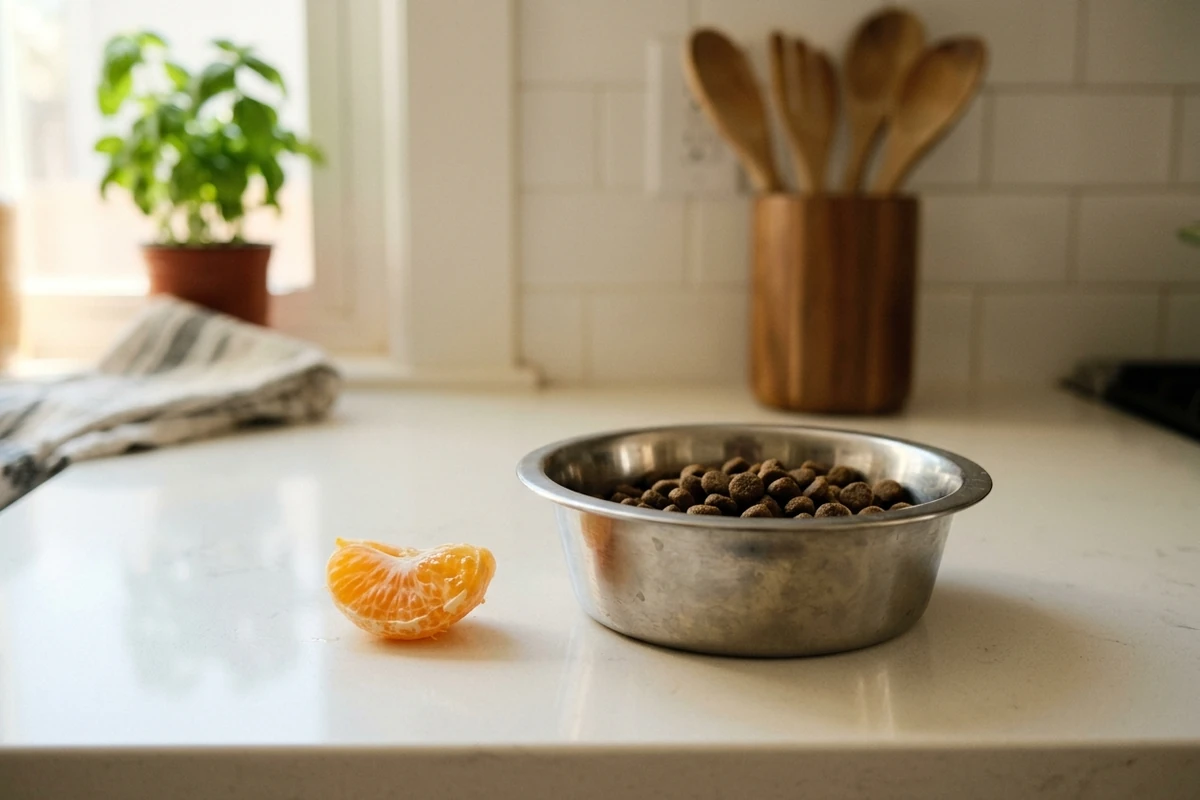
Most articles lead with a glowing list: vitamin C, potassium, fiber, antioxidants. All of that is technically in an orange. But here is the part the top results gloss over, and it changes how you should think about the whole thing. Dogs make their own vitamin C in their liver. Unlike humans, a healthy dog does not need dietary vitamin C, so the single most-hyped “benefit” of oranges is largely redundant for a well-fed pet. Your dog’s complete commercial diet already supplies the vitamins and minerals it needs.
So treat oranges as what they are: a low-calorie, hydrating snack your dog might enjoy, not a supplement. The small amount of fiber can be a mild positive, and the high water content makes a frozen segment a decent summer treat. But do not feed oranges because you think you are boosting immunity. You are mostly handing over sugar and water with a little fiber.
There is one narrow exception worth naming. In dogs under significant physical or illness-related stress, the liver’s vitamin C output can fall short, and some vets discuss supplementation in those specific cases. That is a clinical decision your veterinarian makes, not a reason to start tossing orange segments at a healthy pet. For the everyday dog napping on your couch, the vitamin C in an orange is a nice-to-have, not a need. I mention this only so you do not over-read the benefit either way: oranges are neither a superfood nor a waste, just a fine occasional snack with limits.
- Vitamin C: present, but dogs synthesize their own, so it is not a true nutritional need for healthy dogs.
- Potassium and fiber: real but minor in a one-segment portion.
- Water content: the genuinely useful part – oranges are hydrating, which makes them a reasonable hot-weather treat.
- Antioxidants: present in trace amounts, not a reason on their own to feed citrus.
The Real Risks: Sugar, Acid, and the Parts You Throw Away
Risks are where oranges earn their limits. None of these make a single segment dangerous, but together they explain why “moderation” is not a throwaway word.
Sugar
Oranges are high in natural sugar for a treat. For a dog that is overweight, diabetic, or prone to pancreatitis, that sugar load is a genuine problem. Even in a healthy dog, regular sugary treats nudge toward weight gain, and excess weight is one of the most common health issues vets see. This is the number-one reason oranges stay an occasional snack, not a daily one.
Acidity and the stomach
Citrus is acidic. In a dog with a sensitive stomach, that acid can trigger vomiting, loose stool, or general gut upset. The first time you offer orange, you are running a small experiment on your dog’s digestion, which is exactly why you start with a tiny amount.
The peel, pith, and seeds
This is where I push past the usual “harder to digest” line. The orange peel and the white pith are tough and fibrous and can cause a gastrointestinal blockage, especially in small dogs, which the ASPCA and AKC both flag as a real obstruction risk. But there is more: citrus peel and oil contain essential oils and a compound called d-limonene. In meaningful quantities, citrus oils can irritate the gut and, at higher doses, affect the nervous system in pets. A dog is not going to be poisoned by licking a bit of zest, but a dog that chews through several peels is a dog I would watch closely. Seeds add a choking hazard and trace compounds you simply do not need to risk. Bottom line: flesh only, every time.
How Much Orange Can a Dog Actually Eat?
Portion is everything with a sugary treat. The standard veterinary rule is that treats of any kind should make up no more than 10 percent of your dog’s daily calories. Oranges, being sugary, sit at the cautious end of that allowance. Here is a practical weight-based guide for the flesh only, offered no more than two or three times a week, not daily.
| Dog size | Approx. weight | Safe starting amount (flesh only) |
|---|---|---|
| Toy / very small | 2-10 lb | A small piece of one segment |
| Small | 11-25 lb | Half a segment |
| Medium | 26-50 lb | One segment |
| Large | 51-90 lb | One to two segments |
| Giant | 91+ lb | Two to three segments |
Notice these are starting amounts. A 90-pound dog can physically tolerate more orange than a Chihuahua, but more is not better. The goal is a taste, not a serving of fruit. If your dog does fine with the small starter portion, you can stay near the top of its range on treat days. If it gets loose stool, you cut back or stop.
How to Serve Oranges to Your Dog Safely
Preparation is half the safety. The difference between a problem-free treat and a vet visit usually comes down to what you removed before handing it over. Do this and you remove most of the risk.
- Peel it completely. Remove the outer peel and as much of the white pith as you reasonably can.
- Pull out every seed. No exceptions, even for big dogs.
- Cut to size. For small dogs, break a segment into smaller pieces to remove any choking risk.
- Start with a tiny test amount the first time, then wait 24 hours and watch the stool.
- Skip the juice. Orange juice concentrates the sugar and acid and often has added sugar. It offers nothing your dog needs.
- Frozen segments make a good hot-day treat, but keep the same portion limits – cold does not cancel sugar.
If you want easy, dog-appropriate treat ideas built around safe foods, our guide on whether dogs can eat yogurt safely covers a plain, lower-sugar option you can pair with a small bit of fruit. And before you assume all sweet or dairy treats are fine, it is worth reading why ice cream is a different story for dogs – sugar plus dairy plus additives changes the math.
Which Dogs Should Skip Oranges Entirely
This is the section I wish more articles spelled out, because “moderation” assumes a healthy dog. For these dogs, the answer flips to skip:
- Diabetic dogs. The sugar in oranges can spike blood glucose. Do not feed citrus to a diabetic dog without your vet signing off.
- Overweight dogs. Extra sugar calories work directly against a weight-loss plan.
- Dogs with a history of pancreatitis. Sugary, rich treats are best avoided.
- Dogs with sensitive stomachs or chronic GI issues. Acidic citrus is a likely trigger.
- Puppies. Young digestive systems are easily upset; stick to puppy-formulated food and skip the experiment until they are older, and ask your vet first.
- Senior dogs with reduced kidney function. The potassium and sugar load is worth checking with your vet first.
When in doubt, the safest move is to ask your veterinarian, who knows your dog’s full medical picture. Dairy tolerance follows a similar logic, which is why our breakdown of whether dogs can have milk stresses the same individual-dog caution. The same caution applies to high-fat snacks; if you are weighing treat options, our look at whether dogs can eat cheese safely walks through portion limits the same way this guide does.
Symptoms of Trouble After Eating Oranges
Because oranges are not toxic, most “too much orange” episodes are digestive, not dangerous. Still, you should know the signs and how fast they tend to show up. Mild GI upset usually appears within a few hours to a day.
- Vomiting – the most common sign of too much citrus or sugar.
- Diarrhea or very loose stool – often from the acid or the fiber.
- Gas and stomach gurgling – usually mild and self-limiting.
- Loss of appetite or lethargy – watch these, especially if they persist.
If your dog ate a quantity of peel, the warning signs shift toward obstruction: repeated vomiting, a hard or painful belly, straining with no stool, restlessness, or refusing to eat. Those are not “wait and see” symptoms.
When to Call the Vet or Poison Control
Here is the clear decision guide the top results leave out. Call your veterinarian, an emergency animal hospital, or the ASPCA Animal Poison Control Center at (888) 426-4435 if any of the following is true:
- Your dog ate a large amount of orange peel or whole oranges, especially a small dog, given the blockage risk.
- Vomiting or diarrhea is repeated, severe, or lasts more than 24 hours.
- You see signs of a blockage: a tense or painful abdomen, repeated unproductive vomiting, or straining without producing stool.
- Your dog is diabetic and got into oranges – monitor and call for guidance.
- Your dog is unusually weak, collapses, or will not eat or drink.
For a single segment of flesh in a healthy dog, none of this applies and you can relax. The ASPCA Poison Control line operates around the clock, and a consultation fee may apply, but for a worrying ingestion it is money well spent. When you are unsure whether what your dog ate crosses into a real concern, the VCA Hospitals network and your own vet are the right calls. I would always rather you phone and be told it is nothing than wait on a blockage.
How Oranges Compare to Other Dog-Safe Fruits
Owners rarely feed just one fruit, so it helps to place oranges in context. If your goal is a low-risk fruit treat, oranges are middle of the pack: tasty and hydrating, but sugary and acidic enough to need limits. Several common fruits beat them on the risk-to-reward scale.
| Fruit | Dog-safe? | Key caution |
|---|---|---|
| Orange (flesh) | Yes, in moderation | Sugar and acid; remove peel and seeds |
| Blueberries | Yes, low risk | One of the safest fruit treats; still a treat |
| Apple (no core/seeds) | Yes | Seeds contain trace cyanide; remove the core |
| Banana | Yes | High sugar; small amounts only |
| Grapes / raisins | No – toxic | Can cause kidney failure; never feed |
The contrast with grapes is the one to remember. People lump fruit together as “healthy,” but grapes and raisins are genuinely toxic to dogs and can cause acute kidney failure even in small amounts, while an orange segment is merely a sugary snack. That gap is exactly why a site like this exists: the answer is food-specific, and guessing is how dogs end up at the emergency clinic. If you only take one rule from this comparison, let it be that oranges are fine in moderation and grapes are a hard never.
Other Citrus: Are Lemons and Limes the Same?
No, and this is a useful contrast. Oranges are the gentlest common citrus for dogs. Lemons and limes are far more sour and acidic, and most dogs reject them outright; the peels and oils of those fruits are more likely to cause stomach upset, and dogs generally should not eat them. Grapefruit is also too acidic and bitter. So while a peeled orange segment is a reasonable occasional treat, do not assume “citrus is fine” across the board. Oranges are the exception, not the rule, and even they come with the limits above.
Frequently Asked Questions
Can dogs eat oranges every day?
No. Oranges are high in natural sugar, so they should be an occasional treat, not a daily one. Two or three small servings a week at most, and only the peeled, seedless flesh, keeps the sugar within a sensible treat allowance.
Can puppies eat oranges?
It is best to wait. Puppies have sensitive, developing digestive systems and need a balanced puppy food, not sugary fruit. If you want to offer a taste, ask your veterinarian first and start with a tiny amount.
Is orange peel toxic to dogs?
The peel is not classically toxic, but it is a real problem. It can cause a gastrointestinal blockage, especially in small dogs, and the essential oils in citrus peel can irritate the gut. Always remove all peel and pith before feeding.
Can dogs drink orange juice?
Skip it. Orange juice concentrates the sugar and acid of the fruit and often contains added sugar. It offers no benefit your dog needs and increases the digestive and weight risks.
How much orange is too much for a dog?
More than a few segments at once, or oranges given daily, is too much for most dogs. A small dog should get no more than half a segment as a starter; a large dog, one to two. Watch for vomiting or loose stool, which signals you have offered too much.
What do I do if my dog ate a whole orange with the peel?
Watch closely for vomiting, diarrhea, a painful belly, or straining. For a small dog or a large amount of peel, call your vet or the ASPCA Animal Poison Control Center at (888) 426-4435, because the peel can cause a blockage. When in doubt, call.
Bottom Line
Can dogs eat oranges? Yes – the peeled, seedless flesh, in small amounts, for a healthy dog. The benefits are modest because dogs make their own vitamin C, so feed oranges as a hydrating occasional treat rather than a health food. Always remove the peel, pith, and seeds, keep portions tiny and infrequent, and skip oranges entirely for diabetic, overweight, or sensitive dogs. If your dog gets into a large amount of peel or shows repeated vomiting, do not wait it out – call your veterinarian or the ASPCA Poison Control line. Used with those limits, an orange segment is a fine fetch. Without them, it is a skip.
This guide is for general information and is not a substitute for veterinary advice. Always consult your own veterinarian about your dog’s specific health needs.