
Manuka honey for dogs is safe for most healthy adult dogs in small amounts, and it is one of the few human pantry items with real, studied antibacterial properties that can help with minor wounds and gut support. That is the encouraging answer. But manuka honey is also nearly pure sugar with a premium price tag and a genuine safety catch for puppies and sick dogs that most blog posts skim right past. So before you spoon some into the bowl, let me walk you through where manuka honey earns a fetch, where it earns a skip, and how to use it without wasting money or risking your dog.
I am Marin Benderson. On Fetch or Skip I read the veterinary sources and the actual evidence, then tell you plainly. Manuka honey lands in the “fetch, with real limits” column, and the limits matter more here than with ordinary treats because people tend to treat this stuff as medicine.
Is Manuka Honey Safe for Dogs?
For a healthy adult dog, a small amount of manuka honey is safe. It is not toxic, and many dogs tolerate it well. The caution is not about poison; it is about sugar, about three specific groups of dogs that should avoid it, and about a bacterial spore risk in raw honey that I will cover in detail because the top results gloss over it.
The honest framing is this: manuka honey is a high-sugar food with some bonus antibacterial properties. The bonus is real, but it does not cancel out the sugar. Used as an occasional supplement or a topical wound aid for the right dog, it is fine. Used daily, in large amounts, or for the wrong dog, it stops being a smart choice.
One thing I want to settle early, because it causes a lot of confusion: manuka honey is not in the same category as the foods that send dogs to the emergency room. It will not poison a healthy adult dog the way a toxic food can. The cautions below are about appropriateness and specific vulnerable dogs, not about a substance that is dangerous on contact. Keep that distinction in mind as you read, so you neither panic over a licked spoon nor hand a puppy a daily dose.
What Makes Manuka Honey Different
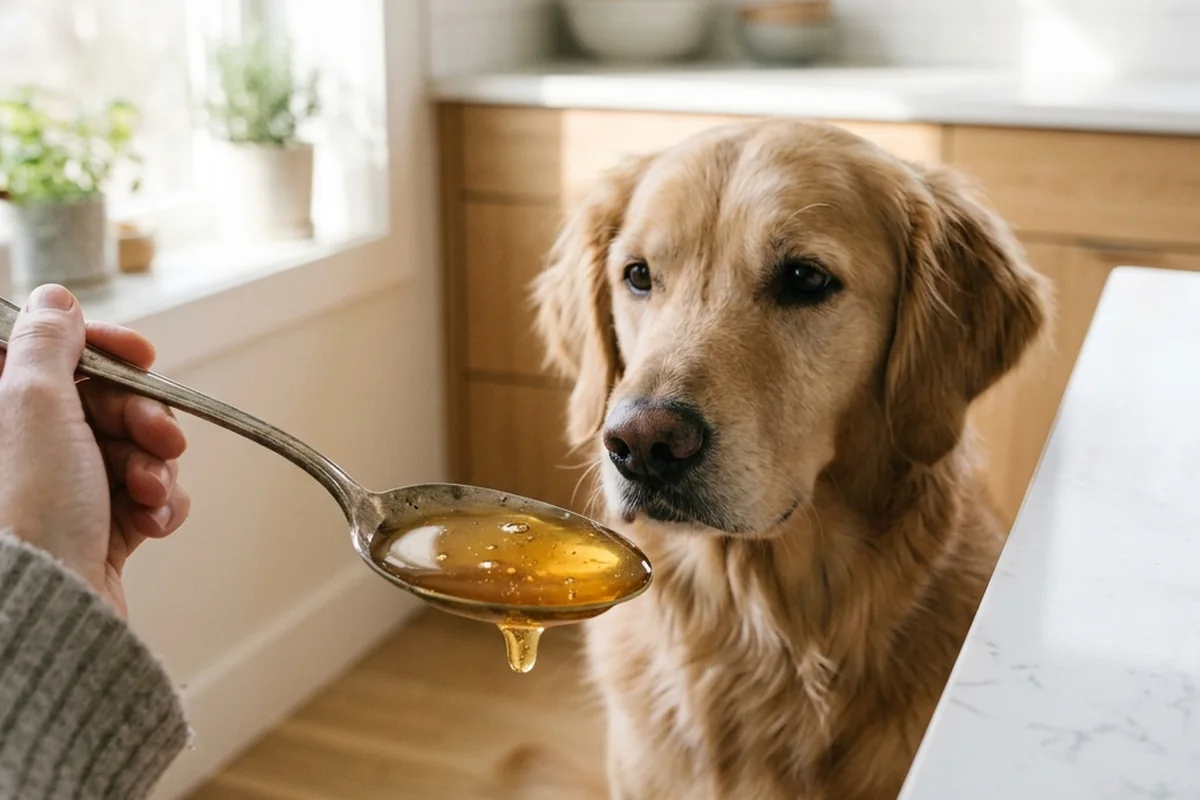
Regular honey has mild antibacterial activity. Manuka honey, made by bees that forage on the manuka bush in New Zealand and Australia, contains a much higher level of a compound called methylglyoxal, or MGO. MGO is what gives manuka its stronger, more stable antibacterial punch, the property that interests vets for wound care.
This is where the ratings come in, and where buyers get confused, so let me decode the labels:
- MGO is a direct measurement of methylglyoxal in milligrams per kilogram. A jar marked MGO 100 has 100 mg/kg; MGO 400 has four times as much. Higher MGO means stronger antibacterial activity.
- UMF (Unique Manuka Factor) is a graded quality certification used mainly in New Zealand. It also tracks antibacterial strength and authenticity. UMF 10+ is a common entry point; UMF 15 to 20+ is stronger.
- The two roughly correspond. UMF 10+ is in the ballpark of MGO 263; UMF 20+ is around MGO 829. You do not need the highest grade for everyday gut support. Reserve the stronger jars for topical wound use.
Plenty of jars are marketed with vague “active” claims and no real number. If there is no MGO figure or UMF certification on the label, you are paying for marketing, not manuka.
The Benefits, Honestly Assessed
Manuka honey has more behind it than most trendy dog supplements, but I want to keep the claims grounded.
- Minor wound healing. This is the strongest use. The antibacterial MGO and the honey’s ability to keep a wound moist can help small, clean cuts and hot spots. Medical-grade manuka is even used in human wound dressings.
- Soothing a sore throat or mild cough. A little honey can coat and calm an irritated throat, which is why some owners use it for kennel cough alongside, not instead of, vet care.
- Gut and digestive support. Honey acts as a mild prebiotic, feeding beneficial gut bacteria. The effect is modest, not a cure for chronic GI disease.
- Possible help with seasonal itch. Some owners report local honey eases environmental allergy symptoms. Evidence in dogs is thin, so treat this as a maybe, not a promise.
What it is not: a substitute for veterinary treatment of an infection, a real allergy medication, or a daily health food that justifies the sugar. Think of it as a targeted tool, used occasionally.
It is also worth being clear-eyed about the evidence base. Much of the strongest research on manuka honey comes from human wound care and lab studies, where medical-grade honey applied to wounds has solid backing. The leap from that to “a daily spoonful keeps my dog healthy” is a marketing leap, not a scientific one. I am not telling you to ignore the benefits; the antibacterial action is genuine. I am telling you to size your expectations to the proven use, which is mostly topical and occasional, and to treat the broad wellness claims with the same skepticism you would apply to any supplement sold with a glossy label and a big price.
The Risks: Sugar, Spores, and the Wrong Dog
Here is the part I will not let you skip, because two of these risks are missing from most articles.
It is almost pure sugar
One teaspoon of honey is roughly 20 calories of mostly sugar. That sounds tiny, but for a small dog it adds up fast against the rule that treats should stay under 10 percent of daily calories. Regular honey feeding nudges toward weight gain and dental problems, the same way any sugary treat does.
The botulism spore risk in raw honey
This is the standout point. Raw, unpasteurized honey, including most manuka, can contain spores of Clostridium botulinum, the bacterium behind botulism. A healthy adult dog’s gut handles these spores without trouble. But the American Kennel Club specifically warns that raw honey should not be given to puppies under one year old or to dogs with compromised immune systems, such as dogs on chemotherapy, because their bodies may not contain the spores safely. Botulism is a serious neurological illness. This single fact is the real reason puppies are excluded, and it is exactly what the product-focused pages tend to leave out.
Bee-product allergy
Rare, but possible. A dog allergic to bee products could react to honey. Start with a tiny amount the first time and watch.
Which Dogs Should Skip Manuka Honey
For these dogs, the answer is to avoid it or to ask your vet first:
- Puppies under one year. Botulism spore risk, full stop. Skip it.
- Diabetic dogs. The sugar will spike blood glucose. Do not feed honey without your vet’s direction.
- Overweight dogs or dogs with a pancreatitis history. The extra sugar works against them.
- Immunocompromised or seriously ill dogs. Same botulism concern as puppies.
- Dogs with a known bee-product allergy.
This kind of dog-by-dog caution runs through everything on this site. The same logic shows up in our guide on whether dogs can eat yogurt safely, where the right answer depends entirely on the individual dog and the amount.
How Much Manuka Honey to Give Your Dog
Less is more. The widely used oral guideline, for healthy adult dogs only and not daily, is based on size:
| Dog size | Approx. weight | Typical oral amount |
|---|---|---|
| Small | Under 20 lb | Up to 1/4 to 1/2 tsp |
| Medium | 20-60 lb | Up to 1 tsp |
| Large | 60+ lb | Up to 1 to 2 tsp |
These are ceilings, not targets, and they are for occasional use. For a specific dog, especially a small one, ask your vet how much fits its calorie budget. Do not make honey a daily habit just because a teaspoon looks harmless.
How to Use Manuka Honey Safely
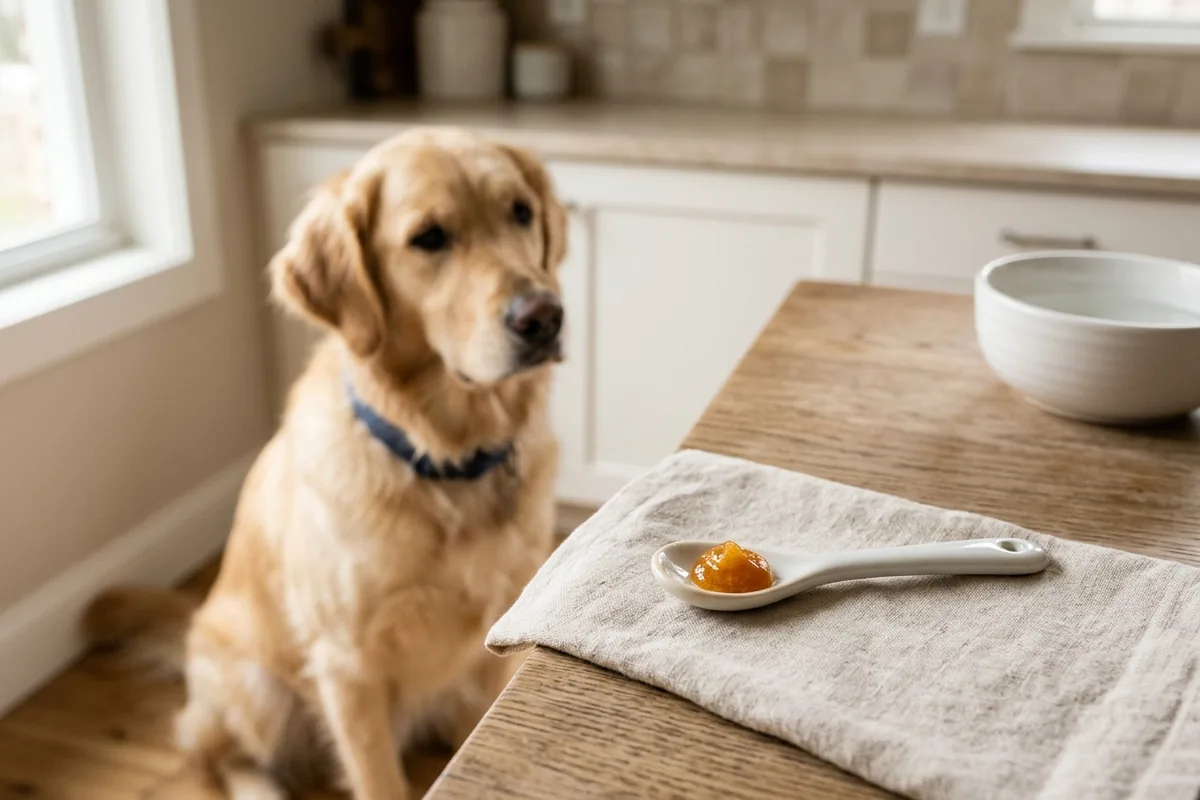
There are two completely different uses, oral and topical, and they call for different handling.
Oral
- Offer it off a spoon, mixed into a little food, or stirred into plain food.
- Start with a fraction of the size-based amount and watch for any stomach upset over 24 hours.
- Keep it occasional. This is a supplement, not a daily ingredient.
Topical, for minor wounds
- Use it only on small, clean, superficial cuts, scrapes, or hot spots.
- Clean the area, apply a thin layer of honey, and cover with a clean bandage if possible so your dog does not just lick it off.
- Medical-grade manuka is sold specifically for wound use; it is the cleaner choice for broken skin.
- Do not home-treat deep wounds, puncture wounds, anything that looks infected, anything near the eyes, or a wound your dog keeps worrying at. Those need a vet.
If you are weighing honey against other sweet additions to your dog’s diet, our look at whether dogs can eat ice cream covers why sugar load is the deciding factor across all of them.
How to Buy and Store Manuka Honey Worth the Money
Manuka honey is expensive and heavily faked, so the buying step deserves attention. A few rules keep you from overpaying for ordinary honey in a fancy jar.
- Look for a real number. A trustworthy jar shows an MGO figure or a UMF grade on the front. No number means no proof of potency.
- Match the grade to the use. For everyday gut support or a throat soother, a lower grade is fine. For topical wound use, spend up for a higher grade or a medical-grade product.
- Check the origin. Genuine manuka comes from New Zealand or Australia. Vague “manuka-style” labeling is a flag.
- Store it cool and dark. Honey keeps almost indefinitely, but heat degrades the beneficial compounds. Do not microwave it or stir it into hot food, which can break down the MGO activity.
- Use a clean spoon every time. Double-dipping introduces bacteria and moisture that shorten the jar’s useful life.
One more money note: you do not need the highest MGO jar for a dog. The strongest grades are priced for human therapeutic use. A mid-range certified jar covers the realistic dog uses without emptying your wallet.
Manuka Honey Compared to Other Home Remedies
Owners often reach for manuka honey as part of a broader “natural” toolkit, so it helps to see where it actually fits. For a minor wound, manuka honey is one of the better-supported home options because the antibacterial activity is measurable, not folklore. For an upset stomach, a bland diet and time usually beat any supplement, honey included. For chronic itching, honey is far weaker than getting an actual diagnosis, since the cause could be fleas, food, or environment, each with a different fix.
The trap with any home remedy is using it to delay real care. Manuka honey on a small scrape is sensible. Manuka honey on a wound that is spreading, smelly, or not closing is a way to lose time your dog does not have. The same caution applies to using it for a cough: a little honey can ease throat irritation, but a persistent cough, especially with lethargy or appetite loss, needs a vet to rule out kennel cough complications, heart issues, or other causes. Treat honey as comfort care for mild, self-limiting problems, and as an adjunct, never a replacement, for anything that worries you.
If you keep a few safe human foods on hand as occasional dog treats, it is worth knowing how each one behaves, the way we break down whether dogs can eat cheese safely and which portions stay in the safe zone.
Signs of Trouble and When to Call the Vet
Because honey is not toxic to healthy adult dogs, most problems are minor digestive upset from too much sugar: loose stool, vomiting, or gas, usually within a day. Cut back or stop, and it resolves.
Call your veterinarian, an emergency clinic, or the ASPCA Animal Poison Control Center at (888) 426-4435 if:
- A puppy under one year, or an immunocompromised dog, ate raw honey – ask about the botulism risk.
- You see signs that could point to botulism: progressive weakness, trouble walking, droopy face, or difficulty swallowing. This is an emergency.
- Vomiting or diarrhea is severe or lasts more than a day.
- Your diabetic dog got into honey – monitor blood sugar and call for guidance.
- A wound you were treating at home looks worse, swollen, or infected.
The ASPCA poison line is staffed around the clock, and the AKC and your own vet are the right sources when you are unsure. I would rather you call about a puppy that licked a spoon than wait and worry.
Frequently Asked Questions
Is manuka honey better than regular honey for dogs?
For antibacterial uses like minor wounds, yes – manuka has much higher methylglyoxal (MGO) than regular honey, which gives it stronger, more stable antibacterial activity. For plain sweetness or a small treat, regular honey is fine and far cheaper. The same sugar and puppy cautions apply to both.
Can puppies have manuka honey?
No. Puppies under one year should not have raw honey, including manuka, because it can contain Clostridium botulinum spores that their immune systems may not handle, risking botulism. Wait until they are adults and ask your vet first.
How much manuka honey can I give my dog daily?
It is best not to give it daily because of the sugar. As an occasional amount, small dogs get up to about a quarter to half a teaspoon, medium dogs up to a teaspoon, and large dogs up to one or two teaspoons. Confirm with your vet for your dog’s size.
What MGO or UMF rating should I buy?
For general gut or oral use, a modest grade like UMF 10+ (around MGO 263) is plenty. For topical wound use, a stronger grade or a medical-grade manuka is worth it. Avoid jars with no MGO number or UMF certification.
Can manuka honey help my dog’s allergies?
Maybe slightly. Some owners report local honey eases seasonal itch, but the evidence in dogs is weak. It is not a replacement for veterinary allergy treatment, and the sugar makes daily use a poor idea.
Can I put manuka honey directly on my dog’s wound?
For a small, clean, superficial cut or hot spot, yes – apply a thin layer and cover it if you can. Use medical-grade manuka for broken skin. Do not home-treat deep, infected, or eye-area wounds; those need a vet.
Bottom Line
Manuka honey for dogs is a fine occasional supplement and a useful topical tool for minor wounds in a healthy adult dog, thanks to its methylglyoxal-driven antibacterial properties. But it is almost pure sugar, so keep portions small and infrequent, and skip it entirely for puppies under one year, diabetic, overweight, or immunocompromised dogs because of the sugar and the real botulism spore risk in raw honey. Buy a jar with an honest MGO or UMF number, use the stronger grades for wounds, and call your vet for anything beyond a minor cut or a tiny taste. Used that way, manuka honey earns its place. Used carelessly, it is an expensive way to feed your dog sugar.
This guide is for general information and is not a substitute for veterinary advice. Always consult your own veterinarian about your dog’s specific health needs.