
Dehydrated chicken feet for dogs are safe for most healthy dogs as an occasional chew, and they are one of the few natural treats that genuinely earns its reputation, with real joint-supporting compounds and a texture that helps scrape teeth. That is the good news, and I lead with it because so many owners are nervous about the word “feet” and the word “bones” in the same sentence. The catch is narrow but important: dehydrated is safe, cooked is not. Air-dried chicken feet crush harmlessly when chewed, while boiled, fried, or roasted chicken feet splinter into sharp shards. Get that one distinction right and these become a solid treat. Get it wrong and you have a vet emergency.
I am Marin Benderson, and on Fetch or Skip I read past the product marketing to tell you what a treat actually does for a dog. Dehydrated chicken feet land in the “fetch, with supervision” column. Here is everything you need to feed them safely.
Are Dehydrated Chicken Feet Safe for Dogs?
Yes, properly dehydrated chicken feet are safe for most healthy dogs. The key is how they are processed. When chicken feet are dehydrated, the small bones dry out and become brittle in a way that crushes and crumbles when a dog chews, rather than fracturing into the dangerous pointed splinters that cooked bones produce. Dehydrated feet are also fully digestible for most dogs, which is why they have become a popular single-ingredient chew.
That said, “safe” comes with conditions: the right dog, supervision, the right number, and a reputable source. They are not a free-for-all, and there are several dogs I would steer away from them entirely, which I will name below. The headline is reassuring; the handling is where you earn the safety.
It also helps to set the right mental category for this treat. A chicken foot is not in the league of the foods that send dogs to the emergency room on contact, the way a toxic plant or a stolen chocolate bar can be. The risks here are mechanical and dose-related: choking if a dog gulps, an upset stomach from too many, fat for a sensitive dog, and the splinter danger only if the feet were cooked. That is a manageable list. Knowing which kind of risk you are dealing with keeps you from either feeding carelessly or panicking over a dog happily crunching a foot under your supervision.
The One Rule That Matters Most: Never Cooked
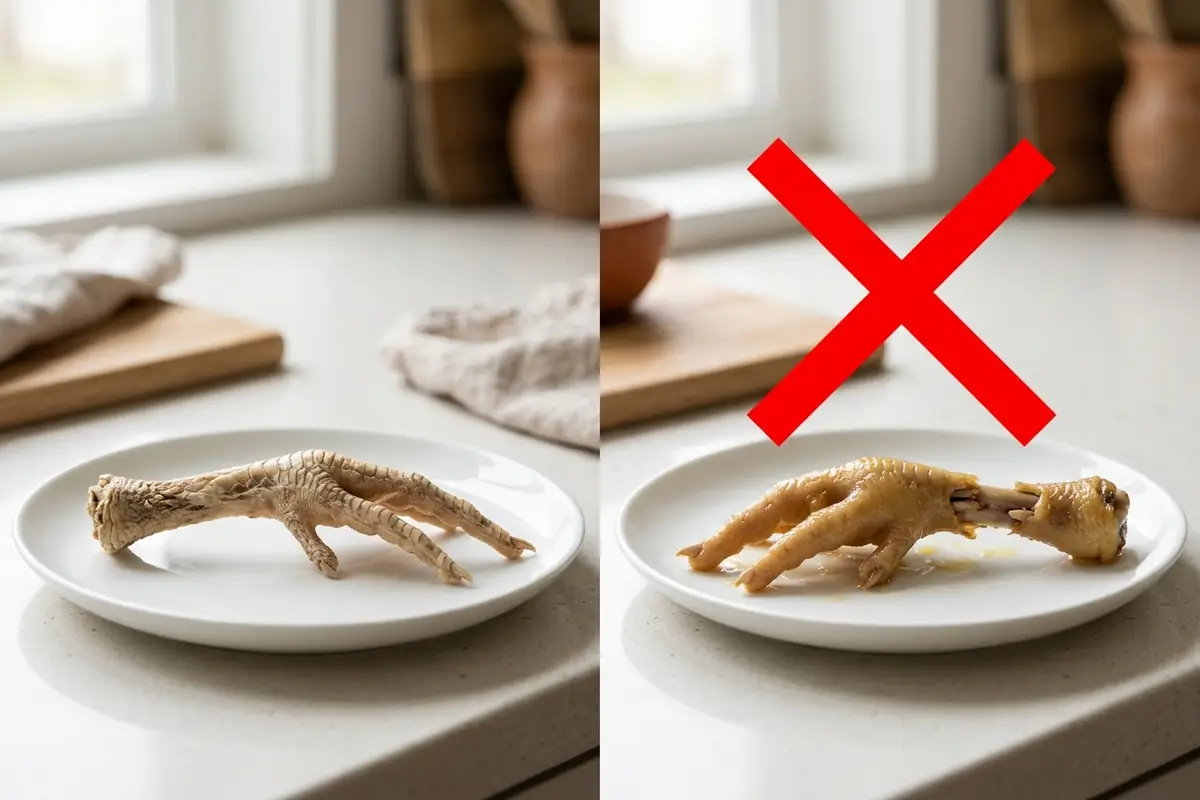
I am putting this near the top because it is the single most important thing on the page. Dehydrated and cooked are not the same, and the difference is the line between a safe chew and a torn intestine.
- Dehydrated (air-dried) chicken feet: bones dry slowly at low heat, become crumbly, and crush safely when chewed. Safe.
- Cooked chicken feet (boiled, baked, fried, roasted, or any from your kitchen): heat changes the bone structure so it splinters into sharp shards. Not safe.
The American Kennel Club is blunt about this: cooked bones splinter into shards that can cause choking and serious damage to a dog’s mouth, throat, or intestines. So never give your dog the chicken feet from your soup pot or a fried snack. Only feed feet that are commercially dehydrated as a dog treat, or that you have dehydrated yourself at low temperature, never cooked. If you take nothing else from this article, take that.
The Real Benefits
Unlike a lot of trendy chews, dehydrated chicken feet back up their claims reasonably well.
- Joint support. Chicken feet are naturally rich in glucosamine and chondroitin, the building blocks behind most joint supplements. The amount in a chew is modest, but it is a genuine bonus for an aging or active dog.
- Dental health. The crunchy, crumbly texture scrapes at plaque and tartar as the dog gnaws, working like a light natural toothbrush. It is not a replacement for brushing, but it helps.
- Collagen and protein. The skin and connective tissue are high in collagen, plus protein and minerals like calcium and phosphorus.
- Mental enrichment. Chewing is calming and satisfying for dogs. A long-lasting natural chew gives them a job to do.
I want to keep one thing honest: the glucosamine in a chicken foot is a nice extra, not a therapeutic dose. If your dog has real joint disease, these chews are a supplement to a vet plan, not a replacement for a prescribed joint product.
The dental benefit is worth a similar reality check. The chewing action does scrape some plaque, and dogs that chew regularly tend to have cleaner teeth than dogs that never do. But no chew reaches below the gumline or replaces a real dental cleaning. Think of a chicken foot as helping to slow tartar buildup between brushings and vet checkups, not as a cure for dental disease that has already set in. Used with that expectation, the dental upside is a genuine plus rather than an overpromise.
The Risks You Have to Manage
Choking and blockage
Even a safe, crumbly chew is a risk for a dog that gulps instead of chews. A dog that tries to swallow a chicken foot whole can choke or, less often, end up with a piece lodged in the digestive tract. This is why supervision is non-negotiable, and why aggressive gulpers are poor candidates.
Digestive upset
Some dogs simply do not agree with a new chew. Too many at once, or a first-time introduction, can cause vomiting, loose stool, or constipation from the mineral load. Start with a small amount and watch.
Fat content
Chicken feet have skin and fat. For a dog prone to pancreatitis or one watching its weight, that fat matters. They are not a low-fat treat.
Sourcing and bacteria
Single-ingredient feet from a reputable supplier are the goal. Cheap or poorly handled products can carry bacteria like salmonella, which is a concern for the dog and for the humans handling them. Wash your hands after handling any raw or dried animal product.
This kind of careful, dog-by-dog thinking runs through everything here. The same logic shows up in our guide on whether dogs can eat cheese safely, where fat and the individual dog decide the right answer.
Which Dogs Should Skip Dehydrated Chicken Feet
For these dogs, I would skip them or check with your vet first:
- Aggressive gulpers who swallow chews without chewing. The choking risk is too high.
- Dogs with a chicken allergy or sensitivity. Obvious, but worth stating.
- Dogs with a history of pancreatitis or who are overweight, because of the fat.
- Very small or toy breeds, where the size and bones pose a bigger relative hazard. Ask your vet about an appropriate size.
- Puppies with immature teeth and digestion, unless your vet approves and supervises.
- Resource guarders, for whom a high-value chew can trigger guarding behavior around people or other pets.
When a dog has chronic health issues, the safe move is always to ask the vet who knows its history, the same caution we apply to everyday foods in our breakdown of whether dogs can eat butter.
How Many Chicken Feet Can a Dog Have?
These are a treat, not a meal, so they fall under the rule that treats should make up no more than 10 percent of daily calories. A practical guide, for an introduced and tolerant dog, is roughly:
| Dog size | Approx. weight | Typical amount |
|---|---|---|
| Small | Under 20 lb | 1 foot, a few times a week |
| Medium | 20-50 lb | 1 to 2 feet, a few times a week |
| Large | 50+ lb | 2 to 3 feet, a few times a week |
Always start with less than this while you learn how your dog handles them. Daily feeding is usually too much because of the fat and minerals; a few times a week is a sensible rhythm.
How to Feed Them Safely
- Supervise every single chew. Stay in the room until the foot is gone.
- Introduce slowly. Offer one, then wait a day and check the stool before making it a regular treat.
- Provide fresh water. Dried chews are, well, dry.
- Take away small end pieces if your dog tries to gulp the last bit whole.
- Buy single-ingredient, reputably sourced feet. If you make your own, trim the toenails, dry at low temperature until fully brittle, and never cook them. Store in an airtight container and discard anything that smells off or shows mold.
- Adjust the rest of the day’s food so the chew fits the calorie budget.
Dehydrated Versus Raw Versus Other Natural Chews
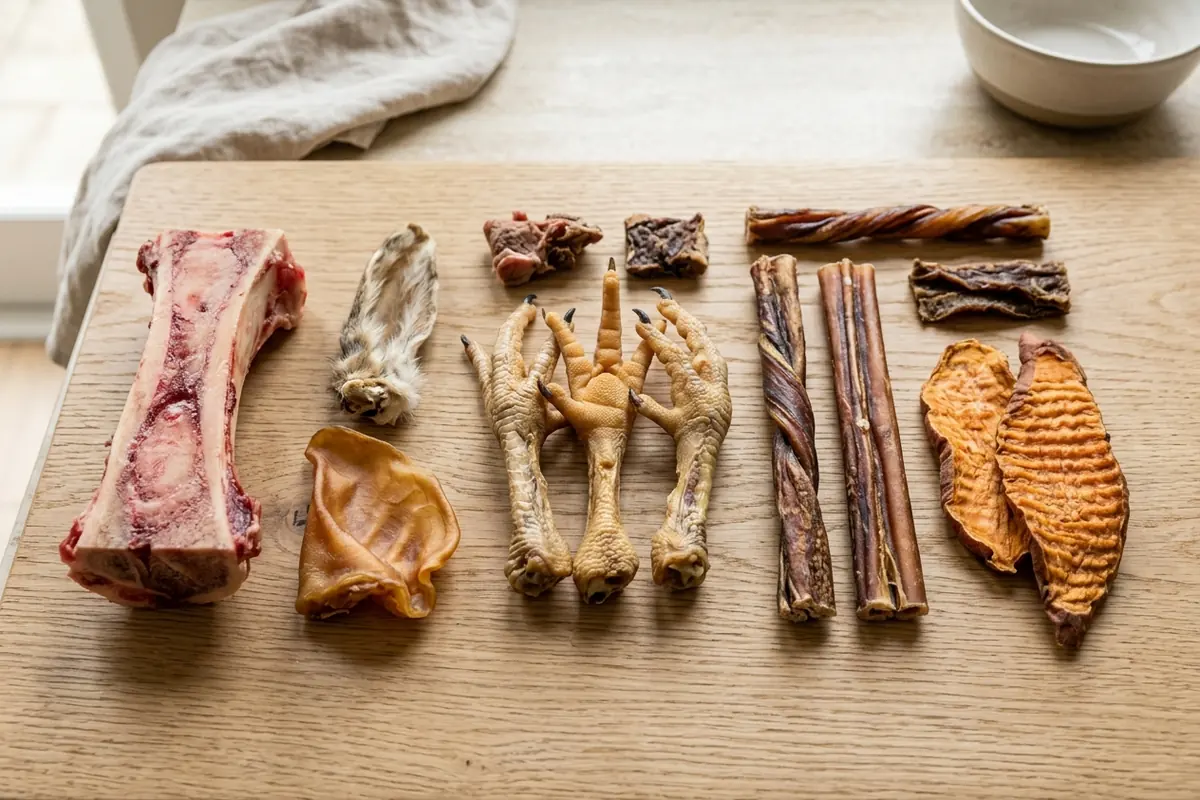
Chicken feet come in more than one form, and they sit alongside a whole shelf of natural chews, so it helps to see how they compare before you commit.
Raw chicken feet are fed by some raw-diet owners and are generally safe because raw bones, unlike cooked ones, are soft enough to chew without splintering. The downside is the mess, the stronger bacterial handling concerns, and the need to keep them frozen. Dehydrated feet give you most of the same benefits in a clean, shelf-stable, less messy package, which is why they are the more popular choice for the average household. Cooked feet, again, are the one form to avoid entirely.
Against other natural chews, dehydrated chicken feet hold up well:
| Chew | Strength | Watch out for |
|---|---|---|
| Dehydrated chicken feet | Joint support, dental, digestible | Gulpers, fat content |
| Bully sticks | Long-lasting, single-ingredient | High calories; choking on the end nub |
| Rawhide | Cheap, widely sold | Blockage risk; many vets advise against |
| Tendon / trachea chews | Lower fat, collagen-rich | Still supervise gulpers |
No single chew is right for every dog. The honest verdict on chicken feet is that they are a strong middle option: more nutritionally useful than rawhide, lower-risk than a hard bone, and a good fit for a dog that actually chews rather than swallows. If your dog inhales everything you give it, a longer-lasting chew it cannot gulp may be a better match than feet.
Making and Sourcing Them the Right Way
Where your chicken feet come from matters as much as how you feed them. If you buy them, choose a product that lists one ingredient, chicken feet, and nothing else, from a supplier that is transparent about where the chicken is raised and how the feet are processed. Avoid bargain imports with no clear sourcing, since those carry the highest bacterial and quality risk. A good dehydrated foot should be hard and brittle, not soft or greasy, and it should smell like dried meat, not rancid fat.
If you would rather make your own, the process is simple but the rules are strict. Rinse fresh raw chicken feet, trim off the toenails with kitchen scissors because they harden uncomfortably when dried, and arrange the feet in a single layer in a food dehydrator. Dry them at a low temperature for roughly a day, until they are completely brittle all the way through. The point is to dry, never to cook, so keep the heat low and do not be tempted to speed it up in a hot oven that would cook the bone. Store the finished feet in an airtight container, keep them somewhere cool and dark, and use them within a few months. Throw out any that develop a soft spot, an off smell, or mold. Wash your hands and your surfaces thoroughly after handling raw poultry at every step.
Signs of Trouble to Watch For
Most dogs do fine, but know the warning signs, which can appear during or shortly after chewing:
- Gagging, retching, pawing at the mouth, or visible distress, which can signal choking
- Repeated vomiting or refusing to eat afterward
- Diarrhea, constipation, or straining to pass stool
- A tense, painful belly or restlessness, which can point to a blockage
- Lethargy or weakness
When to Call the Vet or Poison Control
Call your veterinarian, an emergency clinic, or the ASPCA Animal Poison Control Center at (888) 426-4435 if:
- Your dog is choking or has something stuck. Active choking is an immediate emergency.
- Your dog swallowed a large piece whole, especially a small dog.
- You accidentally fed cooked chicken feet, or your dog stole some, given the splinter risk.
- Vomiting, diarrhea, or constipation is severe or lasts more than a day.
- You see signs of a blockage: a hard or painful abdomen, repeated unproductive vomiting, or straining with no stool.
- Your dog has a pancreatitis history and got into a fatty chew.
For a healthy dog calmly working through one dehydrated foot under your eye, none of this applies. The ASPCA line runs around the clock, and the AKC and your own vet are the right calls when you are unsure. I would always rather you phone early than wait on a possible blockage.
Frequently Asked Questions
Are dehydrated chicken feet a choking hazard?
They can be for dogs that gulp rather than chew, or for very small dogs given large pieces. Properly dehydrated feet crush rather than splinter, but supervision is still essential, and you should take away any small end piece your dog tries to swallow whole.
Can I feed my dog cooked or boiled chicken feet?
No. Cooking, boiling, frying, or roasting makes the bones splinter into sharp shards that can choke a dog or puncture the throat or intestines. Only feed feet that are dehydrated (air-dried at low temperature) as a treat, never cooked.
How many dehydrated chicken feet can a dog eat per day?
Treat them as an occasional chew, not a daily one. A rough guide is one foot for small dogs, one to two for medium dogs, and two to three for large dogs, a few times a week, kept within the 10 percent treat rule. Start with less to see how your dog tolerates them.
Do dehydrated chicken feet really help joints?
They contain natural glucosamine and chondroitin, the compounds behind joint supplements, so they offer modest support. For a dog with real joint disease, they are a helpful extra, not a substitute for a vet-prescribed joint product.
Are dehydrated chicken feet fully digestible?
For most healthy dogs, yes, the dehydrated bones crumble and digest. Some dogs still get an upset stomach, especially at first or with too many, so introduce them slowly and watch the stool.
What do I do if my dog swallowed a chicken foot whole?
Watch closely for choking, gagging, repeated vomiting, a painful belly, or straining. If your dog shows any of these, or is a small dog that swallowed a large piece, call your vet or the ASPCA Poison Control line at (888) 426-4435. When in doubt, call.
Bottom Line
Dehydrated chicken feet for dogs are a genuinely good natural chew for most healthy dogs, offering real joint-supporting compounds, dental benefit, and collagen, as long as you respect the one rule that matters: dehydrated is safe, cooked is dangerous. Supervise every chew, introduce them slowly, keep them to a few times a week, and skip them for gulpers, chicken-allergic dogs, pancreatitis-prone dogs, and very small dogs without your vet’s okay. Source single-ingredient feet from a reputable supplier, and call your vet or the ASPCA Poison Control line if your dog chokes, swallows a piece whole, or gets into cooked feet. Handled that way, these earn a confident fetch.
This guide is for general information and is not a substitute for veterinary advice. Always consult your own veterinarian about your dog’s specific health needs.