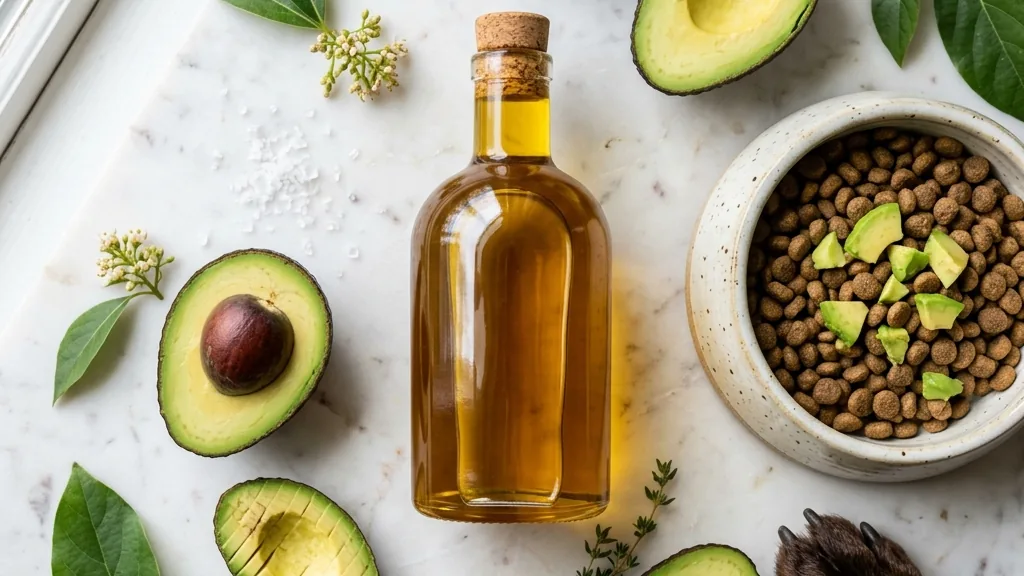
Can dogs have avocado oil? In most cases, yes, in small amounts. This is one of those questions where the headline “avocado is toxic to dogs” is only half the story. Refined avocado oil is very different from the flesh, skin, and pit of the fruit, and for most healthy dogs a small amount is safe and can even support a shiny coat. The catch is that the oil is extremely high in fat, so portion control matters far more than most owners realize. Here is exactly what is safe, what is risky, and how much to give.
If your dog has eaten a whole avocado pit or a large amount of guacamole, skip ahead to the emergency section and call your veterinarian or the ASPCA Animal Poison Control Center at 888-426-4435.
Avocado Oil Versus the Rest of the Avocado
The confusion around this topic comes from lumping the whole fruit together. The avocado plant contains a natural fungicidal compound called persin, and that is the source of the “toxic” reputation. Persin is concentrated in the leaves, bark, skin, and pit, with smaller amounts in the flesh.
Two things make the oil a different conversation. First, dogs are far more resistant to persin than birds, rabbits, horses, and grazing animals, for whom avocado can be genuinely dangerous. In dogs, the flesh usually causes only mild stomach upset. Second, commercial avocado oil is refined, a process that strips out most of the persin along with the fibrous solids. The result is a cooking oil that, like olive or sunflower oil, is essentially fat. That is why the American Kennel Club notes the pit and the choking and obstruction risk it poses is a bigger practical danger to dogs than persin in the flesh.
So the simple rule is this: the refined oil is the safest avocado-derived product for a dog, the flesh is usually only a mild-upset risk, and the pit, skin, and leaves are the parts to keep away entirely.
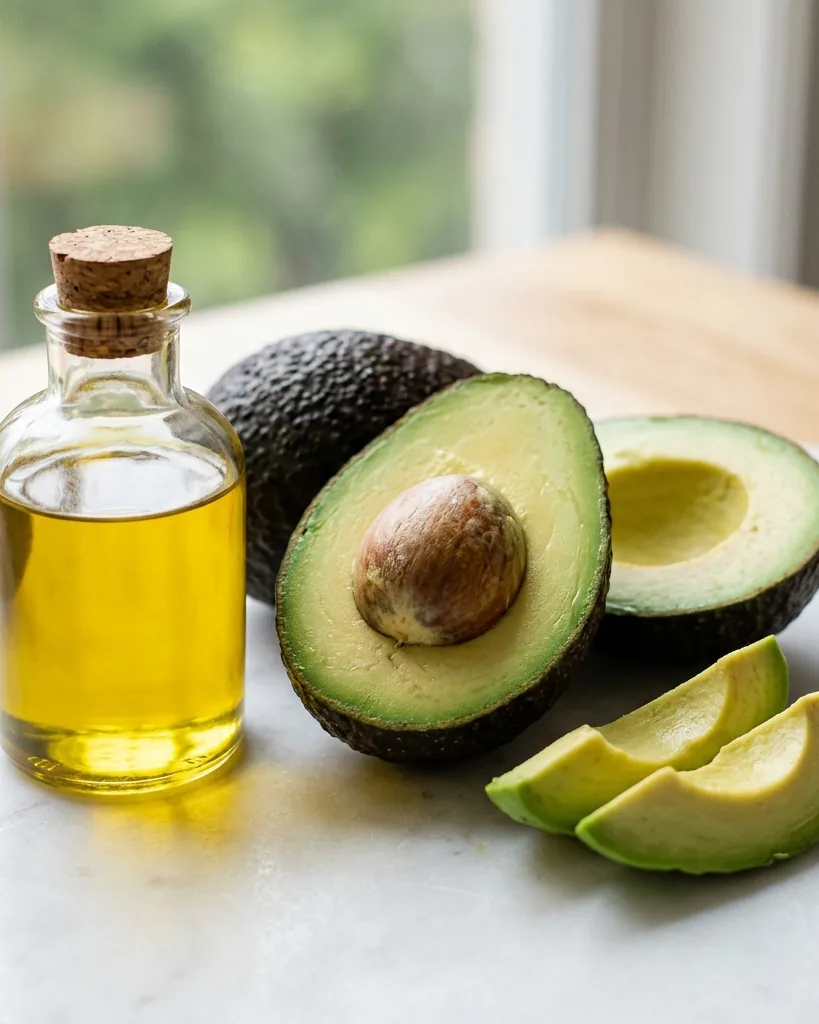
Potential Benefits of Avocado Oil for Dogs
When it is used sparingly, the oil does bring some real nutritional positives. None of these make it a must-have, but they explain why some owners and even some commercial dog foods include it.
- Skin and coat support: The oil is rich in vitamin E, an antioxidant that supports skin health and can help give the coat a healthy shine.
- Healthy monounsaturated fat: It is high in oleic acid, an omega-9 fatty acid, the same kind of fat that makes olive oil a staple of the human Mediterranean diet.
- Anti-inflammatory potential: The combination of vitamin E and monounsaturated fats may offer mild anti-inflammatory benefits that some owners use to support aging joints.
- Topical moisture: Applied to the skin rather than fed, a tiny amount can act as a natural moisturizer for dry, flaky skin or cracked paw pads.
It is worth being honest about the evidence here: most of these benefits are general properties of the oil rather than effects proven specifically in dogs through controlled studies. They are reasons the oil is not harmful in small amounts, not a prescription to add it.
The Real Risk: Fat and Calories
The single most important fact about avocado oil is that it is pure fat. One tablespoon contains roughly 120 kcal and about 14 g of fat. For a small dog, a tablespoon is an enormous amount of extra calories, and a sudden dose of fat carries specific dangers:
- Pancreatitis: A high-fat treat can trigger pancreatitis, a painful and potentially serious inflammation of the pancreas, especially in breeds and individuals prone to it.
- Weight gain: Added oil is concentrated calories. Drizzled on food daily without cutting elsewhere, it quietly pushes a dog toward obesity.
- Digestive upset: Too much oil, or introducing it too quickly, commonly causes loose stool, diarrhea, or vomiting.
This same fat caution applies to other rich kitchen extras, which is why we treat foods like butter for dogs with the same moderation mindset.
This is why the answer is “small amounts” rather than a simple “yes.” The oil is safe in the sense of being non-toxic, but it is easy to overdo in a way that harms your dog’s health over time.
How Much Avocado Oil Can a Dog Have?
If your veterinarian agrees it is appropriate, start small and build up slowly while watching your dog’s stool and weight. A common starting range is 1/4 teaspoon to 1 teaspoon per day, scaled to size.
| Dog size | Typical daily starting amount | Notes |
|---|---|---|
| Toy / small (under 20 lb) | A few drops up to about 1/4 teaspoon | Start with drops; small dogs reach their fat limit fast |
| Medium (20-50 lb) | About 1/2 teaspoon | Build up over a week |
| Large (over 50 lb) | Up to about 1 teaspoon | Still an occasional addition, not a guaranteed daily one |
These are conservative starting points, not targets you must reach. Many dogs get plenty of healthy fat from a complete, balanced diet and need no added oil at all. If you do add it, count it against your dog’s daily calories rather than on top of them, and reduce the portion if you notice soft stool or weight creep.
How to Introduce Avocado Oil Safely
Introducing any new fat gradually gives your dog’s digestive system time to adjust and makes any reaction smaller and easier to spot.
- Talk to your vet first, especially if your dog has any history of pancreatitis, weight problems, or a sensitive stomach.
- Start with a few drops, mixed into a normal meal, and use a plain, food-grade refined oil with no additives.
- Watch for 24 to 48 hours. Check for loose stool, vomiting, or low energy before giving any more.
- Increase slowly over a week or two toward the size-appropriate amount if all is well.
- Keep it occasional. The oil is a small supplement, not a daily requirement.
Using Avocado Oil on the Skin Instead of Feeding It
Some owners are mainly interested in the coat-and-skin benefits, and those can be delivered topically with far less calorie risk. A very small amount rubbed into a dry patch of skin or a cracked paw pad can moisturize without adding fat to the diet. Use only a thin film, choose a plain oil with no essential-oil additives, and apply it when your dog is unlikely to immediately lick it all off. If the skin problem is widespread, persistent, or comes with redness, odor, or hair loss, see your veterinarian rather than relying on oil, because those signs often point to an underlying condition that needs treatment.
Avocado Oil Compared With Other Oils
Avocado oil is not the only oil owners consider, and it is not the most evidence-backed. Here is how it stacks up against the common options, all of which are high in fat and belong in small amounts.
| Oil | Main feature | Notes for dogs |
|---|---|---|
| Fish oil | Omega-3 (EPA and DHA) | The most studied supplement oil for canine skin, coat, and joints |
| Avocado oil | Vitamin E, omega-9 | Non-toxic refined oil; benefits general, very high fat |
| Coconut oil | Medium-chain triglycerides | Popular but high in saturated fat; evidence is limited |
| Olive oil | Monounsaturated fat | Similar profile to avocado oil; safe in small amounts |
For most dogs whose owners want a coat-and-joint supplement, a veterinarian is more likely to recommend a dosed fish oil than avocado oil, simply because the research behind it is stronger. Whole cooked fish can offer some of the same omega-3s, which is one reason owners ask whether dogs can eat salmon safely. Avocado oil is fine as an occasional kitchen substitute, but it is not a uniquely powerful health booster.
Which Dogs Should Avoid Avocado Oil
Because the main risk is fat, the dogs who should skip it are the ones for whom extra fat is most dangerous. Avoid adding the oil, or clear it carefully with your vet first, if your dog:
- Has had pancreatitis or is a breed prone to it
- Is overweight or on a weight-loss plan
- Has a sensitive stomach or frequent digestive upset
- Is on a prescribed low-fat or special diet
- Is a very young puppy whose diet is being carefully balanced
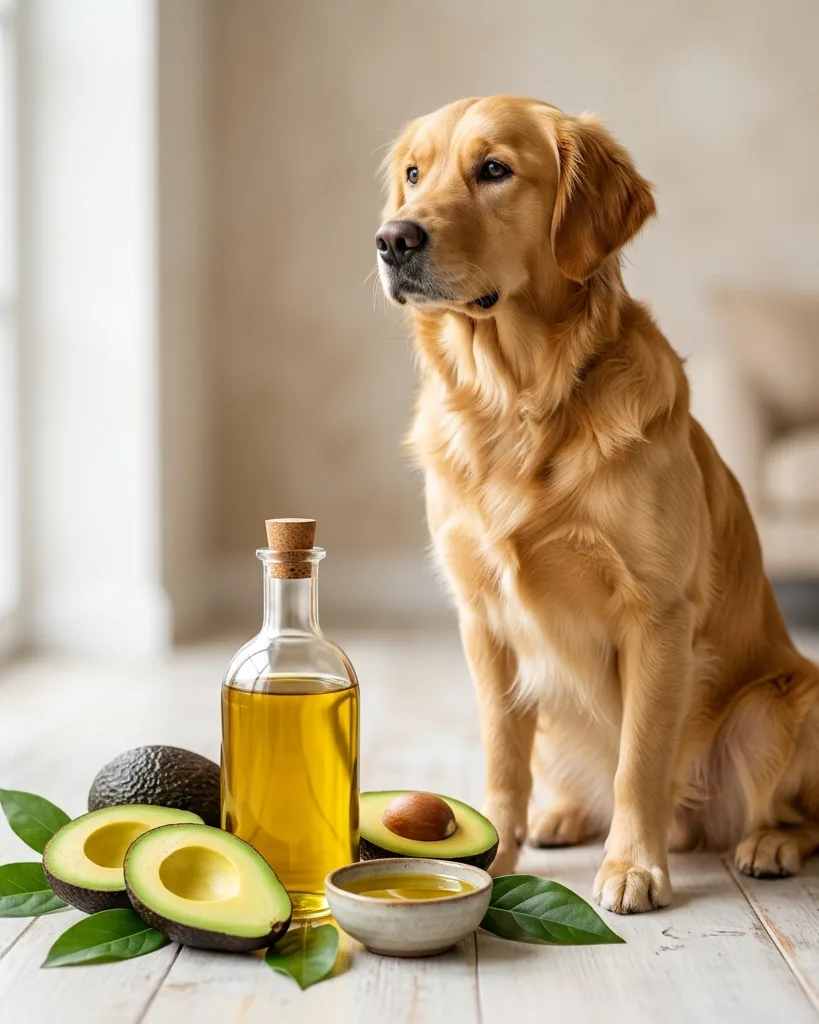
What to Do If Your Dog Eats Avocado, Guacamole, or a Pit
The oil is the safe part of the avocado story. The other parts deserve more caution:
- A bit of avocado flesh: Usually causes at most mild stomach upset in dogs. Watch for vomiting or diarrhea and call your vet if it is significant or persistent.
- Guacamole: The bigger problem is often the add-ins. Onion and garlic are toxic to dogs, and salt and lime do not help. Call your veterinarian or the ASPCA Animal Poison Control Center at 888-426-4435 if your dog eats a meaningful amount.
- The pit: This is the real emergency. A swallowed avocado pit is a serious choking and intestinal-obstruction hazard. If your dog swallows one, contact your vet or an emergency clinic immediately.
The American Veterinary Medical Association (AVMA) maintains a helpful overview of common household and food hazards, and the ASPCA Animal Poison Control Center can advise on any specific exposure around the clock.
Choosing a Quality Product
If you decide to keep some on hand for your dog, the bottle you choose matters. Not every product on the shelf is suitable, and a few label habits keep you on the safe side.
- Pick plain and food-grade. Choose a pure culinary product with a single ingredient. Avoid anything labeled as a massage or aromatherapy blend, because those often contain essential oils or fragrances that can be harmful to dogs.
- Refined is fine for feeding. Refined versions are processed to remove solids and most persin, which is exactly what you want when the goal is a clean source of fat.
- Cold-pressed keeps more vitamin E. Cold-pressed or extra-virgin versions retain more of the antioxidant content, which is useful if the coat benefit is your aim, though they cost more.
- Check for additives. Skip any product with added flavorings, garlic or onion infusions, or seasonings. Plain means plain, the same rule that applies to every human food you share with a dog.
- Store it well. Keep the bottle sealed and away from heat and light so the fat does not go rancid, which can cause stomach upset.
Signs Your Dog Has Had Too Much
Because the problem with this supplement is fat rather than poison, the warning signs are mostly digestive and develop over hours to a day or two. A tablespoon of any cooking fat carries about 120 calories and roughly 14 grams of fat, and dietary fat packs about 9 calories per gram, more than twice the energy of protein or carbohydrate. That density is why a seemingly tiny drizzle can overwhelm a small dog. Watch for:
- Loose stool, diarrhea, or greasy-looking droppings
- Vomiting or a reduced appetite
- Lethargy or restlessness
- A tense, painful belly or a hunched posture, which can signal pancreatitis and warrants a prompt vet call
If you see mild digestive upset, scale back or pause the supplement and let your dog’s stomach settle. If signs are severe or persistent, or you suspect pancreatitis, contact your veterinarian.
Avocado Oil in Commercial Dog Foods
You may notice avocado listed on the ingredient panel of some commercial dog foods and treats, which understandably reassures owners. There is an important difference between that and the kitchen bottle: pet-food manufacturers formulate the total fat content of a recipe so it stays within healthy limits, and they use carefully measured, processed ingredients.
Drizzling extra on top of an already complete food is a different situation, because you are adding uncounted calories to a diet that was already balanced. A complete dog food should provide your dog’s full fat and nutrient needs on its own. If a product already includes avocado as an ingredient, your dog is getting whatever benefit it offers without any action from you, and there is usually no reason to add more.
Can It Help With Itchy Skin or Heavy Shedding?
Owners often reach for a fat supplement when they notice a dull coat, dry flakes, or more shedding than usual, hoping a spoonful will fix it. The honest answer is that healthy dietary fat and vitamin E do support skin-barrier health and coat shine, so a small, vet-approved amount may help a mild case over several weeks. But it is not a cure, and it will not touch the most common real causes of itchy skin.
Persistent itching, recurring hot spots, widespread flaking, a strong odor, or hair loss usually trace back to fleas, environmental or food allergies, or a skin infection, none of which a kitchen fat can resolve. If your dog is genuinely uncomfortable, the fastest path to relief is a veterinary exam to find the cause, not a longer course of supplements. Think of any added fat as gentle background support for an already-healthy dog, and treat a new or worsening skin problem as a reason to call the vet rather than to pour on more.
For coat support specifically, many veterinarians still favor a correctly dosed fish oil over avocado, because omega-3 fatty acids have stronger evidence for calming inflammation in canine skin. Whichever you choose, start low, give it time, and keep the portion within your dog’s daily calorie budget so the cure does not quietly create a weight problem of its own.
A Quick Word on the Persin Myth
It is worth pausing on persin, because misinformation runs in both directions. One camp insists avocado in any form will poison a dog, and the other waves off all caution. The accurate middle ground is this: persin is real and genuinely dangerous to some animals, but dogs are relatively resistant, the refined product contains little to none of it, and the flesh in small amounts tends to cause only mild stomach upset.
The parts that send dogs to the emergency room are the pit, which causes choking and blockages, and any avocado dish loaded with onion, garlic, and salt. Keeping those facts straight lets you relax about a clean culinary product while still respecting the parts of the fruit that deserve caution.
Frequently Asked Questions
Is avocado oil toxic to dogs?
No. Refined avocado oil is processed to remove most persin, the compound responsible for avocado’s toxic reputation, so the oil itself is not toxic to dogs. The real concern with the oil is its very high fat content, not poisoning. The toxic and dangerous parts of the fruit are the pit, skin, and leaves.
How much avocado oil can I give my dog?
Start small and check with your vet. A common range is 1/4 teaspoon to 1 teaspoon per day depending on size, beginning with just a few drops for a small dog. Because the oil is about 120 kcal per tablespoon, even a little adds up, so keep portions conservative and count them against daily calories.
Can avocado oil help my dog’s skin and coat?
It may. The oil’s vitamin E and healthy fats can support skin and coat health, and a thin film applied topically can moisturize dry skin or paw pads. That said, the evidence is general rather than dog-specific, and fish oil is the better-studied option for coat and joint support.
My dog ate guacamole. Should I worry?
Possibly. Plain avocado flesh usually causes only mild upset in dogs, but guacamole often contains onion, garlic, salt, and lime. Onion and garlic are toxic to dogs, so call your veterinarian or the ASPCA Animal Poison Control Center at 888-426-4435 if your dog ate a meaningful amount, and watch for vomiting, diarrhea, or lethargy.
Is avocado oil or fish oil better for dogs?
For supporting skin, coat, and joints, fish oil is generally the better choice because the omega-3 research behind it in dogs is stronger. Avocado oil is fine as an occasional, non-toxic kitchen oil in small amounts, but it is not a uniquely powerful supplement.
This article is for general educational purposes and is not a substitute for professional veterinary care. Talk to your veterinarian before adding any oil or supplement to your dog’s diet, especially if your dog has a health condition.