Can dogs have corn is one of those questions where the honest answer splits four ways, and blending them is how owners get burned. Plain kernels off the cob, in a small portion, are fine for most dogs. The cob is a surgical hazard. Canned and buttered versions carry their own problems. And the allergy fear that drives corn-free marketing turns out to be mostly noise. This guide keeps those four questions separate, anchors every claim to a named veterinary source, and hands you real portions instead of the useless phrase “in moderation.”
The single keyword hides a panicking owner whose dog just swallowed a cob, a shopper wondering why corn sits second on the ingredient list, and a person holding a bowl of buttered corn at a barbecue. Each needs a different answer. The American Kennel Club, the Merck Veterinary Manual, the FDA Center for Veterinary Medicine, and the Cummings School of Veterinary Medicine at Tufts University all weigh in below, and their numbers do the arguing for us.
Quick answer. Yes, dogs can have corn kernels that are plain, cooked or raw, cut off the cob, and served as a small treat inside the ten percent rule. Never let a dog eat corn on the cob or the husk, because the cob does not break down and lodges in the gut. Skip canned corn heavy with sodium, buttered or seasoned corn, and candy corn. Corn is not a common canine allergen, and corn meal in kibble is a digestible, useful ingredient rather than a filler.
The Cob Emergency: What to Do in the First Hour
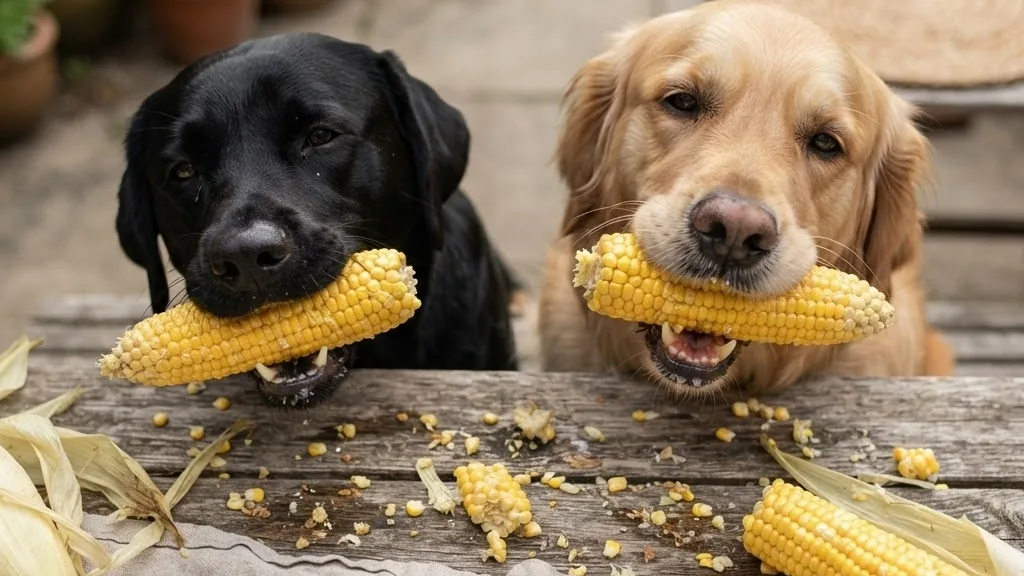
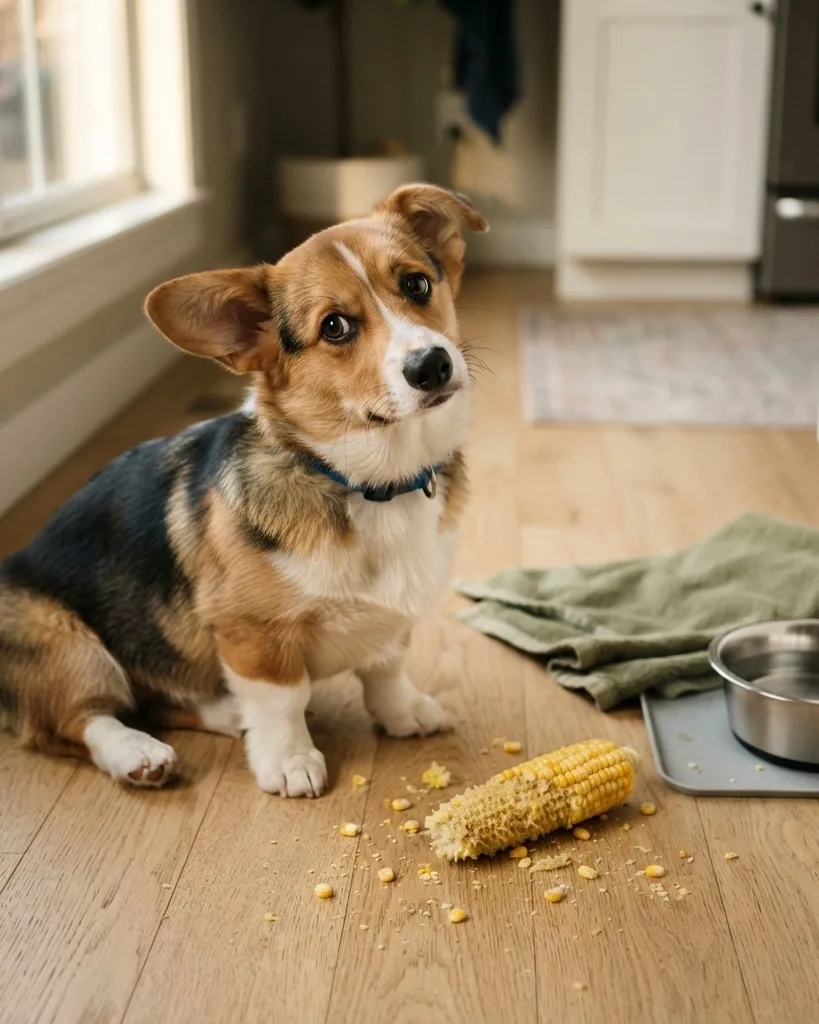
A swallowed corn cob is a mechanical emergency, not a poisoning. The cob is hard, does not digest, and is shaped to wedge in the stomach or small intestine, where it usually will not pass on its own. Foreign body ingestion accounts for approximately 80 percent of all mechanical intestinal obstructions in dogs, the category a cob falls into. Do not induce vomiting at home without a veterinarian telling you to, because bringing a cob back up can lodge it in the esophagus. Call your clinic or an emergency hospital now, describe the size of your dog and the size of the piece, and go in even if the dog seems completely normal.
The reason speed matters is that “no symptoms yet” is not the same as “safe.” Early on, a dog with a partial or high obstruction can look fine for hours. According to the Riney Canine Health Center at Cornell University College of Veterinary Medicine, common signs of a gastrointestinal obstruction include vomiting, loss of appetite, abdominal pain, diarrhea, dehydration, and lethargy, and severe cases progress to peritonitis or sepsis, both life-threatening.
Small dogs sit at higher risk because a cob fragment that a Labrador might pass can fully block a terrier and can lodge in the esophagus on the way down. Dispose of stripped cobs in a sealed bin, never an open trash can or an open compost pile, where scavenging dogs find them.
- Do not wait for symptoms. Call the clinic the moment you suspect ingestion.
- Do not induce vomiting unless a veterinarian directs you to.
- Note the details: dog weight, cob size, and time of ingestion, so the team can triage fast.
- Bring the packaging if butter, seasoning, or a sugar-free product may be involved.
The ASPCA Animal Poison Control Center runs a 24/7 hotline at (888) 426-4435. A cob itself is not toxic, so this is a surgical and mechanical problem rather than a poison-control one, but the hotline is the right first call if the corn came coated in butter, heavy seasoning, or anything that might contain xylitol. If your dog eats other high-risk sweets, our breakdown of what the poison centers say about marshmallows and xylitol covers the same sugar-free-sweetener trap.
What the Vet Will Actually Do at the Clinic
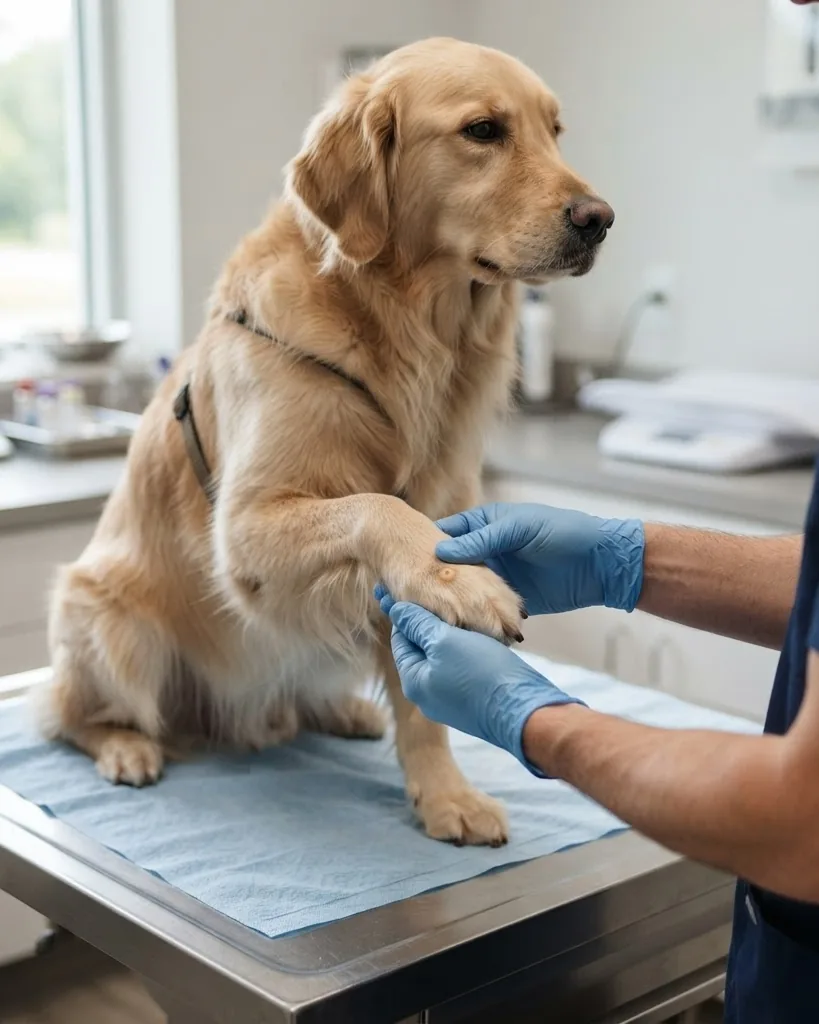
Once you arrive, the workup follows a predictable path, and knowing it lowers the panic. The veterinarian starts with a physical exam and history, then moves to abdominal imaging. A corn cob has a diagnostic radiographic signature that radiologists recognize on sight: the kernel sockets trap gas and produce a regular, grid-like pattern of stippled gas, along with a rectangular shape and stippled opacity. That pattern shows better on the right lateral view than the left, which is why a good workup takes three views rather than one, a point emphasized by MSPCA-Angell in its reference on the radiographic appearance of common gastrointestinal foreign bodies.
If radiographs are inconclusive, the clinic adds ultrasound and bloodwork to check hydration, electrolytes, and signs of infection. When a cob is still sitting in the stomach, endoscopy, using a flexible camera and a snare under anesthesia, may retrieve it without cutting. Once the object moves into the intestine, surgery becomes the answer.
The Riney Canine Health Center describes the surgical options plainly. A gastrotomy opens the stomach; an enterotomy opens the intestine; and where tissue has died or perforated, the surgeon performs a resection and anastomosis, removing the damaged segment and reconnecting the healthy ends. Dogs are most at risk for dehiscence, a failure of the intestinal sutures, within the first three to five days after surgery, which is why post-op monitoring for vomiting, pain, and appetite loss is not optional.
- Radiographs (three views): spot the grid-pattern gas signature.
- Ultrasound and bloods: confirm location and check for infection.
- Endoscopy: possible if the cob is still in the stomach.
- Laparotomy, enterotomy, or resection and anastomosis: for intestinal cases.
The Corn Safety Matrix: Which Forms Are Fine and Which Are Not
Every form of corn lands somewhere different on the risk scale, and treating them as one food is the mistake behind most bad advice. Plain kernels are the safe zone. Cobs and husks are the danger zone. Everything in between, from canned to buttered to candied, depends on what got added. The rule that survives all of it: kernels off the cob, unseasoned, in a small treat portion. Corn on the cob, husk, and silk never belong in a dog’s bowl, because they are indigestible and shaped to obstruct. The table below sorts the common forms so you can decide in seconds while standing at the counter.
| Form | Verdict | Why |
|---|---|---|
| Cooked kernels off the cob | Safe treat | Digestible, easy to portion |
| Raw kernels off the cob | Tolerated | Less digestible than cooked |
| Corn on the cob | Never | Obstruction and choking risk |
| Husk or silk | Never | Indigestible, obstructs |
| Canned sweet corn | Rinse first | Added sodium |
| Buttered or salted corn | No | Fat load, salt, GI upset |
| Plain air-popped popcorn | Occasional | Watch unpopped kernels |
| Candy or caramel corn | No | Sugar; check for xylitol |
Canned corn is the sneaky one. Rinse it well to shed sodium before offering a spoonful, and skip creamed corn entirely because of the added dairy, sugar, and salt. If sodium load is a concern in your household, our guide to the numbers vets use for low-sodium dog food puts the salt question in context.
Unpopped popcorn kernels bring a double hazard: they can choke a dog and can fracture a tooth. Buttered, salted, or microwave popcorn adds fat and sodium that plain air-popped kernels do not.
Why Corn Is in Your Dog’s Kibble, and Why “Filler” Is Wrong
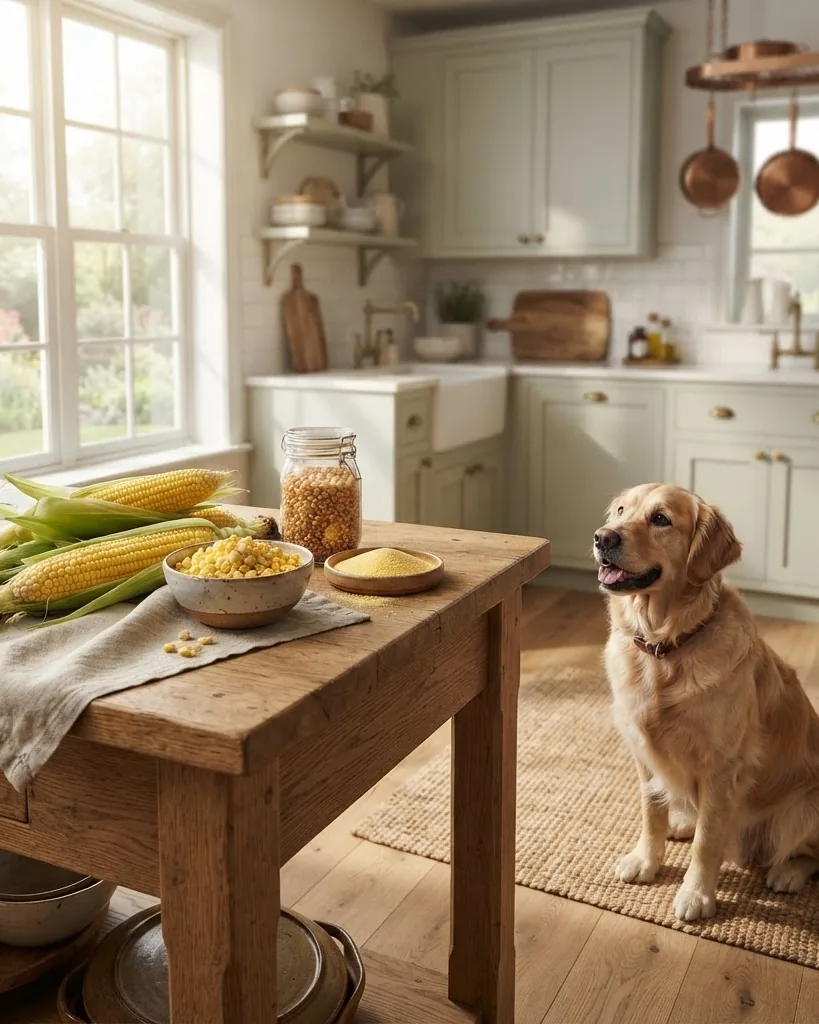
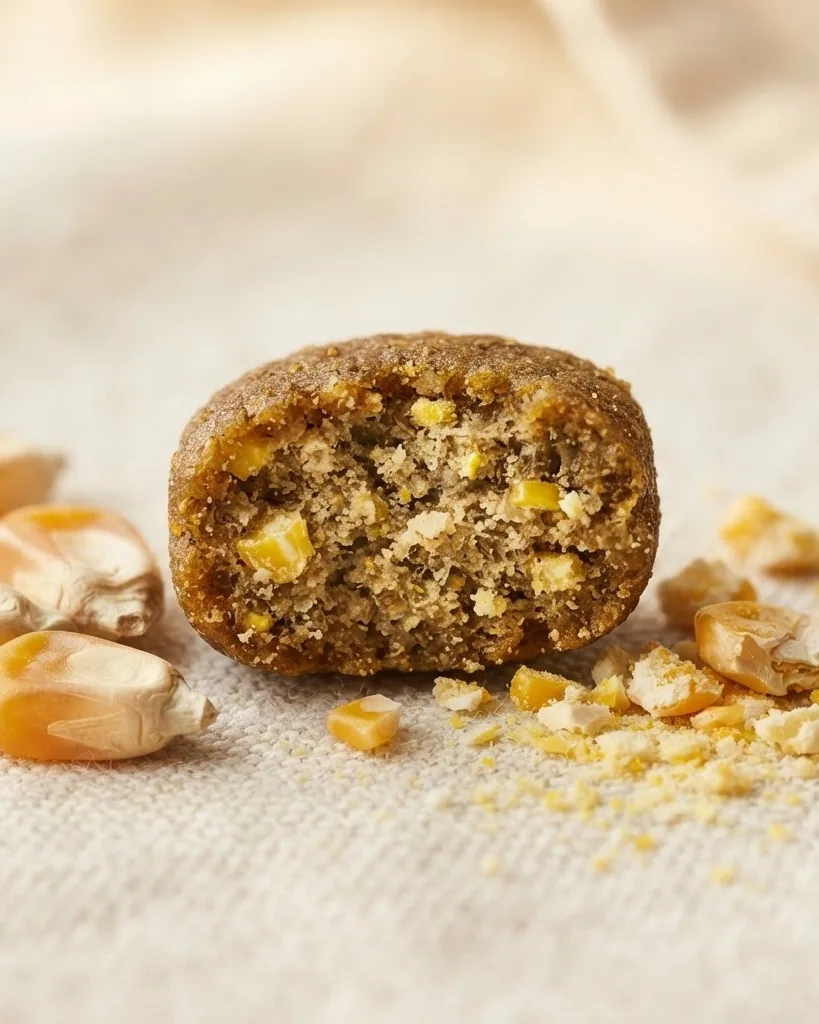
Corn earns its place in commercial dog food, despite a marketing narrative that treats it as cheap padding. The visible evidence people cite, whole kernels appearing intact in the stool, is real but misleading. The starch fraction of ground, cooked corn is 90 to 99 percent digestible in studies, according to the Cummings School of Veterinary Medicine at Tufts University. Whole kernels survive a fast eater’s gut because they were never chewed or ground, not because corn itself resists digestion. Once corn is milled and cooked into corn meal, it delivers usable energy, essential fatty acids, fiber, and micronutrients.
The nutrient list is more substantial than critics admit. Corn supplies linoleic acid, an omega-6 essential fatty acid dogs cannot make themselves and must get from the diet. Whole ground corn carries corn bran, an insoluble fiber that supports firm stool. It also provides several B vitamins, magnesium, potassium, and carotenoids including lutein, zeaxanthin, and beta-carotene, the last a vitamin A precursor.
The “corn causes inflammation” claim rests on a half-truth. Linoleic acid is an omega-6, and a diet loaded with omega-6 and starved of omega-3 can tilt toward inflammatory compounds. Competent formulators offset corn’s omega-6 with fish oil, algal oil, flaxseed, or chia, keeping the ratio balanced. Corn as the sole fat source would be a problem; corn inside a balanced formula is not.
The perception gap is enormous. Even amid grain-free marketing, 81 percent of dog foods and 85 percent of cat foods still use traditional ingredients including corn, wheat, and soy, while 55 percent of pet owners report concern about “fillers” such as grains. Standards bodies like the Association of American Feed Control Officials define what “complete and balanced” means on a label, and corn meal fits inside those definitions as a legitimate ingredient. If you are exploring other starchy additions, compare corn with our data-driven look at what the numbers say about sweet potatoes for dogs.
Aflatoxin: The One Real Corn-Specific Risk in Commercial Food
Aflatoxin is the corn risk almost nobody talks about, and it is the only documented, corn-specific, lethal hazard in commercial dog food. Aflatoxins are toxins produced by molds that grow on crops including corn, and they damage the liver. The FDA Center for Veterinary Medicine owns this dossier. The FDA action level for total aflatoxins, meaning B1 plus B2 plus G1 plus G2, in food for pets of all ages is 20 parts per billion. That is the same strict threshold applied to immature animals and far below the 100 ppb allowed for breeding cattle and swine, the 200 ppb for finishing swine at 100 pounds or more, or the 300 ppb for feedlot beef cattle. Dogs get the tightest limit for a reason.
The survey data ties the risk to corn-heavy formulas without turning it into panic. In the FDA’s FY21 kibble sampling assignment, corn was the primary ingredient in 65 percent, or 83 of 127, dog food samples, and the second ingredient in 13 percent, or 16 of 127. Aflatoxins were detected in 5 samples, at 0.50, 0.54, 1.23, 1.50, and 6.52 ppb, all well below the 20 ppb action level, and four of those five listed corn as the primary grain.
The stakes are real because history shows what happens when the system fails. In the December 2020 Sportmix recall from Midwestern Pet Foods, the FDA was aware of at least 28 dog deaths and 8 illnesses, and the aflatoxin source in the 2020 and 2021 recalls was traced back to the corn used in the food. Signs of aflatoxicosis reflect liver injury: lethargy, loss of appetite, vomiting, and jaundice.
What should an owner actually do with this? Three habits close most of the risk without swearing off corn:
- Check recall lists periodically and register your food’s lot numbers where the brand allows it.
- Store kibble cool and dry. Warm, humid conditions encourage the mold that produces aflatoxin.
- Do not buy damaged bags, and do not decant into a bin without cleaning it between batches.
This is the balanced middle ground a manufacturer defending its own ingredient cannot credibly occupy. Corn belongs in the bowl for most dogs, and the aflatoxin layer is a storage-and-sourcing problem, not a reason to fear corn itself.
The Allergy Myth, Settled With Data
Corn is a rare canine allergen, not a common one, and the belief that it sits near the top of the list does not survive contact with the dermatology evidence. The Merck Veterinary Manual states that in dogs the most common food allergens are beef, dairy products, chicken, wheat, and lamb. Corn is not on that list. The manual also notes that food allergy is uncommon overall, and that the only reliable way to prove one is a strict dietary elimination trial followed by a controlled rechallenge, not a blood test and not a corn-free bag off the shelf.
The primary research is even more pointed. The 2016 critically appraised topic by Mueller, Olivry, and Prelaud, published in BMC Veterinary Research, concluded the most likely allergens in canine cutaneous adverse food reactions are beef, dairy, chicken, and wheat. Corn is absent from that top tier and appears in single figures across the underlying case series, implicated in 1 of 20 dogs in one series and 5 of 67 in another, against beef showing up in 13 of 20 and 11 of 20 in comparable series.
Corn gluten also is not wheat gluten. The protein in corn is called gluten but differs from the wheat, rye, and barley proteins tied to gluten intolerance, which the Cummings School notes is rare and confirmed only in a few breed families such as the border terrier and Irish setter lineages. Even those dogs generally tolerate corn.
If your dog itches, the answer is a supervised elimination diet, not a guess. The Merck Veterinary Manual reports that food allergy is confirmed only when a dog improves on the diet and flares on rechallenge, following a supervised elimination trial run under veterinary guidance. Swapping to a corn-free bag off the shelf skips the diagnosis entirely.
How Much Corn Is Safe: Real Portions, Not “Moderation”
Portion control has a number, and it is the ten percent rule. Treats and non-complete foods, corn included, should stay under 10 percent of a dog’s daily caloric intake, with at least 90 percent coming from a complete and balanced diet, guidance shared by the World Small Animal Veterinary Association and the UC Davis Veterinary Medical Teaching Hospital Nutrition Support Service. The worked example from UC Davis is clean: a dog eating 100 kcal per day gets no more than 10 kcal from treats. Corn kernels are a snack, not a meal component, and they compete for that same 10 percent budget with every biscuit and chew your dog already gets.
To use the rule, you need your dog’s daily calorie target, which your veterinarian can give you or which appears on your food’s feeding chart. Take 10 percent of that number, then remember corn shares it with everything else. A dog on a busy treat day has almost no room left for a spoon of kernels, and that is the point: kernels are an occasional extra, not a daily habit.
Some dogs should get little or no corn regardless of the math. The list that warrants a vet conversation first:
- Dogs on a diagnostic elimination diet must avoid all off-plan foods, corn included.
- Diabetic dogs need vet-directed carbohydrate control.
- Overweight dogs have almost no treat budget to spare.
- Pancreatitis-prone dogs must avoid buttered or oily corn especially.
- Puppies should have new foods introduced slowly and in tiny amounts.
Introduce corn the way you would any new food: a small amount, then watch for a day. For portioning other plant snacks by the same 10 percent logic, our piece on pumpkin seeds, the dose, and the deworming myth runs the identical calculation for a different treat.
Signs of Trouble After Corn, and When to Call
Most dogs handle a spoon of plain kernels without a hitch, but a few will react, and knowing the signal from the noise saves an unnecessary panic and catches the rare real problem. Mild gas or a single soft stool after a first-time treat is usually just a digestive adjustment. Repeated vomiting, persistent diarrhea, obvious abdominal pain, refusal to eat, or lethargy is a different category, especially if a cob, husk, or unpopped kernel could be involved. The Riney Canine Health Center lists vomiting, appetite loss, abdominal pain, diarrhea, dehydration, and lethargy as the core signs of an obstruction, and any cluster of those after suspected cob ingestion means call now.
Watch the clock, not just the dog. A partial obstruction can smolder for a day before it declares itself, so a dog that vomited once and then seemed fine is not automatically in the clear. Recurrent gas, loose stool, or itching that follows every corn-containing meal points toward intolerance rather than emergency, and that is a conversation for your regular veterinarian rather than the ER.
Frequently Asked Questions
Can dogs eat raw corn kernels off the cob?
Yes, most dogs tolerate raw kernels cut off the cob, though they are less digestible than cooked ones. The Cummings School at Tufts notes cooking and grinding raise corn’s digestibility, which is why cooked kernels sit easier. Keep the portion small, inside the ten percent treat rule, and never let the dog gnaw the cob itself, which is the real hazard.
Is canned sweetcorn safe for dogs?
Canned sweet corn is loaded with sodium, so rinse it thoroughly and offer only an occasional spoonful of the plain kernels. Skip creamed corn entirely because of the added dairy, sugar, and salt. Buttered, salted, or seasoned versions add fat and sodium that plain kernels avoid, so drain, rinse, and keep the amount modest.
My dog ate a corn cob three days ago and seems fine. Is that safe?
Not necessarily. A cob does not digest and can lodge without immediate symptoms, then trigger vomiting, appetite loss, or abdominal pain days later. Foreign bodies cause roughly 80 percent of mechanical intestinal obstructions in dogs. Call your veterinarian now, describe your dog’s size and the piece swallowed, and expect imaging rather than a wait-and-see.
Is corn-free dog food worth buying for allergies?
Usually not, because corn is a rare allergen. The Merck Veterinary Manual ranks beef, dairy, chicken, wheat, and lamb as the common canine food allergens, with corn appearing in single-digit case counts in the Mueller 2016 research. A supervised elimination diet diagnoses a true allergy far better than switching to a corn-free bag.
Can puppies have corn?
Puppies can have small amounts of plain, cooked kernels off the cob, introduced slowly so you can watch for digestive upset. Their treat allowance is tiny under the ten percent rule, and their growing bodies need most calories from a complete and balanced puppy diet. Never offer a cob, husk, or unpopped popcorn kernel to a puppy.
Is popcorn okay for dogs?
Plain, air-popped, unsalted popcorn is fine as an occasional treat, but butter, salt, and microwave versions are not, and unpopped kernels risk choking and tooth fractures. Keep popcorn inside the same ten percent treat budget as any other snack, and pick out every unpopped kernel before sharing a small handful.
What about corn tortillas, chips, or cornbread?
These are high in sodium and often fat, so they are not a routine treat. A stray tortilla chip will not poison a healthy dog, but the salt, oil, and seasonings make them a poor regular choice. Plain kernels off the cob are the far better way to share corn’s flavor with your dog.