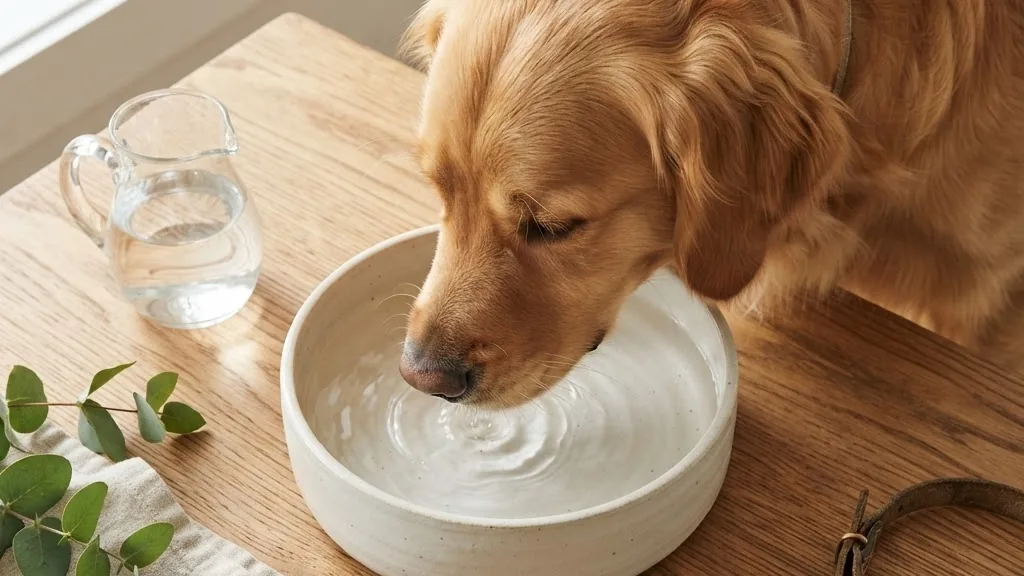
Why is my dog drinking so much water is the exact question a lot of owners type at 11 p.m. after watching the water bowl empty twice before bed. The honest answer starts with a number, not a guess. A healthy adult dog drinks roughly 50 to 60 mL/kg/day, and the moment intake climbs past 100 mL/kg/day, that is clinical polydipsia and it warrants a veterinary look. Everything else in this guide hangs off that one baseline, because “seems like a lot” is not data. Measured milliliters are.
The frustrating part of most advice online is that it tells you to “monitor” without telling you how. This guide fixes that. It gives you a measuring method, a decision framework anchored to real thresholds, a plain walkthrough of what the vet will actually run, and a clear split between “call this week” and “go tonight.” The figures below come from standard veterinary internal medicine references, and the named authorities are the ones your own vet trusts.
Quick answer: A dog drinking more than usual is often responding to heat, exercise, a switch from wet to dry food, or salty treats. But sustained intake above the normal 50 to 60 mL/kg/day range, and especially past the 100 mL/kg/day polydipsia threshold, points to a medical cause such as diabetes mellitus, chronic kidney disease, or Cushing’s disease. Measure a full 24 to 72 hours of water intake, calculate mL/kg/day, and book a vet visit if the number is high or if vomiting, lethargy, or collapse appear.
What Counts as Normal Water Intake for a Dog
Normal daily water intake for a healthy adult dog sits at roughly 50 to 60 mL/kg/day. An alternative rule of thumb expresses this as about 1 fluid ounce per pound of body weight per day, which works out to approximately 65 mL/kg/day. Those two figures are not in conflict. One fluid ounce (about 29.57 mL) per pound (about 0.4536 kg) does equal about 65 mL/kg, so the higher number simply sits slightly above the 50 to 60 mL/kg/day band. Whichever baseline you anchor to, the decision point that matters is the same: intake above 100 mL/kg/day is clinical polydipsia and deserves a veterinary evaluation.
For a 20 kg dog, the normal band is roughly 1,000 to 1,200 mL a day (20 kg times 50 to 60 mL). The polydipsia threshold for that same dog is 2,000 mL a day (20 kg times 100 mL). Seeing those exact volumes side by side is more useful than any adjective, so here is the same arithmetic worked out across common body weights:
| Dog weight | Normal daily intake (50 to 60 mL/kg) | Polydipsia threshold (100 mL/kg) |
|---|---|---|
| 5 kg (11 lb) | 250 to 300 mL | 500 mL |
| 10 kg (22 lb) | 500 to 600 mL | 1,000 mL |
| 20 kg (44 lb) | 1,000 to 1,200 mL | 2,000 mL |
| 30 kg (66 lb) | 1,500 to 1,800 mL | 3,000 mL |
| 40 kg (88 lb) | 2,000 to 2,400 mL | 4,000 mL |
Print that row for your dog’s weight and tape it near the water station. Once the daily total creeps toward the right-hand column, you are no longer guessing.
Diet shifts the picture too. Dry kibble holds only about 6 to 10 percent moisture, while canned or wet food runs about 70 to 82 percent, and raw diets land near 60 to 70 percent. A dog moved off wet food onto kibble will drink noticeably more from the bowl simply to replace the water it used to eat. That is normal compensation, not disease.
Polydipsia and Polyuria: Why Thirst and Peeing Go Together
Excessive drinking rarely travels alone. Veterinarians almost always see it paired with excessive urination, and they treat the two as one syndrome: PU/PD, short for polyuria and polydipsia. Understanding which came first is the single most useful mental model an owner can carry into the situation. In primary polydipsia the dog drinks first, often for behavioral reasons, and then urinates more as a result. In secondary polydipsia a disease process drives water loss or wrecks the kidney’s ability to concentrate urine, and the dog drinks more to keep up.
That distinction reframes the question. You are not just asking why your dog is thirsty. You are asking whether the body is losing water it cannot hold, or drinking water it does not need.
Urine concentration is how the vet tells these apart. Normal canine urine specific gravity, or USG, runs 1.015 to 1.045. When the kidneys lose concentrating power, USG drifts into the isosthenuric zone of 1.008 to 1.012, a hallmark of chronic kidney disease, Cushing’s disease, and diabetes insipidus. A reading below 1.008, called hyposthenuria, points toward diabetes insipidus or psychogenic drinking. The Merck Veterinary Manual is the standard reference vets reach for when interpreting these values, and it treats PU/PD as a starting point for a structured workup rather than a diagnosis on its own.
| USG reading | What vets call it | What it points toward |
|---|---|---|
| 1.015 to 1.045 | Normal concentrating range | Kidneys are holding water as they should |
| 1.008 to 1.012 | Isosthenuria | Chronic kidney disease, Cushing’s disease, diabetes insipidus |
| Below 1.008 | Hyposthenuria | Diabetes insipidus or psychogenic drinking |
You will not measure USG at home, but knowing this scale ahead of the visit makes the vet’s explanation land the first time instead of the third.
The Medical Causes, With the Mechanism Behind Each
Medical causes of excessive thirst share a common thread: each one either forces water out of the body or blocks the kidney’s ability to hold it back. Naming the disease is only half the story. The mechanism tells you why the bowl keeps emptying, and it is what separates a genuinely useful explanation from a list. The American College of Veterinary Internal Medicine (ACVIM) publishes consensus statements governing the diagnosis of the three heavyweight causes, diabetes mellitus, Cushing’s disease, and chronic kidney disease, and those three account for a large share of what your vet will be ruling in or out first.
Here is the working differential, each cause paired with the reason it drives drinking:
- Diabetes mellitus. Excess glucose spills into the urine (glucosuria) and drags water with it through osmotic diuresis. The dog urinates the lost sugar-laden water and drinks to replace it. Peak onset lands around 7 to 9 years, and intact females carry roughly twice the risk of males, a difference attributed to progesterone-driven insulin resistance.
- Diabetes insipidus. A shortage of, or resistance to, antidiuretic hormone (ADH) means the kidney cannot concentrate urine at all. This produces the dramatic dilute urine of hyposthenuria below 1.008.
- Cushing’s disease (hyperadrenocorticism). Chronically high cortisol interferes with ADH action. PU/PD shows up in roughly 80 to 85 percent of cases. About 80 to 90 percent are pituitary-dependent, with the remainder adrenal-dependent.
- Chronic kidney disease (CKD). Damaged kidneys lose their urine-concentrating ability, so the dog leaks dilute urine and drinks to compensate. The International Renal Interest Society (IRIS) is the globally recognized body governing CKD staging across Stages 1 to 4.
- Pyometra (intact females only). Bacterial endotoxins block the kidney’s ADH response. This typically surfaces 4 to 8 weeks after estrus and is a surgical emergency.
- Hypercalcemia. Excess blood calcium impairs concentrating ability. It can stem from certain cancers, Addison’s disease, or vitamin D toxicity.
- Liver disease, Addison’s disease, and pyelonephritis round out the list, each capable of producing PU/PD through altered fluid handling or kidney involvement.
The American Veterinary Medical Association (AVMA), the primary professional body governing standards of care for U.S. veterinarians, publishes owner-facing companion-animal health guidance that reinforces the same message: persistent thirst is a symptom, not a diagnosis, and it earns a workup rather than a wait-and-see.
Medication-Induced Thirst: The Cause Most Guides Skip
Drug-induced polydipsia is one of the most common real-world reasons a dog suddenly drinks more, and it is the cause generic disease-lists mention only in passing. If your dog started a new prescription and the water bowl started emptying faster within days, the two are very likely linked. This is iatrogenic thirst, meaning it is a known, expected side effect of the treatment rather than a new disease. The critical rule is simple and non-negotiable: never stop or change a dose on your own. Call the prescribing vet first.
Four culprits show up again and again in dogs on chronic medication:
- Corticosteroids such as prednisone and prednisolone interfere with ADH action much the way excess cortisol does in Cushing’s disease, so increased thirst is expected.
- Loop diuretics like furosemide are designed to increase urine output, often for heart conditions, and thirst follows the water loss directly.
- Anticonvulsants such as phenobarbital, used for seizure control, commonly increase both thirst and appetite.
- Trilostane, prescribed for Cushing’s disease itself, can shift thirst as it changes cortisol levels.
If you are managing pain or allergy symptoms alongside another condition, dosing precision matters even more. Owner resources like this guide to safe and toxic pain relief for dogs and a vet-backed Benadryl dosage guide for dogs exist precisely because guessing with medication is how thirst becomes the least of your problems. Always loop in your veterinarian before combining anything.
Harmless Reasons Your Dog Might Be Drinking More
Not every empty water bowl is a warning sign, and needless panic helps no one. Plenty of everyday situations push a healthy dog to drink more without any disease being present. The body is doing exactly what it should, replacing water it lost or never got from food. Before you spiral, run through the ordinary explanations, because they resolve on their own once the trigger passes and they do not carry the red flags that follow later in this guide.
Common non-pathological reasons include:
- Heat and humidity. Dogs cool themselves by panting, which loses water fast, so a hot afternoon reliably spikes intake.
- Exercise intensity. A long hike or hard play session raises drinking for hours afterward.
- A recent food switch. Moving from wet food at 70 to 82 percent moisture to dry kibble at 6 to 10 percent moisture means far less water arrives in the meal, so the dog makes up the gap at the bowl.
- Salty treats. High-sodium snacks drive thirst the same way salty food does in people.
- Lactation and growth. Nursing mothers and growing puppies both need more water per kilogram than a settled adult.
Diet is worth a second thought here. If you have recently added human foods to the bowl, some are hydrating and some are not, and a few carry their own risks worth checking, from whether dogs can safely eat oranges to how to serve shrimp to dogs safely. The American Kennel Club (AKC), while not a medical governing body, is a widely trusted resource for framing this kind of normal life-stage and behavior context for worried owners.
How to Measure Your Dog’s Water Intake at Home
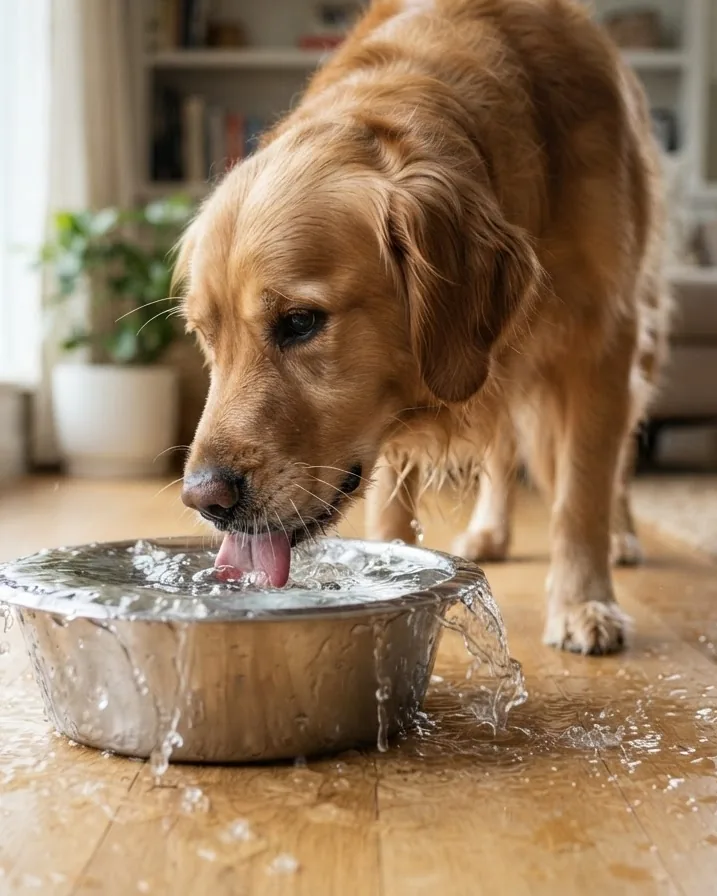
Measuring water intake at home is the single most valuable thing you can do before the vet visit, and almost no one explains the method. You need one marked measuring container, a fixed tracking window of 24 to 72 hours, and a little arithmetic. This turns “he seems thirsty” into a number your veterinarian can act on immediately, which can shorten the diagnostic path considerably. The goal is a clean mL/kg/day figure you can compare against the 50 to 60 mL/kg/day normal range and the 100 mL/kg/day polydipsia threshold.
Follow these steps:
- Measure what goes in. Each time you fill the bowl, pour from a marked jug and write down the milliliters.
- Measure what is left. At the end of each 24-hour block, pour the leftover water back into the jug and subtract it. What is gone is what the dog drank.
- Account for wet food. If you feed canned food at 70 to 82 percent moisture, that water counts toward hydration even though it never touched the bowl.
- Separate multiple pets. If other animals share the bowl, isolate your dog’s water source during the tracking window, or you are measuring the household, not the dog.
- Do the math. Divide total daily milliliters by your dog’s weight in kilograms. A 20 kg dog drinking 2,400 mL is at 120 mL/kg/day, well past the 100 mL/kg/day threshold.
Track across the full 24 to 72 hours rather than a single day, because one hot afternoon can skew a single reading. A pattern over three days is far harder to argue with. Bring the numbers to the appointment written down. Cornell University College of Veterinary Medicine, which publishes accessible peer-reviewed client-education material, consistently frames objective home data as the foundation of a good veterinary conversation.
Red Flags: When to Call This Week vs. Go Tonight
Knowing when excessive thirst is an emergency is what keeps a manageable problem from becoming a crisis. Increased drinking on its own usually earns a routine appointment. Increased drinking alongside certain symptoms means the clock is running. The dividing line is whether your dog looks systemically unwell or is showing signs of an acute, life-threatening condition like pyometra, a diabetic crisis, or a urinary obstruction. Use the tiers below, and when in doubt, phone a clinic rather than talk yourself out of it.
Monitor at home when drinking is mildly up but your dog is bright, eating, urinating normally, and you can tie it to heat, exercise, or a food change. Track the 24 to 72 hour numbers.
Call the vet this week when measured intake sits above the normal band or near the 100 mL/kg/day threshold, when thirst persists for several days, or when you notice gradual weight change, a pot-bellied look, or new nighttime drinking.
Go to the emergency vet now if you see any of these:
- Repeated vomiting or sudden lethargy or collapse
- A distended, painful abdomen
- Straining to urinate while producing little or nothing
- Vaginal discharge in an intact female, especially 4 to 8 weeks after her last heat, which suggests pyometra
The ASPCA Animal Poison Control Center and the Pet Poison Helpline are both authoritative on toxin-induced kidney injury and systemic illness that can present with sudden increased thirst, so if a poisoning is possible, thirst plus any red flag means the emergency clinic, not the morning.
What the Vet Will Actually Do
The veterinary workup for excessive thirst follows a predictable staircase, and knowing the steps ahead of time takes the mystery out of the visit. Your vet is trying to answer one question first: is the kidney failing to concentrate urine, and if so, why. Each test narrows the differential. This is not a fishing expedition, it is the structured PU/PD workup that references like the Merck Veterinary Manual and consensus statements from ACVIM lay out. Bring your home water-tracking numbers, because they help the vet decide how aggressively to test.
Expect this sequence:
- History and physical exam. Medication list, diet, reproductive status, and a hands-on check for a distended abdomen or a pot-bellied silhouette.
- Bloodwork. A complete blood count and serum chemistry screen for diabetes, kidney values, calcium, and liver markers.
- Urinalysis with USG. The concentration reading places your dog in the normal 1.015 to 1.045, isosthenuric 1.008 to 1.012, or hyposthenuric below 1.008 zone.
- Imaging. Ultrasound or radiographs to look at kidney structure, adrenal glands, or a fluid-filled uterus.
- Endocrine testing. An ACTH stimulation test or low-dose dexamethasone suppression test for Cushing’s disease, and a water deprivation test where diabetes insipidus is suspected.
Two quick case pictures make this concrete. An older spayed female with new nighttime drinking, a bigger appetite, and a pot-bellied look leans toward Cushing’s disease, and the vet will likely head for endocrine testing. An intact female who is lethargic with vaginal discharge weeks after her heat leans hard toward pyometra, which skips straight to imaging and surgery. UC Davis School of Veterinary Medicine and the Royal Veterinary College’s VetCompass programme both publish the epidemiological data that shape how vets weight these possibilities by age, breed, and reproductive status.
Long-Term Management and the Do-Not-Do List
Most causes of excessive thirst are manageable once identified, which is the reassuring truth worth ending on. Diabetes mellitus is controlled with insulin and diet, Cushing’s disease with medication like trilostane, and chronic kidney disease is slowed through IRIS-guided staging, diet, and monitoring. Pyometra, once treated surgically, is cured. The prognosis depends heavily on catching the cause early, which circles right back to why measuring intake and acting on red flags matters so much.
There are two mistakes that turn a treatable situation dangerous, and both feel intuitive to a stressed owner:
- Never restrict water to stop house-training accidents. If disease is driving the thirst, the dog needs that water to stay hydrated. Taking the bowl away can trigger dangerous dehydration on top of the underlying problem.
- Never stop or change prescribed medication abruptly. Whether it is a steroid, an anticonvulsant, or a heart drug, sudden changes can be more dangerous than the thirst. Call the prescribing vet and let them adjust.
Diet is part of long-term control too, and small choices add up. If you are rethinking what goes in the bowl, resources on additions like whether dogs can have avocado oil help you avoid quietly making a problem worse. Standards bodies like the American Animal Hospital Association (AAHA) and the World Small Animal Veterinary Association (WSAVA) publish the senior-care and nutrition guidelines your vet uses to build these plans, so a managed dog can live a full, comfortable life.
Frequently Asked Questions
How much water is too much for a dog per day?
Normal intake for a healthy adult dog is about 50 to 60 mL/kg/day. Anything above 100 mL/kg/day is clinical polydipsia and warrants a vet visit. For a 20 kg dog, that threshold is 2,000 mL daily. Measure intake over 24 to 72 hours, divide by weight in kilograms, and compare against those numbers before deciding.
Can a food change alone explain sudden increased drinking?
Yes, quite often. Dry kibble holds only 6 to 10 percent moisture while canned food runs 70 to 82 percent, so switching from wet to dry removes a large water source from the meal. Your dog simply replaces it at the bowl. This is normal compensation and settles as a stable pattern rather than escalating over days.
Is increased thirst in an intact female dog an emergency?
It can be. New thirst 4 to 8 weeks after a heat cycle, especially with lethargy or vaginal discharge, may signal pyometra, a life-threatening uterine infection. This is a go-tonight situation, not a wait-and-see one. Contact an emergency clinic immediately rather than waiting for a routine appointment, because pyometra usually requires urgent surgery.
Should I limit my dog’s water if it is having accidents?
No. If a disease is driving the thirst, restricting water risks serious dehydration on top of the existing problem. The increased drinking is the symptom, not the cause. Instead, measure intake, note any red flags, and get a diagnosis. Your veterinarian will address the underlying condition, which is what actually resolves the accidents.
What tests will my vet run for excessive thirst?
Expect a physical exam, a complete blood count, serum chemistry, and a urinalysis with urine specific gravity. Depending on findings, imaging and endocrine tests like an ACTH stimulation test or a water deprivation test follow. Bringing your home water-tracking numbers helps your vet decide how aggressively to pursue each step and speeds the diagnosis.